Accessible Bathroom Design: Aging in Place in Miami-Dade
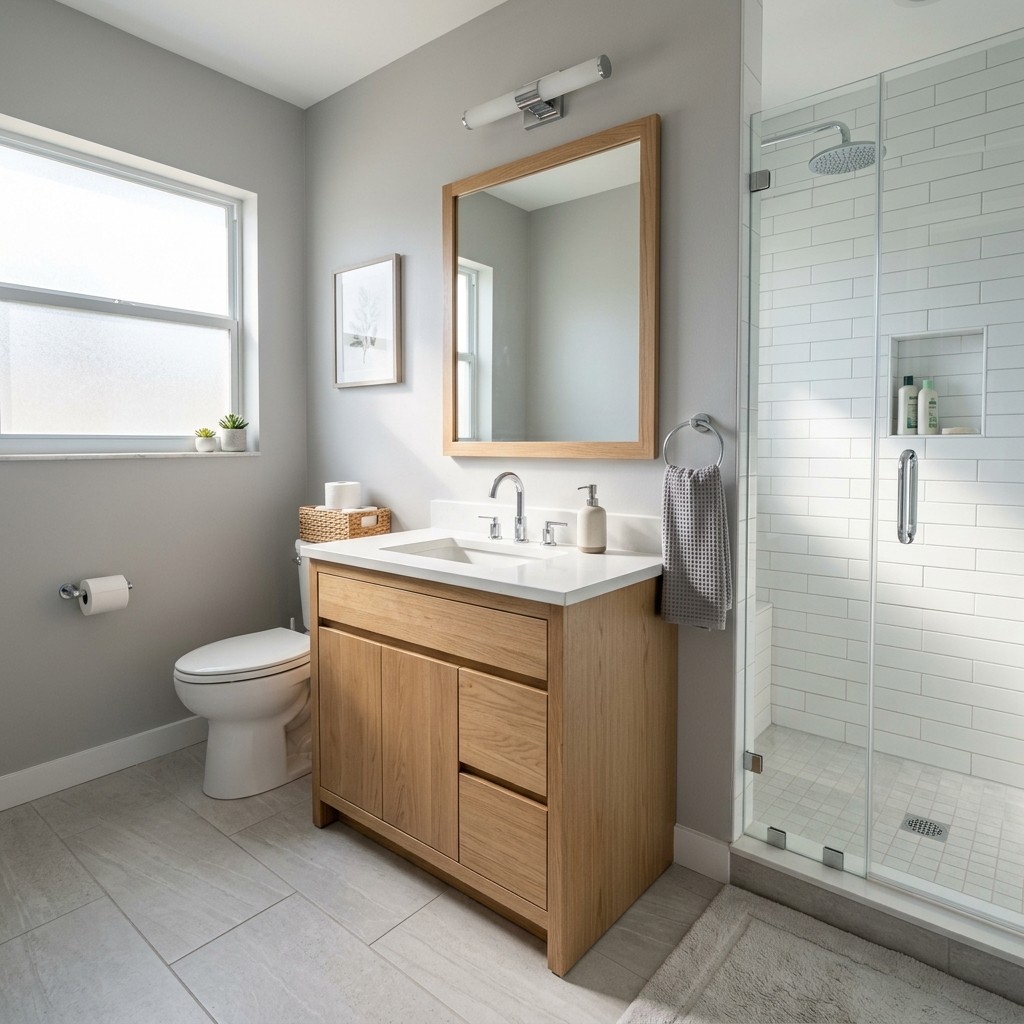
Your Bathroom Should Work for You at Every Age
Here is the reality. Most bathrooms in Miami-Dade homes were not built with accessibility in mind. They have narrow doorways, high tub walls, slippery tile, and fixtures that require bending, reaching, and balancing in ways that get harder over time.
If you or someone in your household is getting older, recovering from surgery, or dealing with mobility challenges, the bathroom is usually the first room that becomes a problem. It is also the room where most household falls happen.
The good news? An accessible bathroom does not have to look like a hospital room. The design options available today are stylish, modern, and built to last. You can make your bathroom safer without sacrificing the look you want.
Curbless Showers: The Foundation of Accessible Design
The single biggest upgrade you can make for accessibility is a curbless shower. No step, no lip, no barrier. You roll in, walk in, or step in at floor level.
A curbless shower works by using a gentle slope in the floor toward the drain. The tile installer creates a slight pitch so water flows to the drain without spilling into the rest of the bathroom. Done right, it is seamless and clean.
Why this matters in Miami specifically: our humidity means water dries slowly. A curbless shower with proper drainage and ventilation handles moisture better than a tub setup that traps water behind curtains and doors.
The cost for a curbless shower as part of a bathroom remodel typically runs $4,000 to $8,000 depending on size and tile selection. That includes waterproofing, the sloped shower pan, tile, and a linear drain.
If you are already doing a full bathroom remodel, the upgrade from a standard shower to a curbless design adds roughly $1,500 to $3,000 to the total.
Grab Bars That Actually Look Good
Forget the stainless steel institutional grab bars you see in hospital bathrooms. Those are fine for commercial settings, but your home deserves better.
Today's decorative grab bars come in matte black, brushed nickel, oil-rubbed bronze, and brushed gold. They match modern fixtures and blend into the design. Some are shaped to double as towel bars or shelf supports. Guests will not even notice they are grab bars unless they look closely.
Placement matters just as much as style. Here is where grab bars should go:
Inside the shower. One vertical bar near the entry point. One horizontal bar on the long wall at about 34 to 36 inches from the floor. One angled bar near the controls if the shower is large.
Next to the toilet. A horizontal bar on the side wall, centered about 12 inches above the toilet seat height. Some homeowners prefer a swing-up bar on one side for easier transfers.
At the tub (if you are keeping one). One bar on the wall at the entry point. One on the back wall for standing support.
Every grab bar needs to be mounted into blocking or studs, not just drywall anchors. If we are doing a full remodel, we add blocking behind the walls so bars can be installed anywhere, now or later.
Comfort-Height Toilets
A standard toilet sits about 15 inches from the floor. That is fine when you are 25. At 65, getting up from that height can be a struggle, especially with bad knees or hip issues.
Comfort-height toilets sit at 17 to 19 inches. That two to four inch difference is everything. You sit down and stand up the way you would from a regular chair.
ADA-compliant toilets are 17 inches minimum. We recommend 17 to 18 inches for most households. Taller models (19 inches) are available for people who are taller or have specific mobility needs.
Elongated bowls are also more comfortable and easier to use than round ones. They cost about the same. A quality comfort-height elongated toilet runs $250 to $600 for the fixture itself.
Non-Slip Tile and Flooring
Slippery tile is dangerous in any bathroom, but especially for older adults. One wet step on polished porcelain and you are looking at a serious fall.
Here is what we recommend for accessible bathrooms:
Matte or textured porcelain tile. Look for tile with a COF (coefficient of friction) rating of 0.60 or higher. That is the industry standard for slip resistance. Plenty of beautiful tile meets this standard.
Smaller tiles in the shower floor. Mosaic tiles (2x2 or smaller) with lots of grout lines provide natural traction. The grout lines themselves create grip. Large format tile on the shower floor is a fall risk.
No polished marble or glass tile on floors. These are gorgeous on walls but dangerous underfoot when wet.
Heated floors (optional but helpful). Radiant floor heating dries moisture faster and keeps tile warm. It reduces the shock of stepping onto cold tile, which can cause instability for some people. Electric radiant mats run $8 to $15 per square foot installed.
Wider Doorways
Standard bathroom doorways are 24 to 28 inches wide. That is tight even for an able-bodied person. For a wheelchair or walker, it is impossible.
ADA guidelines call for a minimum 32-inch clear opening, which typically means a 34 or 36-inch door frame. If you are remodeling anyway, widening the doorway adds $500 to $1,200 to the project depending on the wall structure.
A pocket door or a barn-style sliding door can also help. They do not swing into the bathroom, which means more usable floor space inside. Pocket doors are especially good for tight hallways where a swinging door blocks traffic.
Bench Seating in the Shower
A built-in shower bench is one of the most requested features in accessible bathroom design. And it is not just for people with mobility issues. Everyone appreciates a place to sit while shaving legs, soaking feet, or just letting the hot water run.
Tiled built-in bench. This is framed into the shower during construction, waterproofed, and tiled to match the walls. It is permanent, solid, and looks like it belongs. Typical cost is $400 to $800 added to a shower remodel.
Fold-down teak bench. A wall-mounted teak seat that folds up when not in use. Great for smaller showers. These run $150 to $400 depending on size and quality.
Removable shower chair. The most affordable option and easy to add to any shower. Not as clean-looking, but functional. Good for temporary needs.
We recommend a built-in bench at 17 to 18 inches high and at least 15 inches deep. If space allows, an L-shaped bench gives you room to sit fully and prop up a leg.
Handheld Showerheads
A fixed showerhead mounted at 80 inches is useless if you need to sit down to shower. A handheld showerhead on a slide bar solves this.
The slide bar lets you adjust the height from seated to standing position. A long hose (60 to 72 inches) gives you full range of motion. This setup works for everyone in the household, not just the person who needs it most.
Look for a showerhead with a pause button on the handle. It lets you stop the flow while soaping up without changing the temperature. Small feature. Big difference in daily use.
A quality handheld with slide bar runs $80 to $300 for the fixture. Installation is simple if you are already doing a shower remodel.
Other Details That Matter
Lever-style faucet handles. Round knobs are hard to grip with arthritic hands. Lever handles work with a push of the wrist or even an elbow. Every faucet in an accessible bathroom should have lever handles.
Good lighting. Older eyes need more light. We recommend LED vanity lights at face level plus recessed ceiling lights. A lighted mirror is a bonus. Avoid shadows near the shower and toilet areas.
Anti-scald valves. Pressure-balancing or thermostatic shower valves prevent sudden temperature spikes. This protects against burns, which is especially important for anyone with reduced sensation.
Open floor space. Keep the bathroom floor as clear as possible. An open vanity (wall-mounted or on legs) makes wheelchair access easier and gives the room a more open feel.
What Does an Accessible Bathroom Remodel Cost in Miami?
Every project is different, but here are the ranges we typically see in Miami-Dade County:
Basic accessibility upgrades ($3,000 to $6,000). Grab bars, comfort-height toilet, handheld showerhead, non-slip flooring. No major structural changes.
Mid-range accessible remodel ($8,000 to $15,000). Curbless shower, tiled bench, wider doorway, new vanity, grab bars throughout, comfort-height toilet.
Full accessible bathroom remodel ($15,000 to $28,000). Complete gut and redesign with curbless shower, custom tile, heated floors, widened doorway, new plumbing, new fixtures, grab bars with blocking, and full waterproofing.
The best time to add accessibility features is during a full bathroom remodel. Adding them later means opening up walls again, which doubles the labor cost.
Plan Ahead, Not After a Fall
The biggest mistake families make is waiting until someone falls or has surgery. By then, you need everything done fast, and rush jobs cost more.
If you are planning a bathroom remodel in Kendall, Palmetto Bay, Doral, or anywhere in Miami-Dade, talk to us about building accessibility into the design from the start. It adds minimal cost during construction and saves thousands compared to retrofitting later.
Call Broke & Fixed Home Solutions at (786) 363-7039 or request a free estimate. We will walk through your bathroom, talk about your needs, and show you how to make it safe and stylish at the same time.
Ready to start your Miami remodel?
Free in-home estimate. We will give you clear next steps.