How Long Does Exterior Paint Last in Miami's Climate?
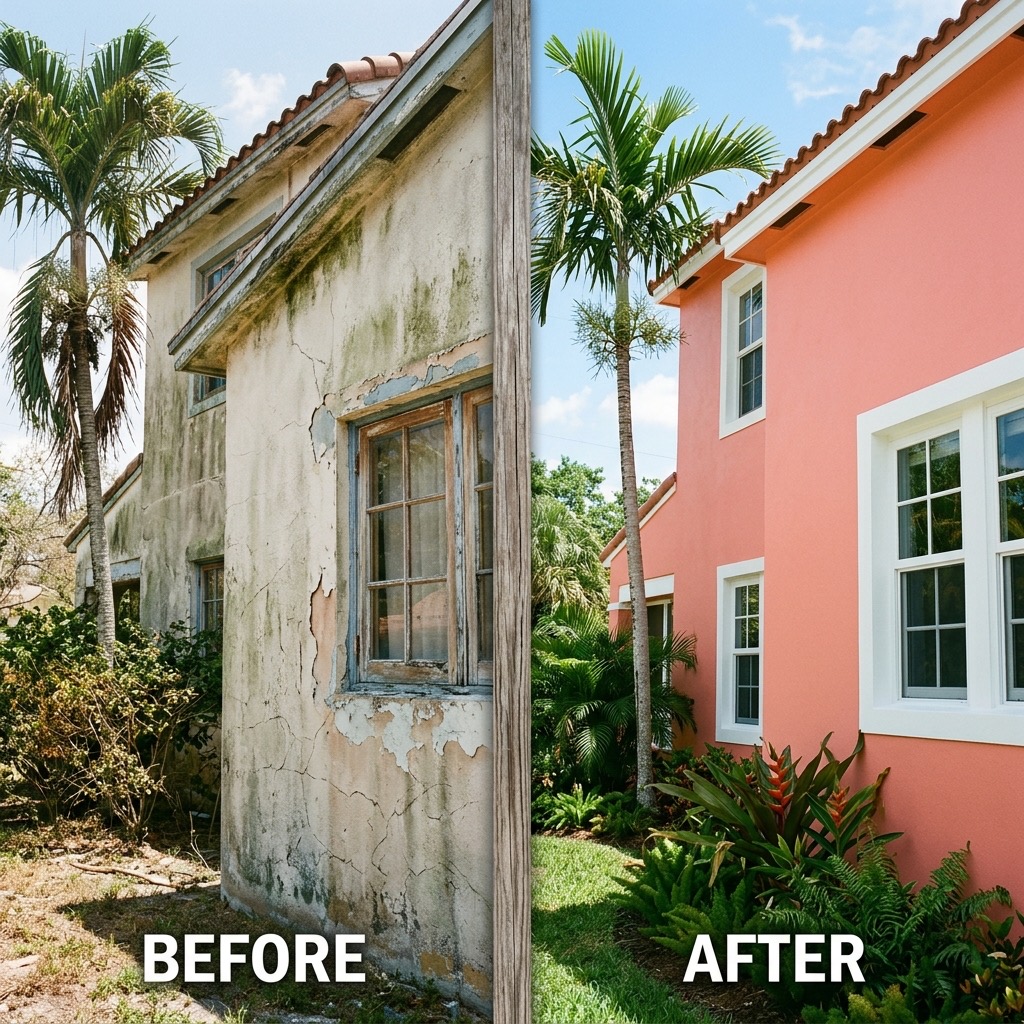
# How Long Does Exterior Paint Last in Miami's Climate?
Short answer: 5 to 8 years for a quality paint job. Budget paint with rushed prep? Maybe 3 to 4 years. Premium paint with proper surface preparation? You can push 8 to 12 years.
The national average for exterior paint is 7 to 10 years. But we don't live in the national average. We live in Miami. And Miami destroys paint faster than almost anywhere else in the country.
UV radiation, humidity that never lets up, salt air, afternoon thunderstorms, mold. Your home's exterior is fighting all of that every single day. Understanding what shortens paint life here helps you plan ahead, budget right, and avoid repainting sooner than you should.
What Shortens Exterior Paint Life in South Florida
Miami is one of the toughest climates for exterior paint in the United States. Here's why your paint job takes a beating.
UV Radiation
Miami gets over 250 sunny days per year. That's a lot of ultraviolet light hitting your walls.
UV breaks down the chemical binders in paint. Those binders are what hold the pigment together and keep it bonded to the surface. Once they start degrading, the color fades and the paint starts to chalk. You'll notice it first on south-facing and west-facing walls. Those sides get the most direct sunlight and fade the fastest.
Dark colors suffer more than light ones. A deep navy or dark brown on a south-facing wall might start looking washed out in just 2 to 3 years if the paint quality isn't there.
Humidity
Miami's average humidity runs between 70% and 90%. That's not occasional moisture. That's constant.
High humidity means moisture is always trying to get behind the paint film. When it does, the paint loses adhesion. You get bubbling, peeling, and flaking. The problem gets worse on walls with poor ventilation or areas shaded by trees where air doesn't circulate well.
Morning dew is another factor people overlook. In Miami, surfaces stay damp well into the morning. That daily cycle of wet and dry puts constant stress on paint.
Rain
South Florida gets over 60 inches of rain per year. Most of it comes in heavy afternoon storms from June through October.
Driving rain doesn't just sit on the surface. It finds every crack, every gap, every spot where the caulk has dried out. Water gets behind the paint and starts working it loose from the inside. If your home has any existing hairline cracks in the stucco, rain will find them and make them worse.
Salt Air
If you live within 5 miles of the coast, salt air is actively breaking down your paint. Salt is corrosive. It eats at paint binders, speeds up fading, and attacks metal surfaces like gutters and railings.
Homes in Coconut Grove and along Biscayne Bay deal with this more than inland neighborhoods. Places like Kendall, Pinecrest, and Palmetto Bay are further from the coast, so salt air is less of a factor. But it still reaches them during strong onshore winds, especially during storms.
Mold and Mildew
Warm, humid, and wet. That's Miami's climate in three words. It's also the perfect recipe for mold and mildew.
Black and green staining shows up on exterior walls fast, especially on north-facing sides that stay shaded. But surface staining isn't the only problem. Mold can grow under the paint film if the surface wasn't properly treated before painting. When that happens, the mold pushes the paint off from underneath. No amount of scrubbing fixes that. The only solution is removing the paint, killing the mold, and starting over.
Temperature Swings
Miami doesn't get extreme cold, but the daily temperature swing matters more than people think. A summer day might go from 75F at sunrise to 95F by mid-afternoon. In winter, overnight lows can drop to the mid-60s and then climb to 85F by noon.
That daily expansion and contraction cycle stresses paint. The surface expands in the heat and contracts as it cools. Over months and years, that movement causes micro-cracking. Once those tiny cracks form, water and humidity get in, and the paint starts failing.
Paint Lifespan by Surface Type
Not every surface on your home wears paint the same way. Here's what to expect in Miami's climate.
Stucco: 5 to 8 Years
Stucco is everywhere in Miami-Dade. It's durable, but it's also porous. It absorbs moisture, which means paint has to work harder to stay bonded. A quality acrylic paint on well-prepped stucco lasts 5 to 8 years. If the stucco has cracks or old patches that weren't properly sealed, expect the lower end.
Wood Trim: 3 to 5 Years
Wood fascia, soffits, window frames, and door trim need repainting more often. Wood expands and contracts with moisture and temperature changes more than stucco or concrete. That movement breaks the paint bond faster. Plan on touching up or repainting wood trim every 3 to 5 years.
Concrete Block: 7 to 10 Years
Unpainted or painted concrete block (CBS construction) is one of the most durable surfaces for holding paint. It doesn't move as much as wood, and it's less porous than stucco when sealed properly. Well-applied paint on concrete block can last 7 to 10 years in Miami.
Metal (Gutters, Railings, Iron Work): 5 to 7 Years
Metal surfaces have their own challenge: rust. In Miami's humidity and salt air, any scratch or chip in the paint exposes the metal to corrosion. Rust-inhibiting primer is a must. With proper prep and quality paint, metal holds up for 5 to 7 years. Without it, you'll see rust spots in 2 to 3 years.
Signs Your Exterior Paint Needs Refreshing
Don't wait until your paint is peeling off in sheets. Catch problems early and you can save money with a touch-up instead of a full repaint.
Chalking
Run your hand along the wall. If you get a white powdery residue on your palm, that's chalking. It means the paint binders have broken down and the pigment is loose. Some chalking is normal over time, but heavy chalking means the paint is no longer protecting the surface.
Fading
Compare a shaded area to a sun-exposed area. If the color difference is obvious, UV has done its work. Faded paint isn't just a cosmetic problem. It means the protective qualities are diminished too.
Peeling and Flaking
Paint lifting off the surface in strips or flakes means adhesion has failed. This usually starts around windows, doors, and roofline edges where water exposure is highest. Small areas of peeling can be scraped, primed, and repainted. Widespread peeling means a full repaint is needed.
Cracking
Hairline cracks in the paint surface are the first stage. If left alone, they widen and deepen. Eventually water gets behind the paint through those cracks and the damage accelerates. If you see cracking that follows a pattern (like a spiderweb), the underlying surface may have structural movement.
Bubbling
Bubbles in the paint mean moisture is trapped underneath. In Miami, this usually happens on walls that get afternoon rain or heavy dew without enough drying time. Sometimes it's a sign of a deeper moisture problem, like a roof leak or failed flashing that's feeding water into the wall.
Mold and Mildew Growth
Dark spots, green patches, or fuzzy growth on the walls means mold or mildew has taken hold. Some of it is just surface contamination that pressure washing removes. But if it keeps coming back quickly after cleaning, it may be growing under the paint.
Bare Spots
Any area where the substrate (stucco, wood, block) is exposed needs attention right away. Bare spots let moisture directly into the surface material and cause damage that goes beyond just the paint.
How to Make Your Exterior Paint Last Longer
The difference between a 4-year paint job and a 10-year paint job comes down to material quality, preparation, and maintenance.
Use Quality Paint
100% acrylic latex paint is the standard for Miami exteriors. It's flexible enough to handle thermal expansion and resistant to UV and moisture. Skip the cheap stuff. A premium paint from Sherwin-Williams, Benjamin Moore, or Behr's top line costs $40 to $70 per gallon. Budget paint runs $20 to $30. Over the life of the paint job, the premium product saves you money because you're not repainting as soon.
Proper Surface Prep
This is where Broke & Fixed Home Solutions puts the most effort on every job. Prep work is 70% of a good paint job. That means pressure washing, scraping loose paint, filling cracks, caulking gaps, priming bare spots, and treating any mold or mildew with a biocide. Skipping prep is the fastest way to a paint job that fails in 2 to 3 years.
Two Coats Minimum
One coat might look fine the day it's applied. Give it a year and you'll see the difference. Two coats of quality paint gives you better coverage, better UV protection, and a thicker barrier against moisture. On porous stucco, a coat of primer plus two finish coats is the right approach.
Mildew-Resistant Formula
In Miami, this isn't optional. Most premium exterior paints include mildewcide in the formula. If yours doesn't, you're inviting mold problems. Check the label or ask your paint supplier. The small extra cost per gallon pays for itself in avoided mold remediation.
Regular Pressure Washing
Wash your home's exterior once a year. This removes dirt, pollen, mold spores, and salt deposits before they can damage the paint. A light pressure wash at 1,500 to 2,000 PSI is enough. Don't blast the walls at high pressure. That can damage the paint and stucco.
Touch Up Small Problems Early
A small peeling spot or hairline crack takes 20 minutes and $10 in materials to fix. Leave it for a year and moisture gets behind the paint, the peeling spreads, and now you need a section repainted. Checking your exterior twice a year (before and after hurricane season) catches problems while they're cheap to fix.
Keep Landscaping Trimmed
Bushes and trees touching your walls trap moisture against the surface. That moisture feeds mold and keeps the wall damp, which breaks down paint faster. Keep all vegetation at least 12 inches away from exterior walls. Trim tree branches that shade walls and block airflow.
Fix Water Drainage Issues
Clogged gutters, downspouts that dump water against the foundation, or grading that directs runoff toward the house all put extra moisture on your walls. Fix drainage problems before you repaint. Otherwise, you're painting over the symptom instead of solving the cause.
Frequently Asked Questions
How often should I repaint my house exterior in Miami?
Most Miami homes need repainting every 5 to 8 years. Homes near the coast or with wood siding may need it sooner. The best approach is to inspect your exterior each year and look for signs of failure like chalking, cracking, or peeling. Catching problems early can extend the time between full repaints by a year or two.
Does the color of paint affect how long it lasts?
Yes. Darker colors absorb more UV radiation and fade faster than lighter colors. A dark charcoal or deep red on a south-facing wall will show fading within 2 to 3 years. Lighter colors like white, cream, and light gray reflect more UV and hold up longer. If you want a dark accent color, use it on shaded walls or smaller accent areas.
Is it worth paying more for premium exterior paint in Miami?
Absolutely. Premium 100% acrylic paint costs $20 to $40 more per gallon than budget options. But it lasts 3 to 5 years longer, resists fading and mildew better, and covers in fewer coats. On a typical Miami home, the paint cost difference is $200 to $500. The labor to repaint is $3,000 or more. The math is simple.
Can I paint my house exterior during Miami's rainy season?
It's possible but risky. The rainy season runs June through October. Afternoon storms can roll in fast and ruin fresh paint. The best months to paint exteriors in Miami are November through May, when rain is less frequent and humidity is slightly lower. If you must paint in summer, early morning application gives the paint time to dry before storms arrive.
Does pressure washing damage exterior paint?
Only if done wrong. A light wash at 1,500 to 2,000 PSI cleans the surface without harming the paint. Going above 3,000 PSI or holding the nozzle too close can strip paint and gouge stucco. For annual maintenance washing, a standard garden hose nozzle or a consumer-grade pressure washer works fine. Save the heavy equipment for pre-paint prep work.
What type of paint is best for Miami's climate?
100% acrylic latex in a satin or semi-gloss finish works best for most Miami exteriors. Acrylic is flexible, UV-resistant, and breathable, which means it handles heat expansion, sun exposure, and moisture better than oil-based or vinyl-acrylic paints. Choose a product with built-in mildewcide. Flat finishes hide imperfections but show dirt faster. Satin and semi-gloss are easier to clean and hold up longer.
Ready to Repaint Your Home's Exterior?
If your paint is showing its age, don't wait for the damage to spread. A fresh exterior paint job protects your home from moisture, mold, and sun damage while boosting curb appeal.
Broke & Fixed Home Solutions paints homes across Miami-Dade County with proper prep, quality materials, and attention to every detail. Call us at (786) 363-7039 for a free estimate. We'll walk the property with you and give you an honest assessment of what your home needs.
Ready to start your Miami remodel?
Free in-home estimate. We will give you clear next steps.