Tile Installation in Doral, FL: Condo and Townhouse Guide (2026)
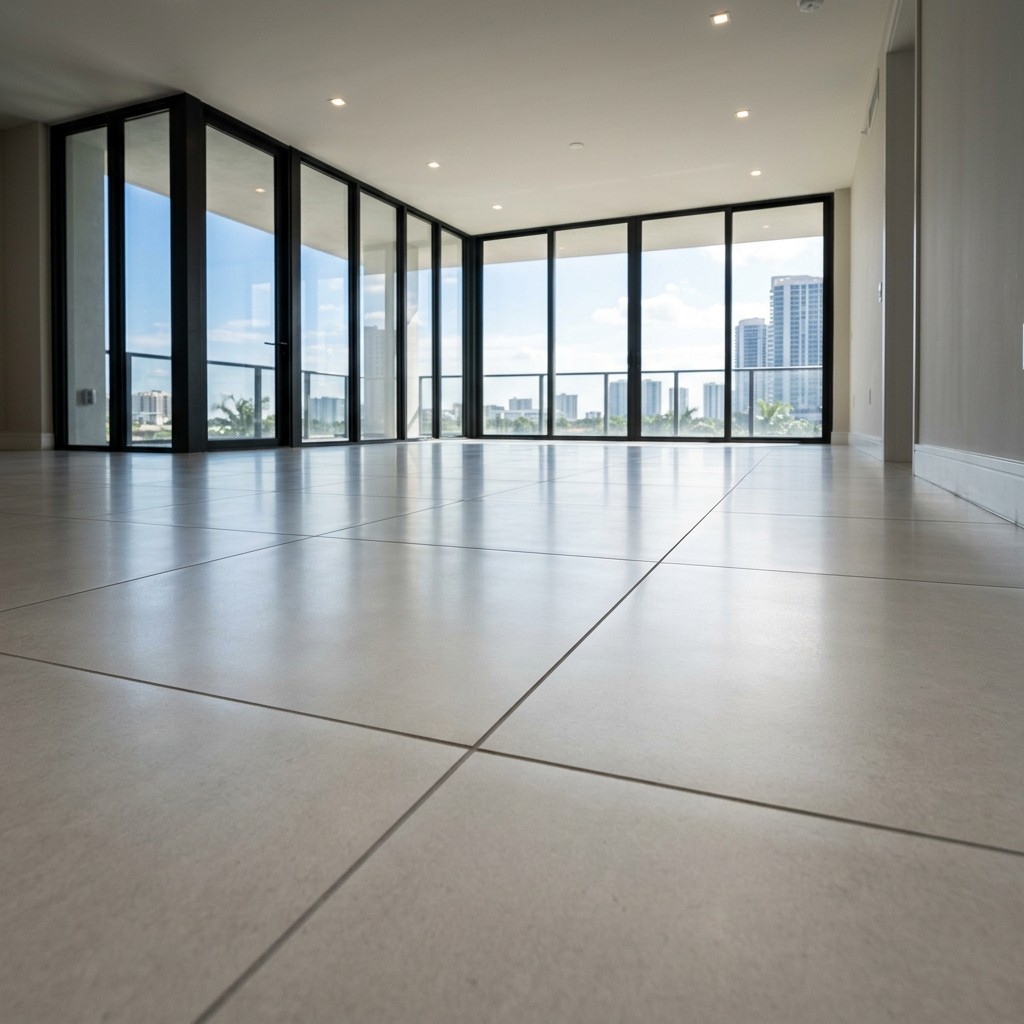
Doral Is Three Different Housing Markets in One ZIP
Doral grew faster than almost any other Miami-Dade city in the last 20 years. Drive across 33172, 33178, and 33122 and you see three distinct types of housing stacked on top of each other.
The first is high-rise condos around CityPlace, Midtown Doral, and the Trump National area. Mostly built between 2008 and 2024, glass towers with concrete floor slabs, strict HOA rules, and elevator logistics that complicate every renovation.
The second is mid-rise and townhome complexes scattered through the Doral interior. Built between 2000 and 2018, usually 3 to 7 stories, often with attached garages on the ground floor. These have their own HOA rules but the construction is closer to single-family in terms of how the work happens.
The third is single-family homes. Smaller percentage of Doral's housing stock than the other two, mostly in the western edges of the city near Doral Country Club. These work like Kendall or Pinecrest single-families for renovation purposes.
Each of these three housing types creates different challenges for tile installation. This guide covers all three, with a focus on the condo and townhouse logistics that Doral homeowners actually have to deal with.
Doral Condo HOA Rules That Affect Tile Work
Before you order a single box of tile, you need to know what your HOA does and does not allow. Most Doral condo associations have rules in four categories:
1. Soundproofing requirements. This is the big one. Almost every Doral high-rise built after 2010 requires the unit owner to install an IIC-rated underlayment under any new tile floor in living areas, kitchens, and sometimes bathrooms. IIC stands for Impact Insulation Class. The HOA will specify a minimum IIC rating (usually 50, 55, or 60) for the assembly. If you skip this step, you are looking at a stop-work order from the HOA, a noise complaint from the unit below, and possibly being forced to tear out the floor and start over. Common acceptable underlayments: ProvaFlex, Schluter Ditra-Heat with acoustic mat, Mapei Mapesonic. Cost: $1.80 to $4.50 per square foot extra.
2. Working hours. Most Doral condos restrict construction work to Monday through Friday, 8 AM to 5 PM. A few allow Saturday work; almost none allow Sunday or evening work. This stretches every project. A tile job that would take 5 days in a single-family takes 7 to 9 days in a condo just because of the working window.
3. Hallway and elevator protection. Common areas must be protected during work. The HOA usually requires plastic on hallway carpets, padding on elevator walls, and floor protection at every transition. Sometimes you have to reserve the elevator in advance for material delivery (one or two scheduled windows per day, not on demand).
4. Insurance and approval paperwork. Every renovation team working in a Doral condo needs to provide proof of general liability insurance, sometimes workers compensation, and often an additional insured certificate naming the condo association. The unit owner usually has to submit a renovation application with scope of work, materials list, schedule, and contact information for the workers. Approval times range from 2 to 6 weeks.
How HB 803 Applies to Doral
Florida HB 803 took effect July 1, 2026. The $7,500 permit exemption is written specifically for single-family dwellings. Read the full HB 803 breakdown here.
What this means in Doral:
- Single-family homes in Doral: the $7,500 cosmetic exemption applies. Tile work that stays under the cap and does not involve plumbing or electrical can be done permit-free.
- Condos and townhouses: the main $7,500 exemption does not apply. But the second piece of HB 803 does help: HOAs can no longer require a building permit as a precondition for their architectural review. If your Doral condo association used to demand a permit copy with your renovation application, that requirement is now illegal.
The practical result for condo owners: you still need HOA approval, you still need a permit if your municipality requires one, but the HOA cannot use a missing permit as a reason to delay their review. Application gets reviewed faster.
For the City of Doral, most tile work that stays cosmetic (replacing existing tile with new tile in the same footprint, no plumbing moves, no structural changes) does not require a permit even in condos. Bathroom tile that includes wet zone changes (rebuilding a shower, moving a drain) does require a permit.
Tile Choices That Make Sense in Doral
The Doral aesthetic is more modern than Kendall or Coral Gables. Most condos and newer townhomes already have a contemporary baseline. Here is what is moving:
Large-format porcelain. Dominant choice for floors and walls. 24x48 inch tiles in marble look, concrete look, or stone look. Fewer grout lines, easier to clean, makes small condos feel larger. Cost: $5 to $14 per square foot for the tile itself, plus installation.
Wood-look porcelain plank. Big in Doral living areas. 8x48 or 9x60 inch planks that look like white oak or walnut but have the durability of porcelain. Better than real wood for condos because of moisture, sound transmission, and HOA requirements that often ban real hardwood on upper floors. Cost: $4 to $9 per square foot.
LVT (Luxury Vinyl Tile or Plank). Has come a long way. Quality LVT at $3 to $6 per square foot looks convincingly like wood or stone. Easier installation, more forgiving on uneven subfloors, quieter underfoot than porcelain. The trade-off: LVT does not have the longevity of porcelain (10 to 20 years versus 50+) and does not add resale value the same way. Good choice for short-term holds or rentals.
Marble and marble-look porcelain. Bathrooms and feature walls. Real marble (Carrara, Calacatta) still has its place in higher-end Doral condos. Marble-look porcelain has caught up enough that we install it more often. No maintenance, no etching, no sealing.
Mosaic and accent tile. Used as backsplashes, shower niches, and feature stripes. Hex tile, fish-scale, herringbone, and Zellige are all having moments in Doral kitchens and bathrooms.
What to avoid in Doral condos: any real natural stone on floors over 1,000 square feet without serious structural calculations. Marble slabs are heavy and not every condo floor was engineered for it. Porcelain is much lighter for the same look.
The Process of Tile Installation in a Doral High-Rise
A tile job in a Doral high-rise is more complicated than the same job in a Kendall single-family. Here is what actually happens:
Step 1: HOA Application and Approval (2 to 6 weeks)
You submit the renovation application with scope, materials, schedule, certificates of insurance, and worker information. The association reviews and approves. Sometimes they request changes (a quieter day, a different underlayment, a different worker schedule). Cannot start work until written approval.
Step 2: Elevator Reservation and Material Staging
Schedule the freight elevator for material delivery windows. Some buildings limit you to one delivery per day. We coordinate the order of operations so we are not running multiple deliveries.
Step 3: Protection of Common Areas
Day 1 of work: lay plastic from the freight elevator door to the unit door. Pad the elevator walls. Protect the hallway floor. This is non-negotiable in Doral high-rises.
Step 4: Demo
Remove existing flooring or tile. Bag debris in heavy contractor bags. Haul down via the freight elevator on the schedule the HOA approved. In some Doral buildings, demo debris has to go down at night via a specific dumpster window; in others, daytime is fine.
Step 5: Substrate Inspection
Check for level, check for cracks in the concrete slab, check for moisture. Doral condos often have moisture vapor coming up through the slab, especially on lower floors. A vapor barrier or moisture mitigation primer goes down before any underlayment.
Step 6: Acoustic Underlayment
This is the step you cannot skip in a Doral condo. The HOA-required underlayment goes down per the manufacturer's spec. Seal seams. Verify coverage.
Step 7: Tile Layout and Cutting
Dry-lay the first row to confirm the layout. Plan where the cuts fall. In a large-format tile job, every cut matters because the tiles are big and a bad cut is visible from across the room.
Step 8: Set and Cure
Mortar set, leveling clips for large-format to prevent lippage, 24 hour cure before grout.
Step 9: Grout
Sanded or unsanded depending on the grout line width. Color matched to the tile. Caulk corners and transitions in matching color.
Step 10: Cleanup and Final
Detail clean the tile. Pull protection. Final walkthrough with the owner. Submit HOA work completion paperwork.
Total time for a Doral condo tile job, 1,000 to 1,400 square feet: 9 to 14 working days of active work, plus the 2 to 6 week HOA approval window on the front end.
Cost Ranges for Doral Tile Installation in 2026
Bathroom tile replacement, condo, 50 sq ft floor plus 80 sq ft shower walls: $4,200 to $7,800
Kitchen floor tile replacement, condo, 200 sq ft: $3,200 to $5,800
Whole-condo floor tile installation, 1,000 sq ft, including acoustic underlayment: $9,800 to $17,500
Whole-condo floor tile installation, 1,400 sq ft, premium tile, including acoustic underlayment: $14,500 to $24,000
Whole-townhouse floor tile, 1,800 sq ft: $13,000 to $22,000
Single-family Doral home, full floor tile replacement, 2,500 sq ft: $16,000 to $28,000
Premium upcharges:
- Large-format 24x48 or larger: add 15 to 25 percent for cutting and handling
- Herringbone or other pattern layout: add 25 to 40 percent
- Schluter trim systems: $4 to $12 per linear foot
- Crack isolation membrane on suspect substrate: $2 to $4 per sq ft
- Heated floor mat installation: $8 to $15 per sq ft (electrical work requires permit)
Three Doral Tile Case Studies
These are hypothetical examples built from real Doral work patterns.
Case 1. CityPlace Doral high-rise. 18th floor 2-bedroom condo. Whole-unit floor replacement.
Owners had bought the unit with original 2014 tile that they did not love (a beige porcelain in a generic 12x24). Wanted to install large-format wood-look porcelain throughout living areas and a marble-look porcelain in the bathrooms.
Scope: 1,150 sq ft of floor. Removed existing tile, installed HOA-required acoustic underlayment (IIC 55 rated), set 9x60 inch white oak look porcelain plank in living areas, set 24x48 inch Calacatta look porcelain in both bathrooms, all transitions in Schluter T-bars in matte brass.
HOA approval: 4 weeks. Active work: 12 working days. Final cost: $19,800.
Case 2. Mid-rise townhouse complex in central Doral. 3-story townhouse, ground floor garage. Tile work in the kitchen and powder room only.
Owners wanted to update the kitchen floor and powder room without doing the whole house. The townhouse had carpet in living areas they did not want to disturb.
Scope: 240 sq ft of kitchen floor plus 35 sq ft of powder room floor and 60 sq ft of powder room wall tile. Removed existing tile, installed acoustic underlayment (townhouse HOA requirement, IIC 50), set 12x24 stone look porcelain in kitchen, set marble look porcelain on powder room floor and walls, new mosaic accent strip behind the sink.
HOA approval: 3 weeks. Active work: 6 working days. Final cost: $7,400. Under HB 803 cap for the single-family qualifying portion, but townhouse status meant the exemption did not formally apply and the HOA still required their approval process. Job was small enough that no permit was needed under Doral's municipal interpretation.
Case 3. Single-family home in west Doral near the Country Club. 2,400 sq ft 2005 house. Whole-home tile replacement.
Owners had been in the house 15 years and the original 2005 ceramic tile was cracked in several spots from settling and just looked tired. They wanted to upgrade to a contemporary porcelain throughout.
Scope: removed existing tile (2,200 sq ft of removal because some areas had carpet), addressed slab cracks with crack isolation membrane in problem areas, installed 24x48 inch large-format porcelain in a warm gray, all rooms continuous flow with no transitions, matching baseboards reinstalled after tile.
HOA: none (single-family in a non-HOA street). Permit: not required because no plumbing or electrical changes. HB 803 cap exceeded due to project size, but no permit was needed regardless because the work was purely cosmetic flooring. Active work: 14 working days. Final cost: $22,400.
What Drives the Quote in Doral
FAQ: Tile Installation in Doral
Do I need HOA approval to install tile in a Doral condo?
Yes. Every Doral condo and townhouse association requires renovation approval before any flooring work. The application typically takes 2 to 6 weeks. You will need to provide a scope of work, materials list, schedule, and insurance certificates from your remodeling team. HOA approval is separate from any building department permit.
Do I need a permit for tile work in Doral?
For single-family homes in Doral, cosmetic tile work under $7,500 is permit-free under Florida HB 803. For condos and townhouses, the main HB 803 exemption does not apply, but most pure tile replacement work in Doral condos does not require a city permit either as long as no plumbing or electrical changes are involved. Bathroom rebuilds that include shower waterproofing changes can sometimes require a permit.
What is acoustic underlayment and why do I need it?
Acoustic underlayment is a soundproofing layer installed between the subfloor and the tile. It reduces impact noise transmission to the unit below. Doral condo associations almost universally require it for any tile installation in living areas, kitchens, and sometimes bathrooms. The HOA specifies a minimum IIC (Impact Insulation Class) rating, typically 50 to 60. Common acceptable underlayments are ProvaFlex, Mapei Mapesonic, and Schluter Ditra-Heat with acoustic mat.
Can I install hardwood floors instead of tile in a Doral condo?
Most Doral condo associations restrict hardwood to ground floors only because hardwood transmits sound and impact more readily than tile or LVT. Some buildings allow engineered hardwood on upper floors with the same acoustic underlayment requirements. Always check your HOA rules before pricing hardwood.
How long does a whole-condo tile installation take in Doral?
Active work runs 9 to 14 days for a 1,000 to 1,400 sq ft condo. Add 2 to 6 weeks on the front end for HOA approval. So plan for 6 to 9 weeks from first call to finish.
What is the best tile for a Doral condo?
Large-format porcelain in 12x24 or 24x48 size is the most popular and practical choice. Marble-look and stone-look porcelain give you the high-end aesthetic without natural stone's maintenance or weight concerns. Wood-look porcelain plank is excellent for living areas if you want a warmer aesthetic and your HOA does not allow real hardwood.
Can you work around my schedule if I cannot be there during the day?
Yes. We work with Doral residents who are away during business hours. We coordinate with the HOA-permitted working hours (usually 8 AM to 5 PM weekdays), do our own access via approved means, and check in with you in the evenings or via text throughout the project.
Are you insured for condo work?
Broke & Fixed Home Solutions carries general liability insurance and workers compensation. We provide certificates of insurance to your HOA on request, including additional insured endorsements when required by the association. Family owned, bilingual EN/ES, fully insured.
Ready to Plan Your Doral Tile Project?
Broke & Fixed Home Solutions handles tile installation across Doral and the rest of Miami-Dade. Family owned. Fully insured. Bilingual EN/ES. We know the Doral high-rise rules, the townhouse HOA quirks, and the building department interpretations. Free in-home estimates, response within 15 minutes.
Browse our service guides:
Or call us directly at (786) 363-7039.
Ready to start your Miami remodel?
Free in-home estimate. We will give you clear next steps.