HB 803 Bathroom Remodel: What You Can Do Without a Permit in Miami
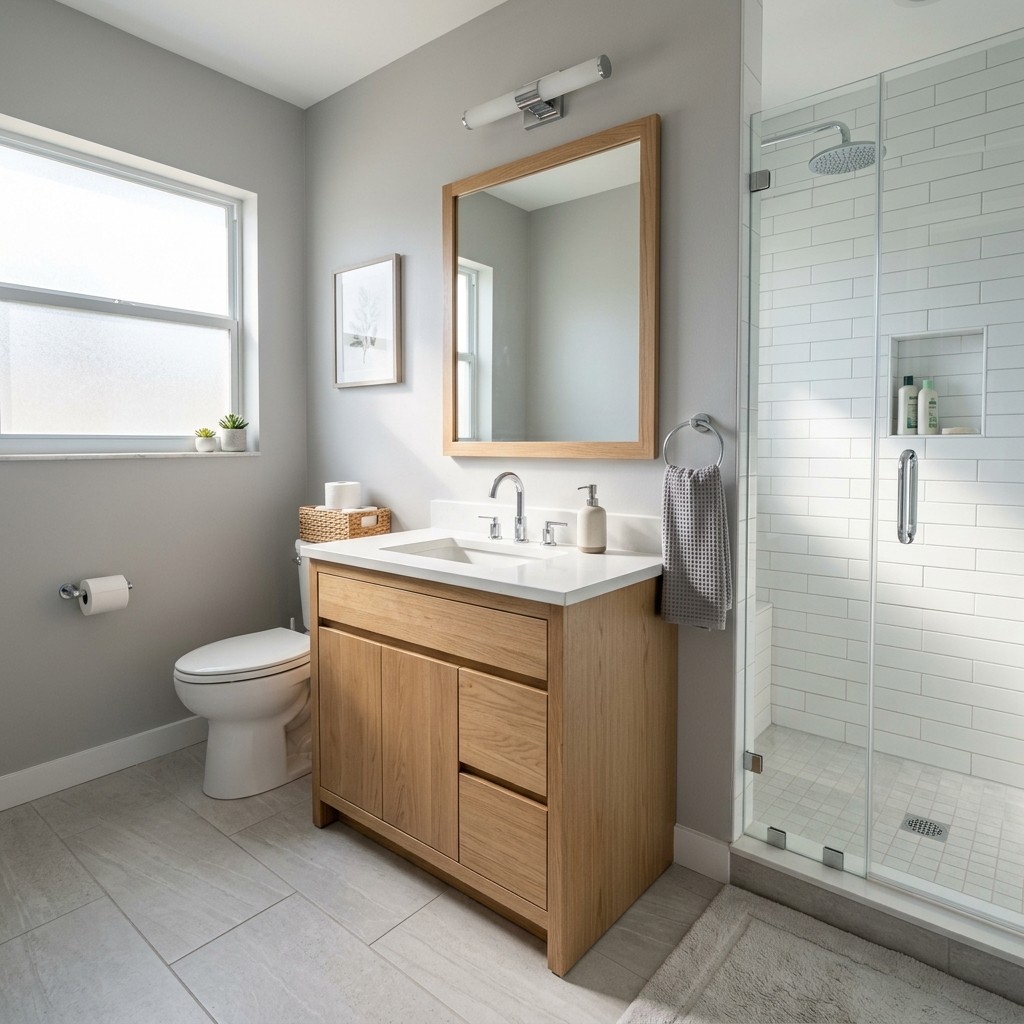
What You Can Remodel in a Bathroom Without a Permit
Under Florida HB 803, you can remodel a single-family bathroom in Miami with no building permit as long as the work is cosmetic and the whole job stays under $7,500. That covers paint, new tile or regrouting, swapping the vanity, replacing fixtures and faucets in their existing spots, a new mirror, and changing a light fixture where no new wiring is added. The law was signed by Governor DeSantis on May 7, 2026 and takes effect July 1, 2026.
The line is simple once you see it. If you are refreshing what is already there, you are usually exempt. The moment you move plumbing, add an electrical circuit, change the structure, or your home sits in a flood-hazard zone, that part needs a permit no matter how small the price tag.
This guide breaks down exactly which bathroom jobs are now permit-free, which ones still need paperwork, and how a normal Miami bathroom refresh fits under the $7,500 line. We work bathrooms across Kendall, Palmetto Bay, and the rest of Miami-Dade every week, so the numbers below come from real quotes, not guesses.
The $7,500 Line and How HB 803 Works
Here is the rule in plain terms. If you own a single-family home, the bathroom work is cosmetic only, and the total job comes in under $7,500, your city or county cannot make you pull a building permit. That saves you the permit fee, which usually runs $200 to $800 in Miami-Dade, and it skips the 1 to 4 week wait for permit approval and inspector scheduling.
Cosmetic means finish work that does not touch a building system. Paint, tile, the vanity cabinet, the countertop, trim, and fixtures that connect back to the plumbing and wiring already in the wall. None of that changes how the house is built. That is the whole idea behind the exemption.
One thing people get wrong: HB 803 is about permits, not about who does the work. You still want a fully insured remodeling team in your house. Skipping a permit on a cosmetic job is fine. Skipping insurance is how a homeowner ends up paying for a slip on a wet tile floor or a leak that shows up months later.
Bathroom Jobs That Are Now Permit-Free
These are the bathroom tasks that fall inside the HB 803 exemption when the total stays under $7,500 and nothing gets relocated:
- Painting the walls, ceiling, and trim
- New tile on the floor, or new tile on shower and tub walls where no plumbing moves
- Regrouting or re-caulking existing tile
- Swapping the vanity cabinet for a new one in the same spot
- Replacing the countertop and sink basin where the drain and supply lines stay put
- New faucet on the sink, tub, or shower in its existing location
- New toilet set on the same flange (a straight swap, not a move)
- New mirror or medicine cabinet
- Swapping a light fixture or exhaust fan cover where no new circuit or wiring is run
- New towel bars, hooks, and hardware
- New baseboards and door trim
In Miami that list covers most of what people actually want. A tired 1990s Kendall bathroom usually just needs fresh tile, a new vanity, paint, and updated fixtures. None of that moves a pipe. So the whole refresh sits inside the exemption. You can read more about how we approach these jobs on our bathroom remodeling page, and the tile work page covers our process for shower walls and floors.
What Still Needs a Permit in a Bathroom
HB 803 draws a hard line at anything that alters a building system. In a bathroom, these still need a permit even if the rest of the job is cheap:
- Relocating plumbing. Moving the toilet, sink, or shower to a new spot. Changing where the drain or supply lines run. Converting a tub to a curbless walk-in shower where the drain has to move. That is plumbing relocation, and that part needs a permit.
- New electrical circuits. Adding outlets, running a new circuit for a heated floor, or wiring in new can lights where there was no box before. Swapping a fixture on existing wiring is fine. Adding wiring is not.
- Structural changes. Knocking down a wall to combine two bathrooms, widening a doorway, or moving a window. Anything that touches how the house holds itself up.
- Mechanical and gas. New ductwork, a relocated exhaust system tied into the HVAC, or any gas line work.
- Flood-hazard properties. If your home sits in a flood-hazard zone under the Florida Building Code, the exemption does not apply at all, even for paint. This catches a lot of homes near canals, the coast, and low-lying parts of Cutler Bay, Palmetto Bay, and South Miami Heights. Check your flood zone before you assume HB 803 covers you.
If your dream bathroom does need a pipe moved or a circuit added, that does not kill the whole project. It just means that one piece goes through the building department. We coordinate the permitted portions and keep the cosmetic work moving so the job does not stall.
There is also the anti-bundling rule. You cannot split one bathroom into three $6,000 invoices to dodge the cap. If anyone offers to do that, walk away. The law was written to stop exactly that, and it can leave the homeowner owing back-permit costs.
How a Miami Bathroom Refresh Fits Under $7,500
Most cosmetic bathroom refreshes in Miami-Dade land right around or under the cap when you keep everything in its existing spot. Here are three real-world examples from how we quote work.
Example 1. Hall bathroom refresh in Kendall. New porcelain tile on the floor, new tile on the tub surround (tub stays put), new 36-inch vanity in the same spot, new faucet, new toilet on the same flange, paint, and new hardware. Materials and labor land around $5,900. Under HB 803, no permit needed. You save roughly $300 in permit fees and 2 to 3 weeks of waiting.
Example 2. Primary bathroom update in Palmetto Bay. Regrout the existing shower, new quartz vanity top with an undermount sink on the existing drain, new faucet, new mirror, new exhaust fan cover on the existing wiring, full repaint, and new baseboards. Materials and labor come in around $7,100. Under HB 803, no permit needed, as long as the home is not in a flood-hazard zone. A good chunk of Palmetto Bay near the bay is, so this one always starts with a flood-zone check.
Example 3. Guest bathroom tile and paint in West Kendall. Strip the old wall tile, install new large-format porcelain on the shower walls and floor, new grout, fresh paint, and a new light fixture swapped onto existing wiring. No fixtures relocated. Materials and labor around $4,800. Under HB 803, no permit needed.
If you want to see where prices tend to land before you call, our bathroom remodeling cost guide for Miami breaks down materials and labor by scope. Planning a kitchen too? The same $7,500 rule applies, and we cover it in our HB 803 kitchen remodel guide.
Tile and Humidity: Getting It Right in Miami
A bathroom refresh in South Florida is not just about looks. Miami humidity is hard on a bathroom, and the wrong tile or grout choice shows up as mildew within a year. Since HB 803 makes tile work permit-free when nothing moves, this is the place to spend your attention.
Porcelain handles moisture better than most natural stone, and it does not need the resealing that marble does. For shower floors, smaller tiles with more grout lines give better grip and let the floor pitch to the drain. We push homeowners toward epoxy or a quality stain-resistant grout in wet areas because standard grout in a Miami shower stains and traps mold fast.
Older Kendall and Palmetto Bay homes add one more wrinkle. Many were built in the 70s, 80s, and 90s with the original mortar-bed showers. When you strip old tile, you sometimes find soft backer board or a failed pan liner behind it. That is not a permit issue under HB 803 since you are not moving plumbing, but it is a repair you want caught before the new tile goes on. A walkthrough before the quote catches most of it.
What to Do Before You Start
A few quick steps keep your bathroom project clean under HB 803:
Get those four right and a Miami bathroom refresh under HB 803 is faster and cheaper than it has ever been.
FAQ: HB 803 Bathroom Remodels in Miami
Can I retile my bathroom without a permit under HB 803?
Yes, in most cases. New tile on the floor or on shower and tub walls is cosmetic work, so it falls under the HB 803 exemption when the total job stays under $7,500 and you are not moving any plumbing. Regrouting and re-caulking are also fine. The exception is if your home sits in a flood-hazard zone, where the exemption does not apply to any work. As long as the shower and tub stay where they are and the drain does not move, retiling a single-family bathroom in Miami does not need a permit.
Does swapping my vanity and sink need a permit?
Replacing the vanity cabinet and dropping in a new countertop and sink in the same location is cosmetic, so no permit is needed under HB 803 when the job stays under $7,500. The key is that the drain and water supply lines stay where they are. You are connecting the new sink back to the existing rough-in. If you decide to move the vanity to a different wall, that means relocating plumbing, and that part needs a permit even though the cabinet itself is cosmetic.
Can I move my toilet or shower without a permit?
No. Relocating the toilet, sink, or shower is plumbing relocation, and that part needs a permit regardless of cost. The same goes for converting a tub to a walk-in shower if the drain has to move. HB 803 only exempts cosmetic work that leaves the building systems alone. If your remodel plan moves a fixture, the rest of the cosmetic work can still qualify, but the relocated plumbing goes through the building department. We coordinate the permitted portions so the project keeps moving.
Can I change a bathroom light fixture without a permit?
Swapping a light fixture or exhaust fan cover onto existing wiring is cosmetic and does not need a permit under HB 803. What does need a permit is adding a new electrical circuit, running new wiring, or putting a fixture where there was no electrical box before. So a straight fixture-for-fixture swap is fine. Wiring in new can lights or a heated floor circuit is not. If you are unsure whether your change adds a circuit, ask before you start so you know which side of the line you are on.
What is the most a bathroom remodel can cost and still skip the permit?
The total cosmetic job has to stay under $7,500 to qualify for the HB 803 exemption. That is the whole project, materials and labor together, not split across separate invoices. Most cosmetic bathroom refreshes in Miami-Dade land between $4,800 and $7,200 when nothing gets relocated, so a typical refresh fits under the cap. The moment the total crosses $7,500, or the moment the work moves plumbing or adds electrical, you are back to needing a permit. Keep it one honest number for one bathroom.
Does HB 803 apply if I live in a flood zone near the coast?
No. If your property is in a flood-hazard zone under the Florida Building Code, HB 803 does not apply, and you pull a permit for any bathroom work, even paint. This catches a lot of Miami-Dade homes near canals, the coast, and low-lying areas of Cutler Bay, Palmetto Bay, and South Miami Heights. Before you assume the exemption covers your bathroom, look up your address on the county flood zone map or call your building department. It is the first thing we check on a Palmetto Bay job.
When does the HB 803 bathroom exemption start?
July 1, 2026. Governor DeSantis signed HB 803 on May 7, 2026, and the operative date is July 1. Bathroom work started before July 1 may still need a permit under the old rules. Work starting on or after July 1 follows the new exemption. If you are planning a summer refresh, that timing lines up well, since interior bathroom work is a smart choice during hurricane season when exterior projects get risky.
Do I still need an insured remodeling company for a no-permit bathroom?
Yes. Skipping the permit does not skip the protection you want around the work. If a worker slips on a wet floor in your home and the remodeling team is not insured, you can be on the hook. If a tile job is done wrong and water gets behind the wall, you want a fully insured company with a clear warranty standing behind it. HB 803 cut the paperwork on cosmetic jobs. It did not lower the bar on who should be doing the work in your house.
Sources
- Florida HB 803, Florida Senate
- Florida House Staff Analysis (PDF)
- Adams and Reese: HB 803 Beyond the $7,500 Exception
- Insurance Journal: DeSantis Signs $7,500 Permit Bill
- WFSU News: New Florida Law Drops Permits for Low-Cost Projects
Ready to Plan Your Miami Bathroom Refresh?
Broke & Fixed Home Solutions has done 200+ remodels across Miami-Dade. Family owned. Fully insured. Bilingual EN/ES. We work in Kendall, Palmetto Bay, and the rest of Miami-Dade County. Free in-home estimates, response within 15 minutes.
Browse our guides:
- Bathroom remodeling
- Tile work
- Bathroom remodeling cost in Miami
- Florida HB 803: the full no-permit guide
- HB 803 kitchen remodel guide
Or call us directly at (786) 363-7039.
Ready to start your Miami remodel?
Free in-home estimate. We will give you clear next steps.