HB 803 Kitchen Remodel: The $7,500 Cap Explained for Miami Homeowners
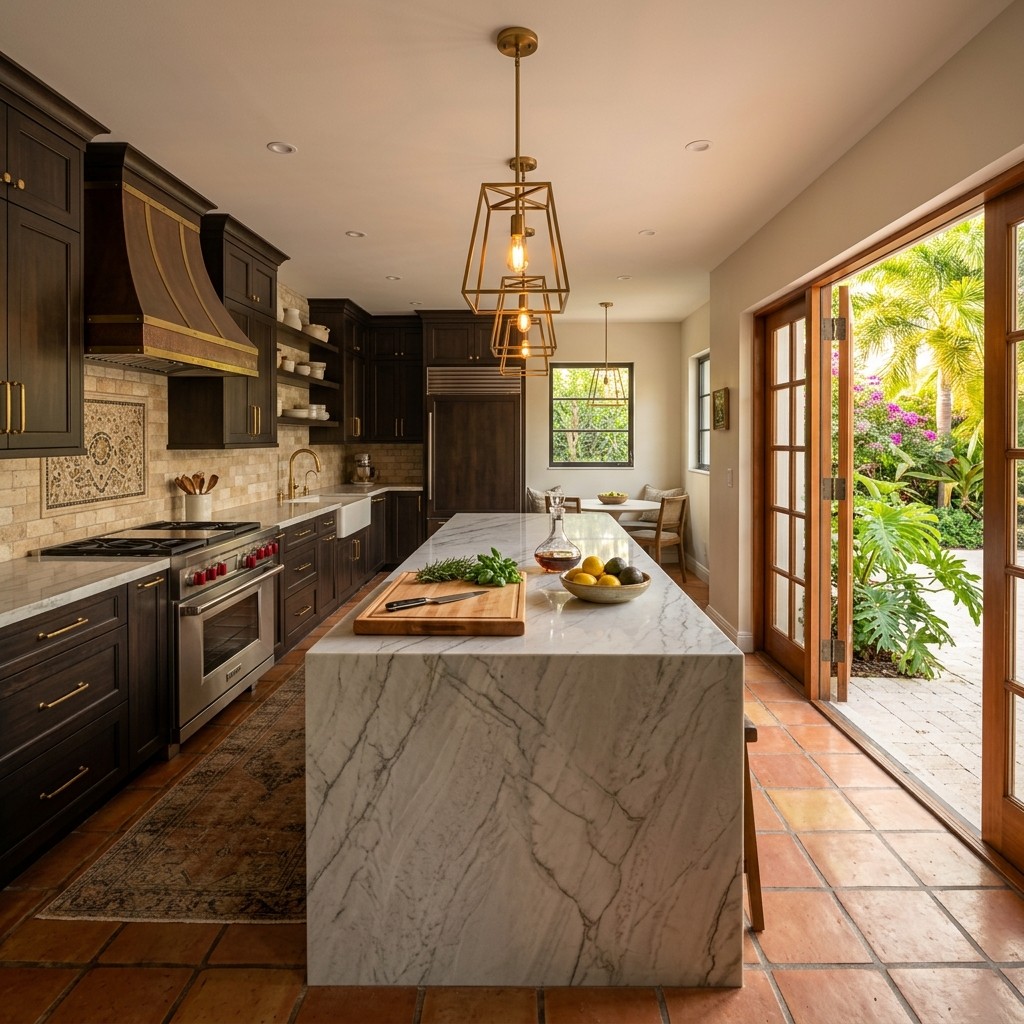
The Short Answer on Kitchens and the $7,500 Cap
Starting July 1, 2026, you can do cosmetic kitchen work on a single-family home in Miami without a building permit, as long as the whole job stays under $7,500. That is what Florida HB 803 does. Governor DeSantis signed it on May 7, 2026, and it takes effect July 1.
The word that matters is cosmetic. New cabinet doors, a fresh countertop, a tile backsplash, new hardware, a sink swapped in the same spot, paint, a light fixture changed on the wire that is already there. All of that is finish work. None of it touches a building system, so none of it needs a permit under the cap. The minute you move the sink to a new wall, add an island that needs its own power and water, or knock out a load-bearing wall, you are outside the exemption and that part needs a permit no matter the price.
This guide breaks down exactly which kitchen jobs fit under $7,500 permit-free, which do not, how the anti-bundling rule trips people up, and three real Miami cost examples so you can see where the line falls.
What Counts as Cosmetic in a Kitchen
HB 803 was written around the kind of kitchen refresh most people actually want. You are making it look new without rebuilding what is behind the walls. Here is the work that qualifies as cosmetic, as long as the full job stays under $7,500:
- Cabinet refacing or repainting. New doors and drawer fronts over the existing boxes, or a full repaint. The cabinets stay where they are.
- New countertops. Quartz, granite, butcher block, laminate. Set on the cabinets you already have.
- Backsplash tile. Subway tile, mosaic, slab, whatever you like. It is a finish on the wall.
- Cabinet hardware. New pulls, knobs, hinges, soft-close.
- Sink and faucet swap in the existing spot. Drop a new sink and faucet into the same hole, hooked to the same supply and drain lines. Nothing moves.
- Paint. Walls, ceiling, trim, and the cabinets themselves.
- Light fixture swap on an existing circuit. Pull down the old fixture, put up a new one on the same box and the same wire. A like-for-like change.
- Flooring. Tile, vinyl plank, or laminate over the existing subfloor.
This is the bread and butter of what our kitchen remodeling team does across Miami-Dade every week. We are not rerouting plumbing or pulling new circuits on these jobs. We are making a tired kitchen look sharp again. So most of our cosmetic kitchen work lands squarely inside the HB 803 exemption.
One thing to keep straight. The $7,500 is the total job, materials and labor together, not just one piece of it. A countertop alone might run $3,000. Add cabinet refacing, a backsplash, and paint, and you can hit the cap fast. We will get into real numbers below.
What Does NOT Qualify, Even Under $7,500
Here is where homeowners get tripped up. The price is only half the test. The other half is whether the work touches a building system. If it does, that part needs a permit even if the whole kitchen comes in under $7,500.
- Moving the sink. Relocating the sink to a new wall or across the room means new drain and supply lines. That is plumbing relocation. It needs a permit.
- Moving or adding a gas line. Switching from electric to gas for a range, or moving the gas line for a relocated stove, is gas work. It needs a permit. No exceptions.
- Adding an island that needs new electrical or plumbing. A decorative island with no power or water is one thing. An island with outlets, a prep sink, or a cooktop pulls new electrical and plumbing runs. That needs a permit.
- New circuits or new outlets. Adding under-cabinet lighting on a fresh circuit, or putting outlets where there were none, is electrical work. The like-for-like fixture swap is fine. New wiring is not.
- Structural wall removal. Opening the kitchen to the living room by taking out a wall. If that wall carries load, you need a permit and an engineer's sign-off. Even a non-load-bearing wall can hide plumbing or wiring you have to deal with.
- Mechanical changes. Moving a range hood that vents outside, or adding new ductwork, is mechanical work that needs a permit.
- Any kitchen in a flood-hazard zone. If your home sits in a flood-hazard zone under the Florida Building Code, the exemption does not apply at all, even for a paint-and-hardware refresh. A lot of Miami-Dade near the coast, the canals, and the low parts of Cutler Bay, Palmetto Bay, and South Miami Heights falls in this category. Confirm your flood zone with the county before you assume you are covered.
The honest way to think about it: if the work changes where water, gas, or power goes, it needs a permit. If it only changes how the kitchen looks, the cap covers it. When a job mixes both, the cosmetic part can still go permit-free, but we coordinate the permitted portions separately so everything is done right.
The Anti-Bundling Rule and the Big Kitchen on a Small Budget
This is the part that catches dreamers. A lot of folks want a full kitchen, a $20,000 kitchen, but they want to keep it under $7,500 to skip the permit. So the question comes up: can we just split it into three smaller invoices?
No. HB 803 has an anti-bundling rule built right in. You cannot take one project and chop it into multiple sub-$7,500 invoices to dodge the cap. If a company offers to write you three separate $6,500 bills for the same kitchen done in the same two weeks, walk away. That is exactly the move the law was written to stop. Doing it can void the exemption and leave you on the hook for back-permitting and fees later.
Here is what is allowed. Genuinely separate projects, done at different times, each count on their own. If you repaint and re-hardware the kitchen in July, then come back in October for new countertops and a backsplash, those are two real projects. Each one gets measured against the cap by itself. The difference is real separation, not paperwork games.
So if you want a big kitchen but you are working with a small budget right now, the move is not to fake it. The move is to phase it honestly.
Honest Sequencing: How to Phase a Kitchen Across Separate Jobs
If your dream kitchen is bigger than $7,500, you have two clean choices. Pull a permit and do it all at once, which is the right call when you are moving plumbing or gas anyway. Or break it into real, separate phases over time, each one cosmetic and under the cap.
We help homeowners sequence the cosmetic route like this:
- Phase one, the visual reset. Cabinet repaint or refacing, new hardware, and a full coat of paint on the walls and ceiling. This alone makes a kitchen feel new and usually lands well under $7,500. Done in one trip.
- Phase two, the surfaces. A few months later, new countertops and a backsplash. Sink and faucet swapped in the same spot while we are in there. Another standalone job under the cap.
- Phase three, the floor. New tile or vinyl plank flooring as its own project when the budget comes back around.
Each phase is real work at a real time, not a split invoice. You spread the cost, you skip the permit on each cosmetic phase, and you end up with the kitchen you wanted. The catch is patience. If you need it all done next month and it involves plumbing or gas, phasing will not help and you should just permit it.
A word of caution on the sequencing pitch. If anyone tells you to do all three phases in the same month and call them separate, that is bundling wearing a costume. Real phases happen at real intervals. We would rather lose the fast sale than set you up for a back-permitting headache.
A Real Look at the Numbers: Three Miami Kitchen Examples
Numbers make this concrete. Here is how the cap plays out in kitchens we actually quote across Miami-Dade. Prices are typical ranges, not promises, and they move with material choices.
Example 1. Cabinet refresh in Doral. Repaint all the cabinets, new soft-close hardware throughout, paint the walls and ceiling, swap the light fixture on the existing box. About $4,900 in materials and labor. Cosmetic, nothing moved, comfortably under the cap. No permit needed under HB 803. The homeowner saves the Miami-Dade permit fee, usually $200 to $800, and the one to four week wait for approval and inspection.
Example 2. Surface upgrade in Coral Gables. New quartz countertops on the existing cabinets, a slab backsplash, a new undermount sink and faucet dropped into the same location with no plumbing moved, plus new pulls. About $7,100. Still cosmetic, still under $7,500, no permit needed. The trick here is the sink stayed put. Move that sink three feet down the counter and this becomes a permitted plumbing job.
Example 3. Cabinet refacing plus floor in Doral, phased. The homeowner wants refacing, a new floor, new counters, and a backsplash, which adds up past the cap. We phase it. Phase one is refacing, hardware, and paint at about $6,200 in the spring. Phase two, done in the fall as a separate job, is countertops, backsplash, and a tile floor at about $7,300. Two real projects, two different seasons, each under the cap, each permit-free. Total kitchen transformation without the permit on either phase.
Notice the pattern. The second you relocate the sink, add a powered island, or open a wall, the math changes and that piece needs a permit. Keep it cosmetic and keep it under $7,500, and the kitchen is yours to refresh on your schedule. If you want a fuller picture of pricing, our kitchen remodeling cost guide for Miami walks through ranges by scope.
How This Connects to the Rest of HB 803
The kitchen rules are one slice of a bigger law. The same $7,500 cosmetic cap covers bathrooms, painting, tile, and flooring too. If you want the full picture of what HB 803 changed across the board, including the HOA piece and the effective date, start with our main HB 803 guide.
If you are planning a bathroom at the same time as the kitchen, the cap is per project, and the same cosmetic-versus-system line applies. We cover the bathroom side in detail in HB 803 and bathroom remodels in Miami. And whether you are in Coral Gables, Doral, or anywhere else in the county, your local building department is the final word on flood zones and edge cases, so confirm with them when you are not sure.
FAQ: HB 803 and Miami Kitchen Remodels
Do new countertops need a permit under HB 803?
No, not on their own. New countertops on your existing cabinets is cosmetic finish work. It does not change any building system. As long as the total job stays under $7,500 and your home is a single-family dwelling outside a flood-hazard zone, you can have countertops replaced permit-free starting July 1, 2026. The one catch is if the new counter forces a sink relocation, which is plumbing work that needs a permit. Keep the sink in the same hole and you stay inside the exemption.
Can I reface my kitchen cabinets without a permit in Miami?
Yes. Cabinet refacing, putting new doors and drawer fronts over your existing cabinet boxes, is cosmetic and qualifies under HB 803 when the job is under $7,500. The same goes for a full cabinet repaint. The cabinets are not being moved and no electrical or plumbing is touched, so there is no building system involved. This is one of the most common permit-free kitchen jobs we do across Kendall, Doral, and Coral Gables. If you are also adding new circuits for under-cabinet lighting, that wiring part would need a permit, but the refacing itself does not.
What kitchen work still needs a permit even under $7,500?
Anything that touches a building system. Moving the sink, adding or moving a gas line, putting in an island that needs new electrical or plumbing, adding new outlets or circuits, removing a load-bearing wall, and changing ductwork or a vented range hood all need a permit no matter the price. HB 803 only exempts cosmetic work, so the price cap and the cosmetic test both have to be met. And if your home is in a flood-hazard zone, the exemption does not apply at all, so even a paint job would need a permit there.
Can I split my kitchen remodel into smaller invoices to stay under $7,500?
No. That is bundling, and HB 803 specifically bans it. You cannot take one kitchen project and break it into multiple sub-$7,500 invoices to skip the permit. If a company offers to do that, it is a red flag and it can void your exemption, leaving you responsible for back-permitting costs. What is allowed is genuinely separate projects done at different times. Repaint cabinets in July, do countertops in October, and those count as two real jobs. The key is real separation across time, not splitting one job on paper.
How much does a permit-free kitchen refresh cost in Miami?
It depends on scope, but here are real ranges. A cabinet repaint with new hardware and wall paint often runs around $4,500 to $5,500. Add new countertops and a backsplash and you climb toward the $7,000 to $7,500 cap. New flooring is usually its own line. Skipping the permit saves the Miami-Dade fee, typically $200 to $800, plus the one to four week wait for approval and inspection. Remember the cap is the total of materials and labor, so plan the scope to fit if you want to stay permit-free.
If I move my kitchen sink, does the whole project need a permit?
Not the whole project, just the plumbing part. Moving the sink to a new location is plumbing relocation, and that portion needs a permit even if everything else is cosmetic. The cabinet refacing, paint, hardware, and backsplash around it can still be cosmetic work. We coordinate the permitted portion for the sink relocation and handle the cosmetic work alongside it. The simplest way to keep a kitchen fully permit-free is to leave the sink in its existing spot and just swap the sink and faucet there.
Can I add a kitchen island without a permit?
It depends on the island. A standalone decorative island or a butcher block prep table with no power and no water is cosmetic and fine under the cap. The moment the island needs electrical outlets, a prep sink, or a cooktop, you are adding new electrical and plumbing runs, and that needs a permit. So a simple island, yes. A working island with utilities, no, that part needs a permit. If an island is on your wish list and the budget is tight, a non-powered island keeps you inside the exemption.
Does HB 803 apply to my kitchen if I live in a condo or townhome?
The $7,500 exemption is written for single-family dwellings, so a condo or townhome kitchen is not covered by the main cap the same way. You can still benefit from the HOA provision, which stops your association from requiring a building permit as a condition of architectural review. But the building itself may need permitted work for anything touching shared systems, and your association controls a lot of what you can change. Check with your HOA and your building department before you order materials so you know exactly what your unit allows.
Sources
- Florida HB 803, Florida Senate
- Florida House Staff Analysis (PDF)
- Adams and Reese: HB 803 Beyond the $7,500 Exception
- Insurance Journal: DeSantis Signs $7,500 Permit Bill
- WFSU News: New Florida Law Drops Permits for Low-Cost Projects
Ready to Plan Your Miami Kitchen?
Broke & Fixed Home Solutions has done 200+ remodels across Miami-Dade. Family owned. Fully insured. Bilingual EN/ES. We handle cosmetic kitchen work under the HB 803 cap, and we coordinate the permitted portions when a job needs them. Free in-home estimates, response within 15 minutes.
Start here:
- Kitchen remodeling
- Kitchen remodeling cost in Miami
- Kitchen remodeling in Coral Gables
- Kitchen remodeling in Doral
- The main HB 803 permit guide
Or call us directly at (786) 363-7039.
Ready to start your Miami remodel?
Free in-home estimate. We will give you clear next steps.