HB 803 Timeline: Pre-July 1 vs Post-July 1 Remodel Costs in Miami
The July 1, 2026 Cutoff in One Line
If your cosmetic remodel starts before July 1, 2026, the old rules apply and a qualifying small job in Miami-Dade may still need a permit, which means $200 to $800 in fees and a 1 to 4 week wait. If the same job starts on or after July 1, Florida HB 803 exempts it, so for a qualifying single-family cosmetic project under $7,500 you skip the permit and can often start the same week.
Governor DeSantis signed HB 803 on May 7, 2026. The operative date is July 1, 2026. That one date splits remodel work into a before and an after, and the math is not subtle. This article puts the two side by side with real numbers, then tells you why the calendar is going to get crowded fast.
One thing to be clear about up front. HB 803 changes the PERMIT rule, not who does the work. A bathroom that needs plumbing moved still needs a permit on either side of July 1. The exemption only covers cosmetic and finish work on a single-family home. We coordinate the permitted portions when a job needs them. The timeline below is for jobs that genuinely qualify.
What Counts as a Qualifying Cosmetic Job
Before we compare costs, you need to know which jobs the exemption actually touches. HB 803 covers cosmetic work on a single-family dwelling when the total job is under $7,500. Cosmetic means you are not altering a building system. The clean examples:
- Paint, interior and exterior
- Flooring and tile in existing layouts
- Cabinets, countertops, and backsplash
- Trim, baseboards, and crown molding
- Replacing fixtures in their existing locations
What still needs a permit, before or after July 1, even under $7,500: relocating plumbing, any electrical work, structural changes, gas, mechanical or HVAC, and roofing. Any work on a property in a flood-hazard zone is also out, which matters a lot in coastal Miami-Dade. We break that down in our flood-zone guide. For the full picture of what qualifies and what does not, start with our HB 803 cornerstone guide.
So the timeline split only helps you if your job is on the qualifying side of the line. If it is, the difference between June 30 and July 1 is real money and real weeks.
Before July 1: The Old Permit Math
Here is how a small cosmetic job runs under the old rules. We are using Miami-Dade ranges that we see in practice, not exact quotes, because fees vary by municipality.
The permit fee for a small cosmetic project typically lands between $200 and $800. That is the line item the homeowner pays the building department, separate from the cost of the actual work. On top of the fee, you wait. Plan review and inspector scheduling usually run 1 to 4 weeks before anyone can start. In summer that stretches, because the building department gets busy and inspectors are booked.
So a before-July-1 timeline for a qualifying cosmetic job looks like this:
- Day 1: You approve the estimate.
- Day 1 to 5: We prepare and file the permit paperwork.
- Week 1 to 4: Plan review and permit issuance.
- After issuance: Work begins, with inspections scheduled along the way.
Add it up. On a job that takes us a week of actual labor, the permit step can more than double the calendar time. And the $200 to $800 fee comes straight off the top of the homeowner's budget. For a small refresh, that fee is not a rounding error. It can be five to ten percent of the whole job.
After July 1: The HB 803 Math
Same job, started on or after July 1, 2026, qualifying as cosmetic and under $7,500 on a single-family home. The permit step disappears.
- Day 1: You approve the estimate.
- Same week: We schedule and start.
- No permit fee. No plan-review wait. No inspector booking for the cosmetic scope.
That is the whole change. You keep the $200 to $800 you would have paid in fees, and you reclaim the 1 to 4 weeks you would have spent waiting. For a homeowner who wants a bathroom looking right before family visits, or a kitchen done before the holidays, those weeks are the difference between making it and missing it.
It is worth saying plainly. The work itself does not get cheaper because the labor and materials are the same. What changes is the fee you skip and the wait you avoid. On a small job, skipping a $500 fee and four weeks of waiting is a big deal.
Three Worked Examples, Side by Side
Numbers make this concrete. These are the same way we quote real jobs across Miami-Dade.
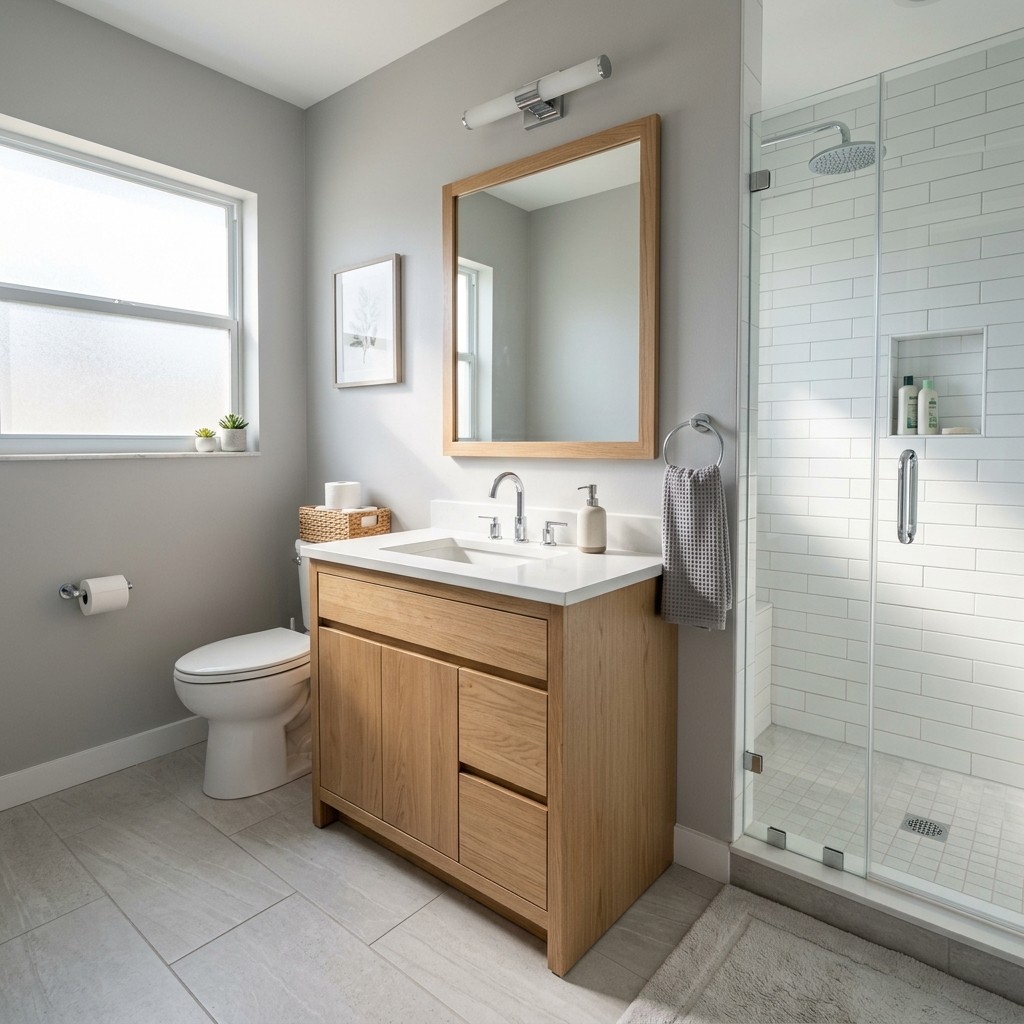
Example 1: Guest Bathroom Refresh in Kendall
Scope: new vanity in the same spot, new tile on the shower walls with no plumbing moved, fresh paint, new mirror and hardware. Materials and labor land around $5,800.
- Before July 1: Permit fee around $300, plus a 2 to 3 week wait for issuance and inspection scheduling. Total time to done, roughly 4 to 5 weeks.
- After July 1: No permit, no fee, start the same week. Total time to done, about 1 week of work.
The homeowner in Kendall saves the $300 and three weeks. Same bathroom, same crew, same quality. For real pricing on jobs like this, see our bathroom remodeling cost guide.
Example 2: Kitchen Cosmetic Update in The Hammocks
Scope: paint the existing cabinets, new hardware, a new countertop set on the existing cabinet boxes, a tile backsplash, and a new sink dropped into the existing rough-in with no plumbing relocated. Materials and labor come to about $7,200, just under the cap.
- Before July 1: Permit fee around $500, plus a 3 to 4 week wait in summer. Total time to done, roughly 5 to 6 weeks.
- After July 1: No permit, no fee, start the same week. Total time to done, about 2 weeks of work.
The homeowner in The Hammocks keeps $500 and a month of calendar. Because this job sits right at $7,200, it is also a good reminder of the cap. Add one more $600 item and you cross $7,500, and the whole job needs a permit again. We help you scope honestly so you know where you stand. See the kitchen remodeling cost guide for how these numbers come together.
Example 3: Interior Repaint Plus New Floors
Scope: repaint a 3-bedroom single-family home top to bottom, walls, ceilings, and trim, and lay new vinyl plank over the existing slab in the main living areas. No building system touched. Materials and labor around $6,900.
- Before July 1: Paint alone was already permit-free in most municipalities, but the flooring scope could trigger a permit question depending on the city, so figure a $200 to $400 fee and a 1 to 2 week wait if the building department wanted paperwork.
- After July 1: HB 803 settles it. Cosmetic, single-family, under $7,500, no permit, start the same week.
This is the quiet benefit of the law. It removes the gray area. Before July 1 you sometimes did not know if a finish job needed a permit until you asked. After July 1, a qualifying cosmetic job is clearly exempt, so there is nothing to guess.
The Demand Surge Nobody Is Pricing In
Here is the part that does not show up in any fee chart. Once homeowners across Miami-Dade realize they can skip the permit on small jobs, the phones start ringing. A lot of work that was sitting on the shelf because of permit cost and delay is going to come off the shelf all at once, starting July 1.
July and August are already the tightest months of our year, every year. People want projects done over the summer. Now add a wave of homeowners who were waiting for HB 803. The qualifying jobs are exactly the fast, small ones, the bathroom refresh, the cabinet repaint, the floor swap, the kind of work a good crew can knock out in a week. Those slots fill first.
So the savings the law gives you on paper can get eaten by the wait to get on a calendar. Skipping a four-week permit does you no good if the next open start date is six weeks out because every crew in town is booked. The way you keep the speed advantage is simple. Get your estimate and lock your start date before the rush.
How to Use the Timeline to Your Advantage
A few honest moves to make the date work for you instead of against you.
If your job clearly qualifies and you can wait a few weeks anyway, starting on or after July 1 saves you the fee and the permit wait. There is little reason to file paperwork in late June for a cosmetic job that could start a week into July without it.
If your job is borderline on price, scope it carefully against the $7,500 cap before you commit. Crossing the line by a few hundred dollars pulls the whole job back under the permit rule. Sometimes trimming one item, or sequencing a genuinely separate project for later, keeps you clean. Note that you cannot split one project into fake invoices to dodge the cap. The law bans that, and it is the wrong way to play it.
If your job needs a permit no matter what, because it touches plumbing, electrical, structure, or sits in a flood zone, the July 1 date does not change your path. Your remodeling team should coordinate the permitted portions either way. The fee savings on plan review can still matter, and a private provider can speed the review. We cover that in our private-provider guide.
Either way, the calendar is the real constraint this summer. Book the estimate now so your start date is yours.
FAQ: HB 803 Timeline and Costs
Does the start date or the contract date decide which rules apply?
The date the work begins is what matters for the permit question, not when you signed an estimate. If a qualifying cosmetic job starts on or after July 1, 2026, it follows the new exemption. If it starts before July 1, the old rules can still apply and a permit may be required. If your job is on the line, talk to your building department, since they administer the rule locally. For a job we are scheduling around the cutoff, we will line up the start date so you land on the side that saves you the fee and the wait.
How much does a permit actually cost in Miami-Dade right now?
For a small cosmetic project, permit fees in Miami-Dade typically run between $200 and $800. The exact number depends on the municipality and the declared value of the work, so treat that as a range, not a quote. On a job under $7,500, that fee can be five to ten percent of the total budget, which is real money on a small refresh. Your building department can give you the precise fee for your address. After July 1, a qualifying cosmetic job carries no permit fee at all.
How long does the permit wait add to my project?
Plan review and inspector scheduling for a small cosmetic permit usually run 1 to 4 weeks in Miami-Dade. In summer it tends toward the high end, because the building department gets busy and inspectors are booked out. On a job that takes about a week of actual labor, the permit step can more than double your total calendar time. After July 1, a qualifying job skips that wait, so the timeline is just the work itself. Confirm current timelines with your local building department, since they change with workload.
Should I wait until July 1 to start my remodel?
If your job clearly qualifies as cosmetic, single-family, and under $7,500, and you can wait a few weeks, starting on or after July 1 saves you the permit fee and the wait. There is little reason to file paperwork in late June for a job that could start a week into July without it. But do not wait so long that you lose your slot. Once the rush hits, start dates push out. The smart move is to lock your estimate and your date now, scheduled for early July, before everyone else does the same.
Will the new law make my project cost less to build?
The labor and materials cost the same on either side of July 1. What changes is the fee you skip and the time you save. You keep the $200 to $800 you would have paid the building department, and you reclaim the 1 to 4 weeks of permit wait. On a small job, skipping a $500 fee and a month of waiting is a meaningful win, even though the actual build price does not move. Anyone telling you the construction itself gets cheaper because of HB 803 is selling something.
Why are July and August so hard to book in Miami?
Summer is when people want projects done, so July and August are the busiest months for remodeling in Miami-Dade every year. HB 803 adds fuel. A wave of homeowners who were holding off because of permit cost and delay will all want their small jobs done starting July 1. Those qualifying jobs are the fast ones, so the slots fill quickly. The permit time you save with the new law can get eaten by the wait to get on a calendar. Booking early is how you keep the speed.
Does HB 803 apply if my project is over $7,500?
No. The exemption only covers cosmetic work under $7,500 on a single-family home. If your total job crosses $7,500, it needs a permit even if every task is cosmetic. That is why scoping against the cap matters. Crossing the line by a few hundred dollars pulls the whole job back under the permit rule, with the fee and the wait that come with it. You also cannot split one project into separate sub-$7,500 invoices to stay under the cap. The law bans that bundling outright.
What if my cosmetic job is in a flood-hazard zone?
The timeline split does not help you. Any work on a property in a flood-hazard zone is excluded from the HB 803 exemption, so a permit is required before and after July 1, even for cosmetic work under $7,500. Flood-hazard zones are common near canals, the coast, and low-lying areas of Cutler Bay, Palmetto Bay, and parts of South Miami Heights. Check your flood zone before you assume the exemption covers you. Our flood-zone guide walks through how to find out and what it means for your project.
Sources
- Florida HB 803, Florida Senate
- Florida House Staff Analysis (PDF)
- Adams and Reese: HB 803 Beyond the $7,500 Exception
- Insurance Journal: DeSantis Signs $7,500 Permit Bill
- WFSU News: New Florida Law Drops Permits for Low-Cost Projects
Ready to Lock Your Summer Start Date?
Broke & Fixed Home Solutions has done 200+ remodels across Miami-Dade. Family owned. Fully insured. Bilingual EN/ES. We schedule jobs around the July 1 cutoff so you land on the side that saves you the fee and the wait. Free in-home estimates, response within 15 minutes.
Plan your project:
- HB 803 cornerstone guide
- HB 803 and flood zones in Miami
- Bathroom remodeling in Kendall
- Kitchen remodeling cost in Miami 2026
- Remodeling in The Hammocks
Or call us directly at (786) 363-7039.
Ready to start your Miami remodel?
Free in-home estimate. We will give you clear next steps.