Stucco Painting Guide: What Miami Homeowners Need to Know
Painting stucco in Miami is not the same as painting a wood-sided house in Georgia. The climate, the material, and the way homes are built down here all change the rules. If you skip the prep or use the wrong product, you are looking at peeling, bubbling, and mold growth within a year or two.
This guide covers what actually works for stucco painting in South Florida. Real prep steps, real product recommendations, and honest cost numbers from projects we handle across Miami-Dade County.
Why Stucco Is Different From Other Surfaces
Stucco is not siding. It is not drywall. It is a cement-based coating that behaves differently from almost every other surface you can paint.
It is porous. Stucco absorbs water like a sponge. That means moisture gets behind the paint film, which causes bubbling and peeling if the paint cannot breathe. Oil-based paints seal the surface too tightly, trapping moisture inside the wall. That is why you need breathable paint designed for masonry.
It is textured. The rough surface of stucco means more square footage of actual surface area per wall compared to a flat surface. You will use 25 to 40 percent more paint than you would on smooth siding. If someone quotes you based on smooth-wall coverage, the number is too low.
It cracks. Stucco moves with temperature changes. In Miami, where a wall can go from 75 degrees at 6 AM to 140 degrees in afternoon sun, thermal expansion creates hairline cracks constantly. Those cracks let water in, which leads to staining and paint failure.
It holds moisture. South Florida humidity means stucco rarely dries out completely. Add afternoon rain showers from May through October, and you have a surface that stays damp more often than not. Every decision about prep and paint needs to account for this.
Most Miami Homes Are CBS Construction
If your home was built in Miami-Dade County after 1960, there is a good chance it is CBS construction. CBS stands for Concrete Block and Stucco. The walls are made of concrete masonry units (cinder blocks) with a layer of stucco applied over the exterior.
This is different from frame construction with stucco over wire lath, which is more common in other parts of the country. CBS construction is stronger and more hurricane-resistant, which is why it became the standard in South Florida after Hurricane Andrew in 1992.
For painting purposes, CBS matters because:
- The stucco layer is applied directly to concrete block. There is no air gap or sheathing behind it.
- Moisture can wick through the block from inside the house (especially if you run your AC heavily and the interior is much cooler than the exterior).
- The wall is solid masonry, so it stores heat. A south-facing CBS wall in July can stay hot well into the evening.
- Cracks in CBS stucco often follow the mortar joints of the block pattern underneath.
Understanding your wall construction helps you make better decisions about paint, primer, and when to schedule the work.
When Your Stucco Needs Repainting
Not every faded wall needs a full repaint. But when you see these signs, it is time:
Chalking. Run your hand along the wall. If a white powder comes off on your palm, the paint has broken down from UV exposure. The pigment is literally turning to dust. Moderate chalking is normal after 5 or 6 years. Heavy chalking means the paint is no longer protecting the stucco.
Fading. Color loss is gradual, so you might not notice it until you look at a shaded area next to a sun-exposed area. Drastic fading means the paint film is degraded and no longer blocking UV from reaching the stucco.
Peeling or bubbling. This means moisture got behind the paint film. It could be from poor prep on the last paint job, from using the wrong paint, or from a crack that let water into the wall. Either way, the existing paint has to come off before you repaint.
Cracks. Hairline cracks under 1/8 inch are cosmetic and can be handled during prep. Cracks wider than 1/4 inch need stucco repair before any painting happens. If you see stair-step cracks following the block pattern, that could indicate settling and should be evaluated.
Mold and mildew staining. Dark streaks or patches, especially on north-facing walls or under eaves, mean mold is growing on or in the paint film. In Miami, mold is not a matter of if but when. A good mildew-resistant paint can slow it down significantly.
Water staining. Brown or rust-colored streaks running down from window sills, roof edges, or AC units mean water is sitting on the stucco and leeching minerals through the surface. These stains will bleed through new paint if not treated properly.
Prep Work: This Is Where the Job Is Won or Lost
Ask any experienced painting crew and they will tell you the same thing. Prep is 60 to 70 percent of the job. On stucco, that number might be higher. If the prep is bad, the best paint in the world will fail.
Pressure Washing
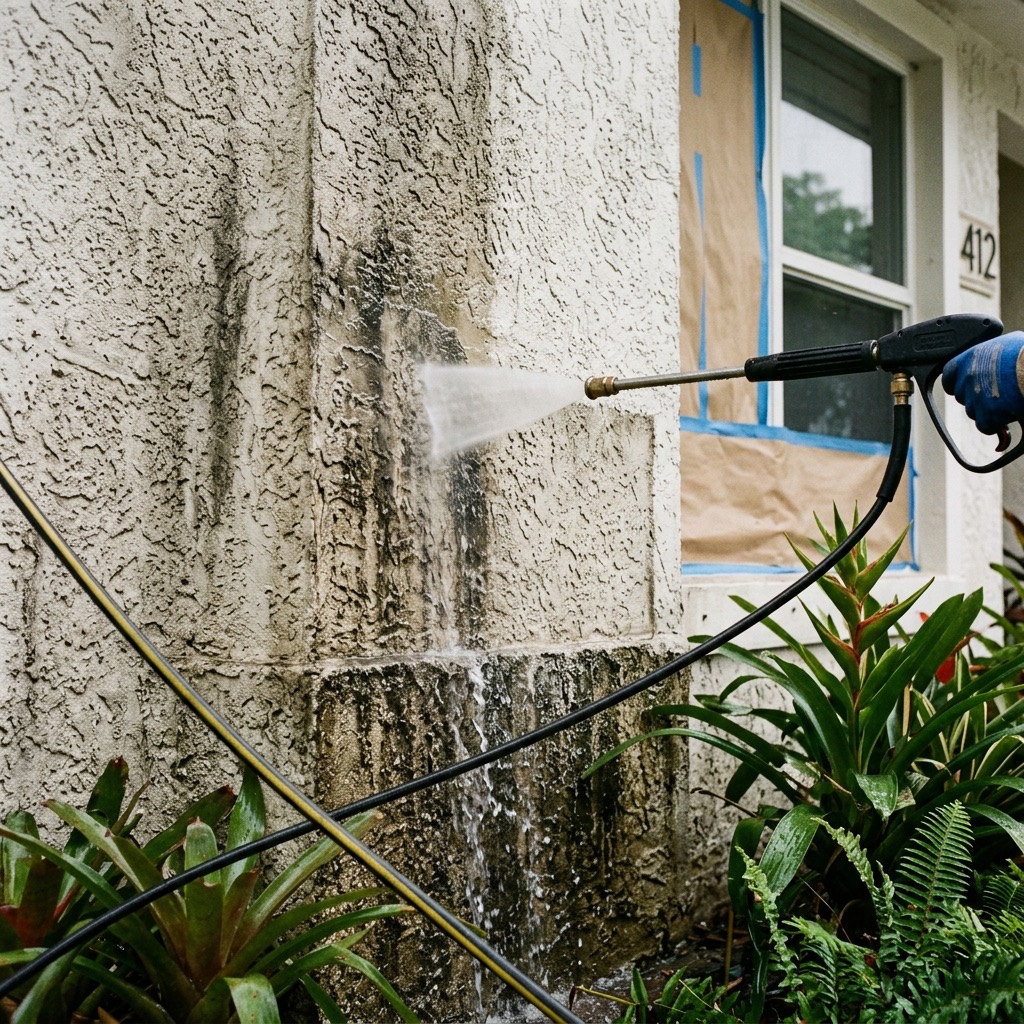
Every stucco paint job starts with pressure washing. You need to remove dirt, chalk, mold, loose paint, and anything else sitting on the surface.
Use 2,500 to 3,000 PSI with a 25-degree tip. Stay at least 12 inches from the wall. Too much pressure or too close a distance will gouge the stucco and create divots that show through the paint.
After washing, let the stucco dry for 24 to 48 hours minimum. In Miami's humidity, 48 hours is safer. If rain is in the forecast, wait. Painting over damp stucco is the number one cause of paint failure on exterior walls in South Florida.
Crack Repair
Go over every wall with your eyes and your hands.
Hairline cracks (under 1/8 inch): Fill with elastomeric caulk. This stays flexible and moves with the stucco as it expands and contracts. Rigid fillers will crack again within months.
Larger cracks (1/8 to 1/4 inch): Use a stucco patch compound. Apply it in thin layers and let each layer cure before adding the next. Feather the edges so the patch blends with the surrounding texture.
Cracks wider than 1/4 inch: These need proper stucco repair. Cut out the damaged area, fill with new stucco mix, and retexture to match. Do not just caulk over a large crack and paint it. That is a temporary fix that will fail.
Mold and Mildew Treatment
Pressure washing removes surface mold, but it does not kill the roots. Before priming, treat any areas that showed mold or mildew growth with a TSP (trisodium phosphate) solution or a diluted bleach solution (1 part bleach to 3 parts water).
Scrub it on, let it sit for 10 to 15 minutes, then rinse thoroughly. Let the wall dry again before moving to primer.
In Miami, we treat the entire house, not just the spots with visible mold. Spores are everywhere. If you only treat visible patches, the untreated areas will show mold within a year.
Primer
Primer is not optional on stucco. It serves three purposes: it seals the porous surface so your topcoat does not soak in unevenly, it provides a bonding layer so the paint sticks properly, and it blocks stains from bleeding through.
Bare or patched stucco: Use a masonry bonding primer. This penetrates the pores and creates a solid foundation for the topcoat.
Previously painted stucco in good condition: A standard exterior primer works, but make sure it is rated for masonry.
Stucco with staining or heavy chalking: Use a stain-blocking primer. This prevents old stains, rust marks, and tannin bleed from showing through your fresh paint.
Best Paint for Stucco in Miami
This is where a lot of homeowners go wrong. Not all exterior paints are created equal, and what works on wood siding in North Carolina will fail on stucco in Miami.
100% Acrylic Latex
This is the standard for stucco painting in South Florida. Acrylic latex breathes, which lets moisture vapor escape from the wall without bubbling the paint. It also stays flexible, which matters on a surface that expands and contracts with heat.
Never use oil-based paint on stucco in Miami. It will trap moisture and peel within 2 to 3 years.
Elastomeric Paint
For older stucco with lots of hairline cracks, elastomeric paint is the best option. It applies thicker than standard paint and stretches up to 300 percent, bridging small cracks and preventing new ones from showing through. The downside is cost. Elastomeric paint runs about 2 to 3 times more per gallon than standard acrylic latex. But on older CBS homes with chronic cracking, it is worth every dollar.
Mildew-Resistant Formula
In South Florida, this is not optional. Every exterior paint you use should have a mildew-resistant additive. Without it, you will see mold growth within 6 to 12 months, especially on shaded walls and under overhangs.
Brand Recommendations
These are brands we use and trust on Miami stucco projects:
Sherwin-Williams Duration Exterior: Excellent adhesion, self-priming on previously painted surfaces, strong mildew resistance. Our go-to for most stucco jobs.
Benjamin Moore Aura Exterior: Premium product with outstanding fade resistance. Good choice for dark or saturated colors that need to hold up to Miami sun.
Behr Marquee Exterior: Solid performer at a lower price point. Good for budget-conscious projects where you still want quality.
All three come in flat, satin, and semi-gloss finishes. For stucco, flat or satin is standard. Semi-gloss on stucco shows every imperfection and is rarely a good choice for walls.
Light Colors vs. Dark Colors
Dark colors on stucco in Miami cause problems. Here is why:
Dark paint absorbs significantly more heat than light paint. A dark south-facing wall can reach surface temperatures above 160 degrees on a summer afternoon. That kind of heat causes the stucco to expand more aggressively, which opens cracks and stresses the paint film.
Dark colors also fade faster in UV-intense climates. A deep navy that looks sharp in year one will look washed out by year three.
If you want a darker accent, use it on trim or a feature wall that gets some shade. Keep the main body of the house in light to medium tones. Whites, creams, light grays, and soft beiges perform best and hold their color longest in Miami.
Application Methods
How paint goes on stucco matters almost as much as what paint you use.
Roller: Use a thick-nap roller, 3/4 inch to 1 inch. The deep texture of stucco needs a thick nap to push paint into every crevice. A standard 3/8-inch nap will leave bare spots in the texture valleys.
Spray and back-roll: This is the professional method for large stucco surfaces. Spray the paint on for fast, even coverage, then immediately roll over it with a thick-nap roller to work the paint into the texture. This gives the best coverage and adhesion.
Brush: Reserved for cutting in around windows, doors, trim, and tight spots. Not practical for large wall areas on stucco.
Two coats is the minimum. On bare or patched stucco, plan on primer plus two topcoats. Trying to get away with one coat on stucco always shows.
Common Mistakes That Ruin Stucco Paint Jobs
Painting wet stucco. If the stucco is still damp from pressure washing or rain, the paint will not bond properly. Moisture trapped under the paint film will push it off the wall as it tries to escape. Always test with a moisture meter before painting.
Skipping primer. Stucco is porous. Without primer, the first coat of paint soaks into the surface unevenly, leaving blotchy color and weak adhesion. You end up needing three or four coats of paint to look right, which costs more than just priming properly in the first place.
Using the wrong paint type. Oil-based paint, interior paint, and cheap exterior paint all fail on stucco in Miami. Spend the money on 100% acrylic latex rated for masonry.
Painting in direct sun. When the stucco surface is too hot, paint dries before it can properly bond. This causes poor adhesion and uneven color. Paint early morning or late afternoon, or work on the shaded side of the house. In Miami summers, the window for good painting conditions is narrow.
Not fixing cracks first. Paint does not fix cracks. It hides them temporarily, then the crack opens again and takes the paint with it. Fix every crack before you prime.
Cutting corners on coats. One coat of premium paint is still one coat. It will not last. Two coats minimum, applied at proper coverage rates.
How Long Does Paint Last on Miami Stucco?
With proper prep, quality paint, and two coats over primer, expect 5 to 8 years before a repaint is needed.
Factors that push toward 8 years: Light colors, quality paint (Duration or Aura), thorough prep, minimal sun exposure (north-facing walls, shaded areas), and good drainage away from the walls.
Factors that push toward 5 years: Dark colors, budget paint, south or west-facing walls with full sun, areas near sprinkler systems, and coastal locations where salt air accelerates paint breakdown.
Houses within a few miles of the ocean may need repainting every 4 to 5 years regardless of paint quality. Salt air is rough on everything.
What Does Stucco Painting Cost in Miami?
For a typical Miami-Dade home (1,500 to 2,500 square feet, single story, CBS construction), expect to pay between $3,000 and $8,000 for a full exterior stucco paint job.
Here is what drives the range:
- Size: A 1,500 square foot home has roughly 2,500 to 3,000 square feet of exterior wall area. A 2,500 square foot home has 4,000 to 5,000 square feet. More wall area means more paint, more labor, and more time.
- Condition: Stucco in good condition with minimal cracks needs less prep. Stucco with heavy cracking, mold issues, or failing old paint needs extensive prep work that adds labor hours.
- Paint quality: Premium paint costs $50 to $80 per gallon. Budget paint costs $25 to $35. On a house that needs 15 to 25 gallons, that difference adds up. Elastomeric paint pushes costs higher.
- Stories: Two-story homes require scaffolding or lifts, which adds equipment costs and slows down the crew.
- Detail work: Lots of windows, trim, fascia, and soffits increase the time spent cutting in and masking.
At Broke & Fixed Home Solutions, we provide detailed estimates broken out by prep, materials, and labor so you know exactly where your money goes. No surprises.
Frequently Asked Questions
Can I paint stucco myself?
You can, but results are rarely the same as professional work. The prep is the hard part. Pressure washing, crack repair, mold treatment, and priming all require equipment and experience. If you skip any of those steps, the paint will fail early. For a small accent wall, DIY is reasonable. For a full house exterior, the cost of renting equipment and buying materials often approaches what a crew charges, and you will spend several weekends doing it.
How soon can I paint new stucco?
New stucco needs to cure for at least 28 days before painting. Some mixes need longer. If you paint too early, moisture trapped in the curing stucco will push the paint off. You will also see efflorescence, a white crystalline deposit that forms as moisture carries salts to the surface. Let it cure fully, wash off any efflorescence, and then prime and paint.
Is elastomeric paint worth the extra cost?
For older CBS homes with chronic hairline cracking, yes. Elastomeric paint bridges cracks up to 1/16 inch and flexes with the wall as it expands and contracts. On newer homes with minimal cracking, standard 100% acrylic latex works fine and costs less. Your wall condition should drive this decision, not a sales pitch.
What time of year is best for exterior painting in Miami?
November through April is ideal. Lower humidity, less rain, and cooler temperatures mean the stucco stays drier and the paint has better curing conditions. Summer painting is possible, but you have to work around afternoon storms and time your application to avoid direct sun on the surface. Early morning starts are a must from June through September.
Will painting stucco fix water intrusion problems?
No. Paint is a protective coating, not a waterproofing system. If water is getting inside your walls through cracks, failed window seals, or roof flashing issues, those problems need to be fixed before painting. Paint applied over an active leak will just peel off. Fix the source of the water first, then paint.
How do I maintain my stucco paint between repaints?
Wash the exterior once a year with a garden hose or low-pressure washer (1,200 to 1,500 PSI). Pay attention to areas under eaves and on north-facing walls where mold grows first. Spot-treat any mold with a diluted bleach solution before it spreads. Touch up any chips or cracks as soon as you notice them. Small maintenance prevents big failures.
Ready to Get Your Stucco Painted Right?
If your Miami home is showing signs of fading, cracking, or mold staining, it is time to talk about a repaint. At Broke & Fixed Home Solutions, we handle the full process: pressure washing, crack repair, mold treatment, priming, and two coats of quality paint. Every job starts with a detailed walkthrough and honest estimate.
Call us at (786) 363-7039 or request a free estimate online.
Related Reading
Ready to start your Miami remodel?
Free in-home estimate. We will give you clear next steps.