Acrylic Shower Panels vs a Tiled Conversion: What You Are Actually Buying
Two Different Products, One Search Result
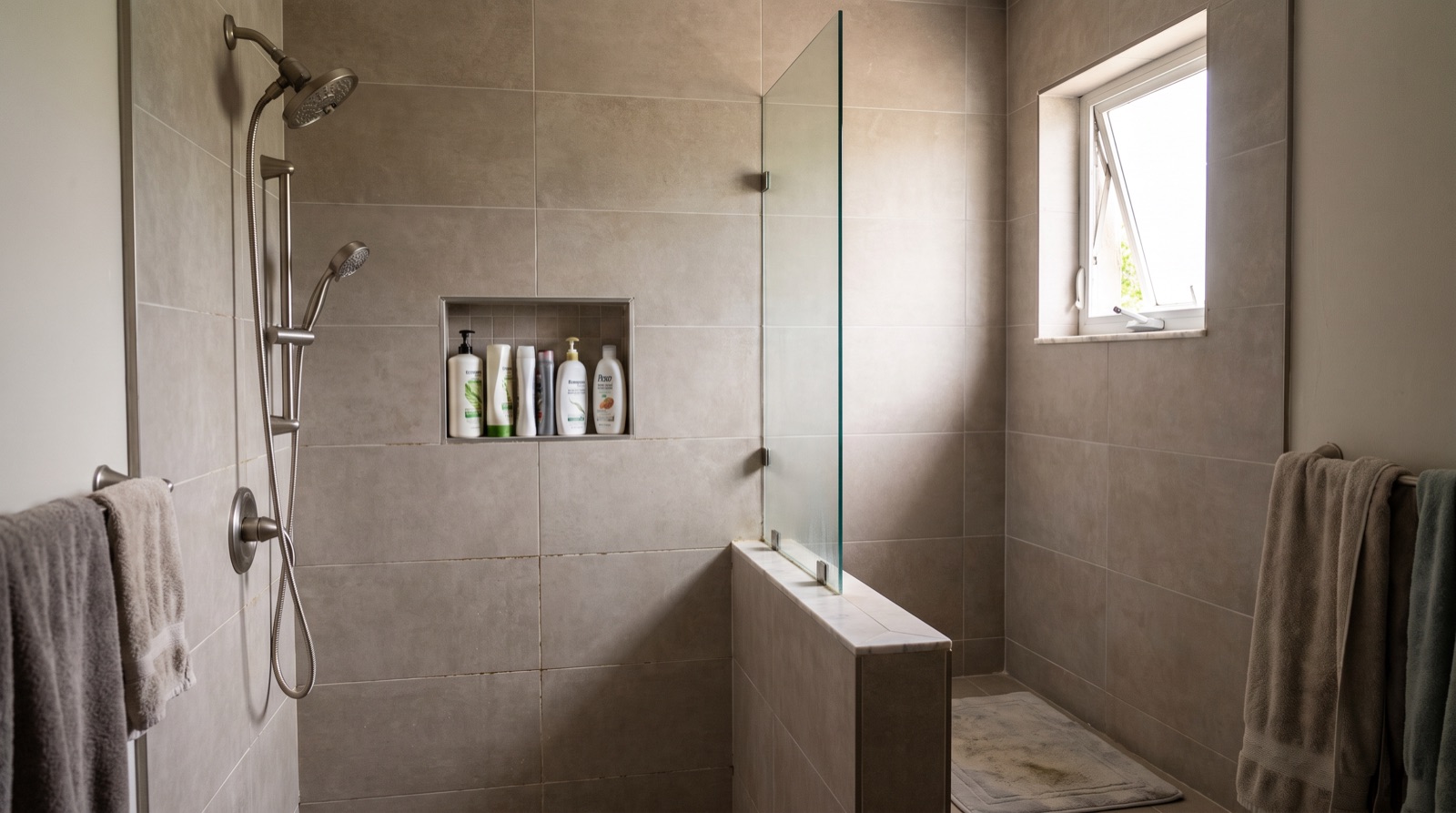
Search "tub to shower conversion Miami" and you get two kinds of companies on the same page. One installs an acrylic panel system, usually in a day. The other builds a tiled shower over five to eight working days. Both ads say "tub to shower conversion." Both show a clean walk-in shower in the photo.
They are not the same product. They are built differently, they fail differently, and they cost differently. Neither one is a scam. But a homeowner comparing a one day price against a tiled price is comparing a jacket to a coat and wondering why the numbers do not line up.
This guide explains what each one actually is, so you can decide which one belongs in your bathroom before anyone quotes you.
What an Acrylic Panel System Actually Is
An acrylic system uses molded panels for the walls and a molded pan for the floor. The panels are cut to fit your alcove and sealed at the seams. Most of these systems are sold by national companies with a fixed product line, a set of color options, and a trained install crew.
The appeal is real. The install is fast, often one or two days. The surface is non-porous, so there is no grout to scrub and no grout to reseal. The finish is consistent because it comes out of a mold, not off a trowel.
Here is the part that matters most, and the part the ads skip. Many of these systems are designed to install over the existing wall surface. The old tile stays. The panels go over it. That is where the speed comes from.
What a Tiled Conversion Actually Is
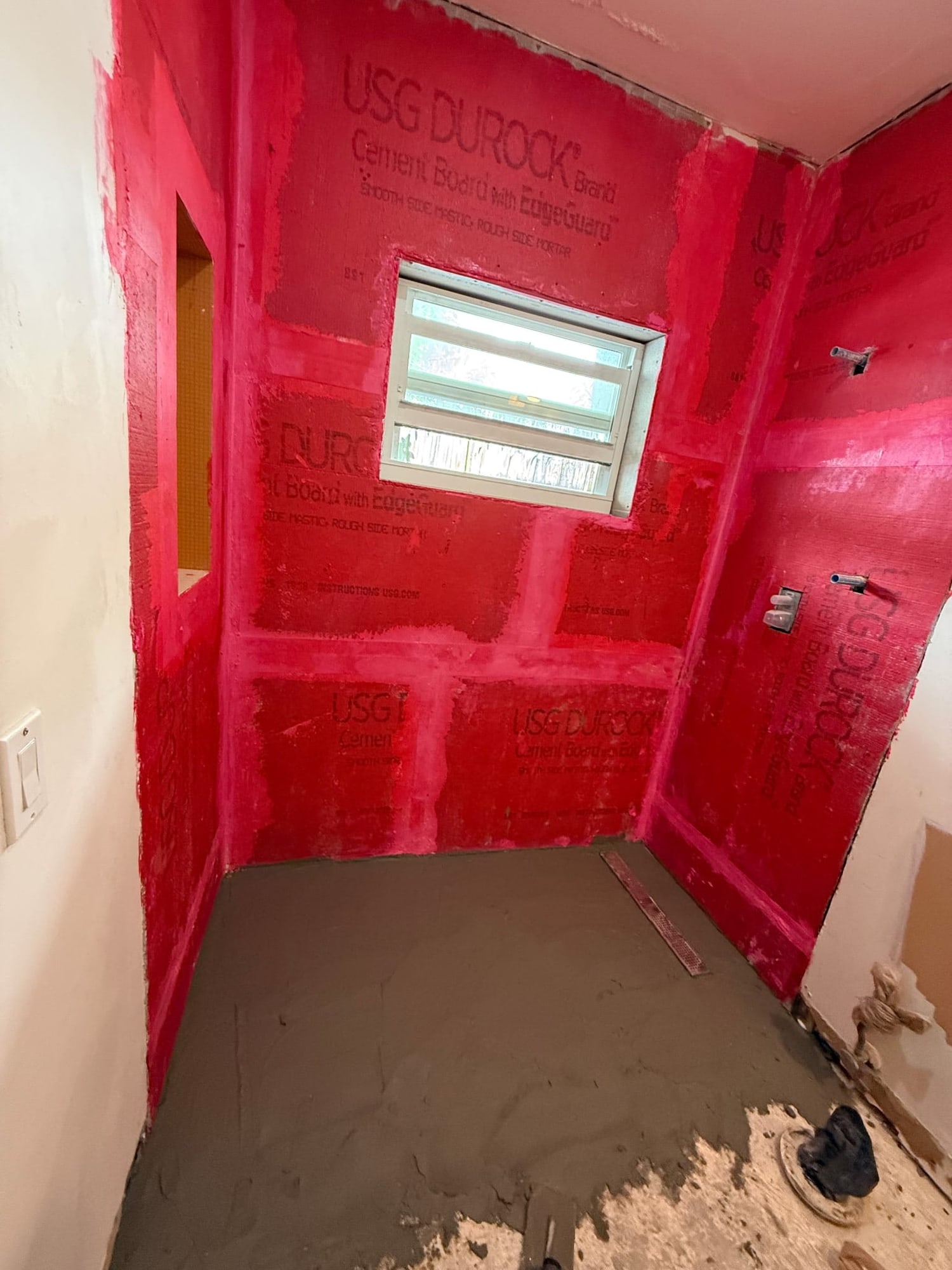
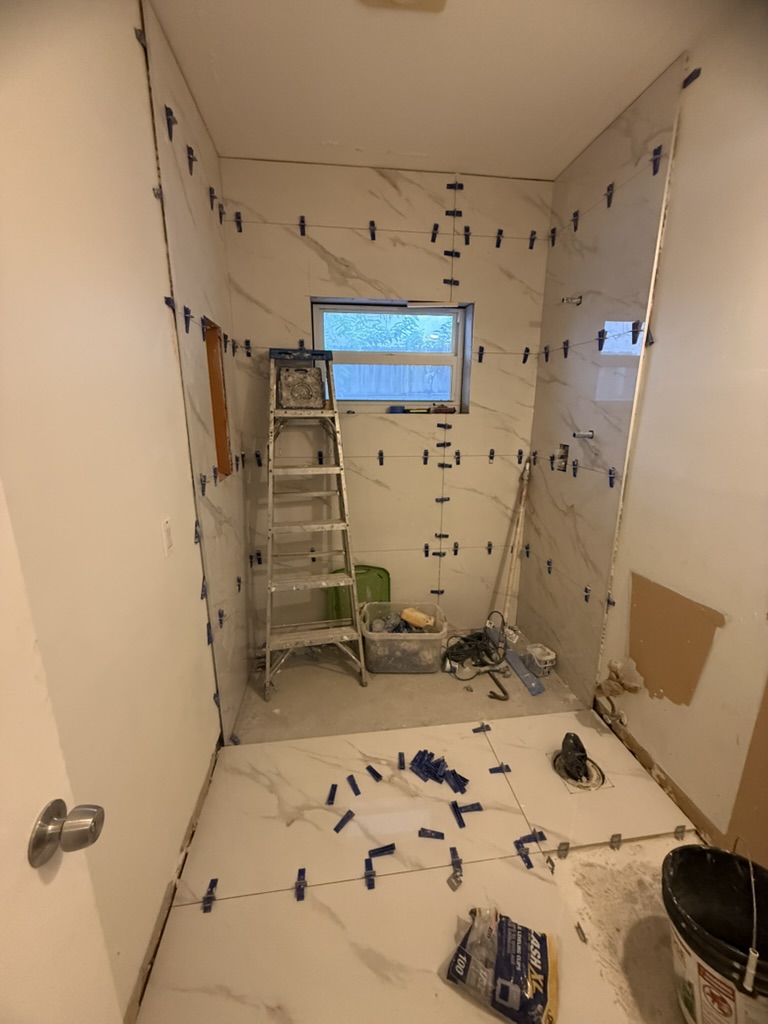
A tiled conversion removes the tub and the surround down to the framing. The wall gets inspected. Damaged material comes out. New cement backer board goes up. A waterproofing membrane goes over the board and gets rolled or troweled into every corner and seam. The shower pan is built and sloped to the drain. Then tile, then grout, then fixtures, then glass.
The membrane is the whole point. It is the layer that keeps water inside the shower instead of inside the wall. You will never see it again once the tile is on, which is exactly why it is the easiest thing for a cheap quote to skip.
The Part Nobody Shows You: What Is Behind the Old Wall
When we pull a tub out of a Miami home built in the 1970s or 1980s, we frequently find water has already been getting past the old surround. Stained substrate. A dark line running down a stud. Swollen particle board at the floor line. Sometimes it is minor. Sometimes the bottom plate is soft.
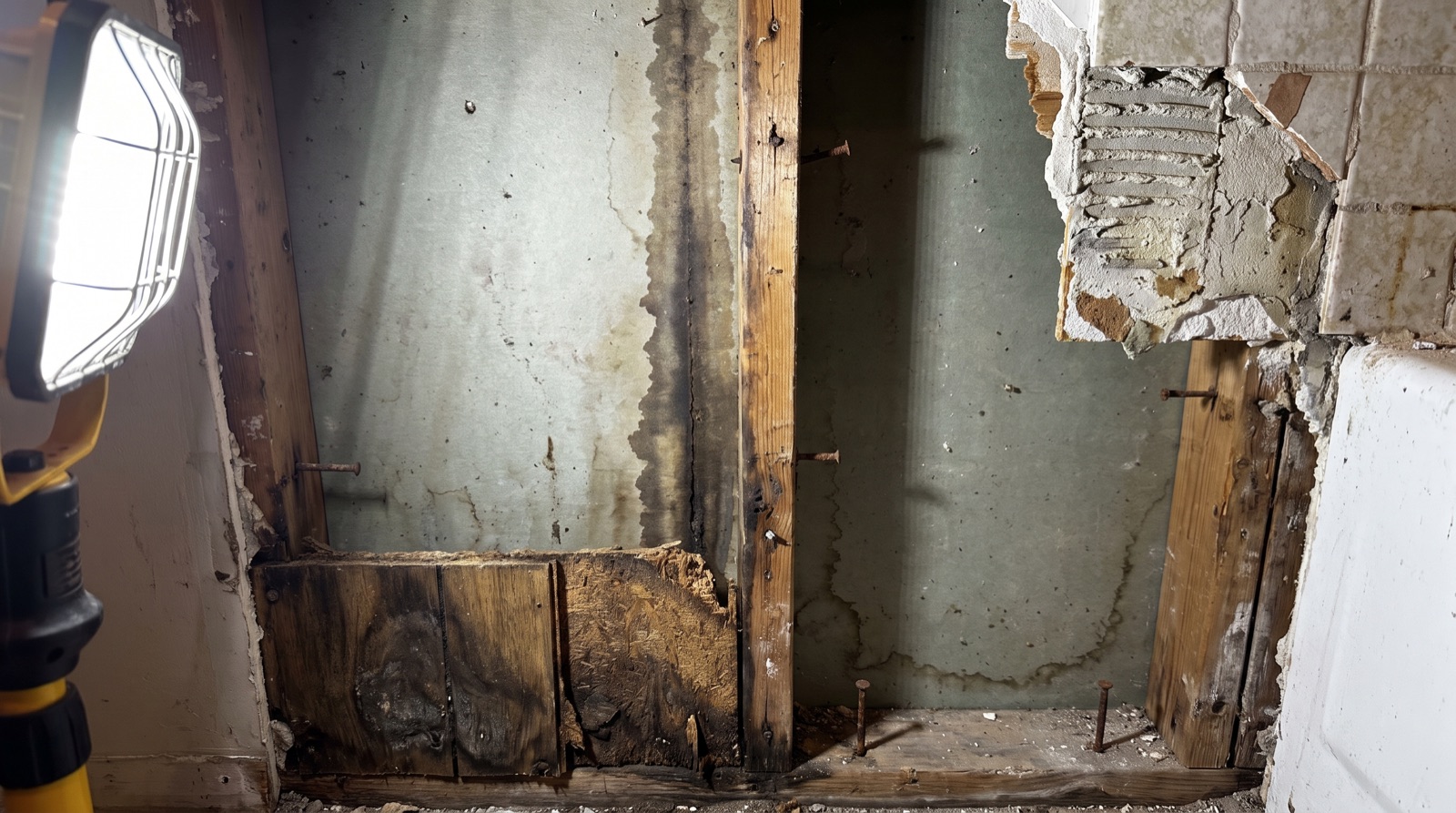
That photo is the honest argument for opening the wall. From inside the bathroom, that wall looked fine. Tile was intact. No visible mold. Nothing a homeowner would have flagged.
If a panel system goes over a wall in that condition, the moisture does not leave. It gets sealed in behind a non-porous surface with nowhere to dry. Installers who do this work well know it, which is why a good acrylic installer will still open the wall when they suspect a problem. The risk is not the acrylic. The risk is covering without looking.
Ask any company, acrylic or tile, one question: what happens if you find water damage behind the old surround? A real answer describes an inspection and a change order. A vague answer is the warning.
When Acrylic Is the Right Call
Acrylic genuinely wins in some situations, and we will tell you when you are in one:
- You are on a firm budget and the walls behind the surround are known to be sound
- The bathroom is a rental or a flip where low maintenance beats longevity
- You cannot lose the bathroom for a week, and one or two days is the hard limit
- Somebody in the house cannot tolerate a multi-day dust and noise situation
- You hate cleaning grout more than you like the look of tile
If that is your list, an acrylic system is a reasonable purchase. Get the wall inspected first anyway.
When Tile Is the Right Call
- The house was built before 1990 and the surround has never been opened
- You have seen any sign of a leak: a soft floor, a stain on the ceiling below, a musty smell
- You want a specific look, a specific size, a bench, a niche, or a low curb
- You are planning to stay in the home, or you want the bathroom to help at resale
- You want the shower to be repairable in place instead of replaceable as a unit
Cost, Honestly
A tiled tub-to-shower conversion in Miami-Dade commonly runs $4,500 to $12,000. The low end is a same-footprint shower with standard porcelain, the drain staying put, sound walls, and a fixed glass panel. The high end is a larger custom shower with a bench, niches, upgraded fixtures, a linear drain, and frameless glass.
Acrylic systems from national companies usually land under that range on the simple end, and they can climb into it once you add a door upgrade, a bench, or a premium panel finish. The gap is smaller than the ads suggest, especially after the first negotiation.
You will also see numbers online that describe neither product. Some cost aggregators publish a Miami average near $1,500 to $2,300 and a low end around $311. Those figures do not include tub removal, a shower pan, waterproofing, tile, glass, and disposal. They describe a partial labor task, not a finished shower. Our full breakdown is in the tub-to-shower conversion cost guide.
How to Tell Which One a Quote Is Describing
You do not need to ask a company which category they are in. Read the scope. These five lines tell you everything:
If the quote does not answer these, ask. A company that does good work in either category will answer them without hesitating.
The Honest Summary
Acrylic buys you speed and low maintenance. Tile buys you a wall you have actually seen, a waterproofing layer built for your bathroom, and a shower that can be repaired instead of replaced.
We build tiled conversions, so we have an obvious preference. But the reason we wrote this is simpler than a sales pitch: most of the frustration in this market comes from people who thought they were buying one thing and got the other. Know which one you are buying.
If you want a real number for a tiled conversion in your bathroom, use the tub-to-shower conversion estimate form. It asks about your drain, your tub size, and your ZIP code, and it returns a starting range before anyone comes to measure. If you want the schedule first, the conversion timeline guide walks through what happens each day.
Frequently Asked Questions
Can acrylic shower panels be installed over existing tile?
Yes, and that is how most one day systems achieve their speed. The panels are designed to bond to a sound, flat existing surface. The question is not whether it can be done, it is whether it should be done on your specific wall. If the surround has been leaking, if grout has been failing for years, or if there is any soft spot in the floor near the tub, covering that wall traps the moisture behind a non-porous surface where it cannot dry. That is how a cover-up job turns into a full tear-out two or three years later. A responsible installer will inspect the wall and tell you when covering is not appropriate. Ask directly what their process is when they find damage, and ask for the answer in the written scope rather than as a verbal reassurance at the kitchen table.
Does a tiled shower leak more than acrylic because of the grout?
Grout is not the waterproofing layer, and this is the most common misunderstanding in bathroom remodeling. Grout is a filler between tiles. Water passes through grout by design. The layer that stops water is the membrane underneath the tile, applied over cement backer board and worked into every corner, seam, and change of plane. A properly built tiled shower with a correct membrane does not leak. A tiled shower built without one will leak no matter how perfect the grout looks. When people say tile showers leak, they are almost always describing a shower where the waterproofing was skipped or done badly. That is a workmanship problem, not a material problem, and it is why the membrane deserves its own line on your estimate.
Which one holds up better in Miami humidity?
Both hold up fine when installed correctly, and both fail when installed badly. Humidity is not really the deciding variable here. What matters more in South Florida is what happens under the surface. Most of our homes sit on concrete slabs, and a slab does not let a wet subfloor dry downward the way a raised wood floor can. That makes the waterproofing layer and the drain connection more important than the surface material. Acrylic gives you a seamless non-porous surface with fewer places for soap film and hard water spotting to collect. Tile gives you a shower that can be opened and repaired in one spot instead of replaced as a unit. Choose based on how long you plan to keep the bathroom and what condition the wall is in today.
Will an acrylic conversion hurt my home value compared to tile?
For most Miami homes in the mid market, an acrylic conversion in good condition reads as a clean, updated bathroom and does not hurt you. Buyers respond to whether the bathroom looks cared for. Where the gap shows up is at the higher end, in Pinecrest, Coral Gables, and Palmetto Bay, where buyers and their agents expect tile in a primary bathroom and will read a molded panel surround as a builder-grade choice. It also shows up on inspection. A tiled shower with documented waterproofing survives scrutiny better than a panel system installed over an unknown wall, because an inspector can see the build quality in one and not the other. If resale in the next few years is a real factor, that is worth weighing.
Ready to start your Miami remodel?
Free in-home estimate. We will give you clear next steps.