The Complete Guide to Kitchen Remodeling in Miami-Dade
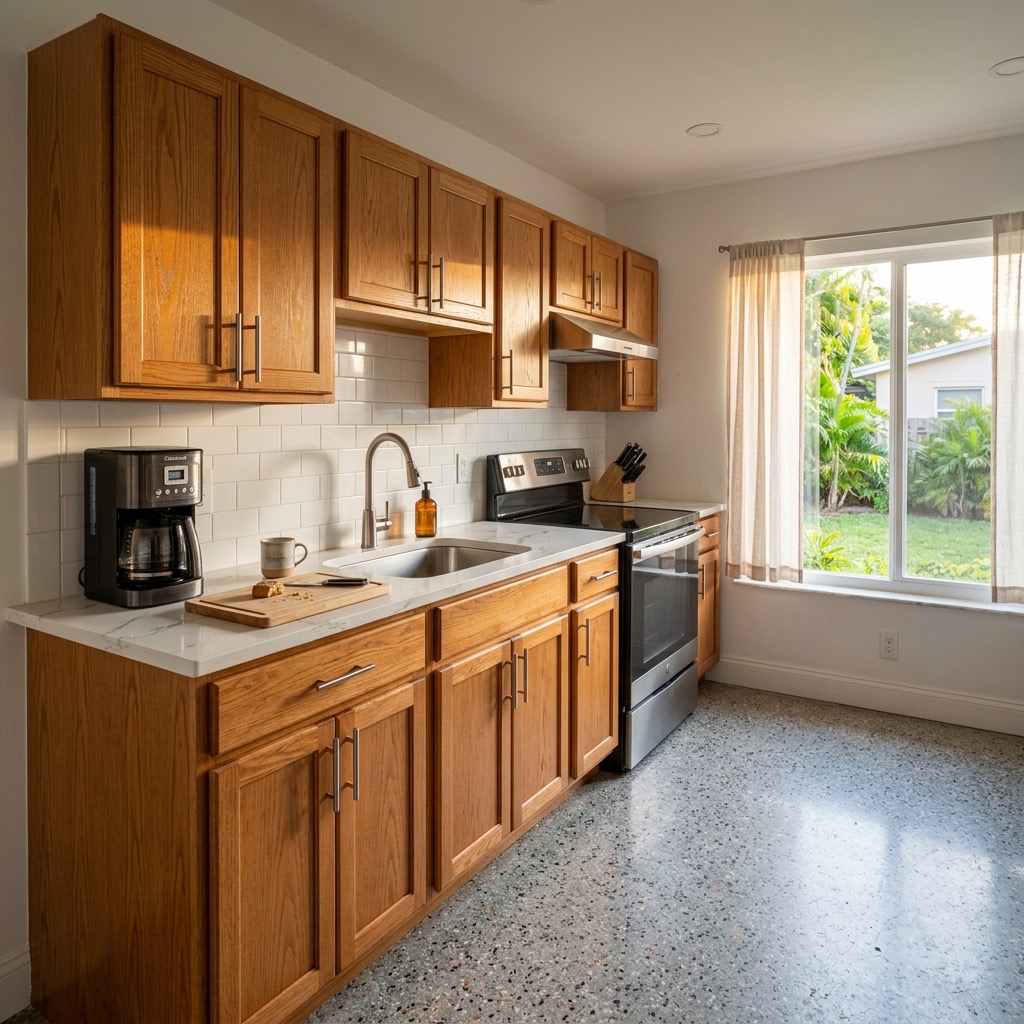
# The Complete Guide to Kitchen Remodeling in Miami-Dade
Your kitchen does more work than any other room in the house. It handles meals, homework, morning coffee, holiday gatherings, and everything in between. But if you live in Miami-Dade County, your kitchen also deals with something most homeowners don't think about until it's too late: South Florida's heat and humidity.
We remodel kitchens across Miami-Dade every week. From Kendall ranch homes built in the 80s to newer Doral townhouses. Every project is different, but the questions homeowners ask are almost always the same. How much will this cost? What should I upgrade first? Can I keep my layout or do I need to start fresh?
This guide answers all of it. Real numbers, real materials, and real advice from a team that's in these kitchens daily.
Why Miami Kitchens Need Special Attention
Most kitchen remodeling guides are written for homes in places like Ohio or North Carolina. Miami is a different animal. The climate here punishes cheap materials and shortcuts.
Humidity warps cheap cabinets. Builder-grade particleboard cabinets from the 90s absorb moisture over time. You'll see swelling at the bottom of base cabinets, peeling laminate, and doors that won't close right. This is extremely common in homes across Kendall, The Hammocks, and South Miami Heights. If your cabinets feel soft at the corners or the laminate is bubbling, moisture has already done its damage.
Tile over linoleum over tile. We pull up kitchen floors in older Miami-Dade homes and find three layers. The original tile from the 80s, a sheet of linoleum glued on top, and then another layer of tile stuck over that. Each layer traps moisture. The subfloor underneath is often in rough shape. A proper remodel strips everything back to the slab.
Mold loves dark, warm spaces. Behind kitchen sinks, under dishwashers, inside cabinet bases. Slow leaks in Miami kitchens create mold problems fast. When we demo a kitchen, we check every wall and base for moisture damage before new materials go in.
Outdated layouts waste space. Many Miami-Dade homes were built with closed-off kitchens separated from living areas by a wall or a pass-through window. That made sense in 1985. It doesn't work for how families use kitchens today.
If your kitchen was built more than 20 years ago and hasn't been touched since, it's probably fighting you in ways you've gotten used to. A remodel fixes the stuff you see and the stuff hiding behind the walls.
What a Kitchen Remodel Actually Includes
A kitchen remodel isn't one project. It's six or seven projects happening in sequence. Here's what's involved:
Demo. Removing old cabinets, countertops, backsplash, flooring, and sometimes walls. Demo reveals what's underneath, including plumbing condition, electrical wiring, and any water damage.
Cabinets. New cabinets, refaced cabinets, or painted cabinets. This is the biggest visual change and usually the biggest cost. More on this below.
Countertops. Measured and templated after cabinets are installed. Quartz, granite, marble, or butcher block. Fabrication and install typically take 1 to 2 weeks after templating.
Backsplash. Tile work behind the countertop and stove area. Subway tile, mosaic, large format, or natural stone. Installed after countertops are set.
Plumbing. Moving or replacing supply lines and drain lines for the sink, dishwasher, and sometimes a pot filler or island sink. If you're changing your layout, plumbing is a major cost factor.
Electrical and lighting. Updating outlets to code, adding under-cabinet lighting, pendant lights over an island, or recessed ceiling lights. Older Miami homes often have a single overhead fluorescent fixture. That's usually the first thing to go.
Appliance fitting. New appliances need to fit the new layout. Refrigerator cutouts, range hood venting, dishwasher connections, and microwave placement all need to be planned before cabinets are ordered.
Flooring. Tile, luxury vinyl plank, or polished concrete. Installed either before or after cabinets depending on the material and plan.
Paint and trim. Walls, ceiling, crown molding, and baseboards. The finishing touches that tie everything together.
Each step depends on the one before it. That's why kitchen remodels take longer than most homeowners expect, and why the order of operations matters.
How Much Does a Kitchen Remodel Cost in Miami?
Here's what homeowners across Miami-Dade are paying in 2026. These are real ranges based on projects we've completed, not national averages pulled from a website.
Budget Refresh: $12,000 to $20,000
This is the sweet spot for homeowners who want a real transformation without gutting everything. You'd be surprised what this budget can do.
- Cabinet painting or refinishing (keeping existing boxes)
- New countertops (quartz or granite, mid-range)
- New backsplash (subway tile or similar)
- Updated lighting (recessed lights, under-cabinet LEDs)
- New faucet and sink
- Fresh wall paint
- Keeping existing layout and flooring
A $15,000 budget refresh can make a kitchen look like a completely different room. This is where most homeowners should start. If your cabinet boxes are solid and the layout works, there's no reason to tear everything out.
Standard Remodel: $20,000 to $35,000
This covers more significant changes and higher-end materials.
- New cabinets (semi-custom) or full refacing
- Quartz or granite countertops (premium slabs)
- Tile backsplash with design details
- New flooring
- Updated plumbing fixtures
- Full lighting upgrade
- New appliances (mid-range)
- Minor layout adjustments
Most of our full kitchen remodels in Kendall, Doral, and Palmetto Bay land in this range.
Full Overhaul: $35,000 to $50,000+
This is a gut-and-rebuild. Everything comes out and the kitchen is redesigned from scratch.
- Custom or high-end semi-custom cabinets
- Premium countertops (thick quartz, natural stone)
- Layout changes including wall removal
- Plumbing relocation
- Electrical panel upgrades
- Island addition
- High-end appliances
- Custom lighting plan
- New flooring throughout
Full overhauls are common in Coral Gables and Pinecrest where homeowners want to open up older floor plans and create magazine-worthy kitchens.
Important note on pricing: Material costs in Miami-Dade run about 10 to 15 percent higher than national averages due to shipping and demand. Labor rates reflect South Florida's cost of living. These aren't inflated numbers. They're what the work actually costs when it's done right.
For a detailed breakdown with line-item pricing, check out our kitchen remodel cost guide.
Kitchen Cabinet Painting: The Smartest Budget Move
This is the upgrade most homeowners don't know about. Or they've heard of it but assume the results look cheap. They don't. Not when it's done right.
Cabinet painting transforms your kitchen for a fraction of the cost of new cabinets. We're talking $3,000 to $6,000 for a full kitchen versus $12,000 to $25,000 for new semi-custom cabinets. That's a massive savings, and the result can look just as clean.
Why It Works
Most cabinets built before 2010 in Miami-Dade homes have solid wood doors or plywood boxes with solid wood fronts. The structure is fine. It's the finish that's dated. Dark oak from the 90s. Honey maple from the 2000s. Tired white that's yellowed over the years. A professional paint job updates the look completely.
The Process
Cabinet painting is not a weekend DIY project with a roller and some latex paint from Home Depot. Professional cabinet painting involves:
The finish should be smooth, even, and durable. You should not see brush marks, drips, or orange peel texture.
Best Paints for Miami Humidity
This matters more here than anywhere else. In South Florida's humidity, the wrong paint peels, chips, or yellows within a year. We use paints specifically formulated for high-humidity environments:
- Benjamin Moore Advance is an excellent waterborne alkyd that levels beautifully and holds up in humidity
- Sherwin-Williams Emerald Urethane Trim Enamel is another strong option with great durability
- Cabinet Coat by Insl-X was literally made for this job
All three cure to a hard, washable finish that resists moisture and grease. Avoid standard wall paint on cabinets. It's too soft and will show wear within months, especially in Miami's climate.
Color Trends for 2026
White is still the most popular choice, but we're seeing more variety in Miami-Dade kitchens this year:
- Warm whites like Benjamin Moore Simply White or Swiss Coffee (instead of stark, cold white)
- Sage green for a natural, relaxed feel
- Navy blue on lower cabinets with white uppers (two-tone is big right now)
- Greige tones that split the difference between gray and beige
- Black lower cabinets with open shelving or glass-front uppers
Two-tone cabinets are the fastest growing trend we're seeing. Dark lowers, light uppers. It adds depth without making the kitchen feel heavy.
When to Paint vs. When to Replace
Paint your cabinets when:
- The boxes and doors are structurally solid
- You like your current layout
- The cabinet style works (shaker, flat panel, raised panel)
- You want to save $8,000 to $15,000
Replace your cabinets when:
- The boxes are warped, swollen, or delaminating
- Particleboard has absorbed moisture and feels soft
- You need a different layout or more storage
- The cabinet style is hopelessly outdated (think scalloped edges and cathedral arches)
For most Miami-Dade homes built between 1985 and 2005, cabinet painting is the right call. The bones are good. The look just needs an update. Read our full cabinet painting guide for more details on process and pricing.
Cabinet Refacing vs. Full Replacement
Cabinet refacing sits between painting and full replacement. Here's how they compare:
Cabinet Painting: $3,000 to $6,000
- Keeps existing doors and boxes
- Changes color only
- Takes 3 to 5 days
- Best for solid wood doors in good condition
Cabinet Refacing: $6,000 to $14,000
- Keeps existing boxes
- Replaces door fronts and drawer fronts
- Applies new veneer to cabinet frames
- Allows style change (wood to shaker, for example)
- Takes 1 to 2 weeks
Full Replacement: $12,000 to $25,000+
- Everything comes out
- New boxes, doors, drawers, and hardware
- Can change layout and dimensions
- Takes 2 to 4 weeks (plus lead time for ordering)
Refacing makes sense when your cabinet boxes are solid but the doors are damaged, outdated, or a style you can't live with. It gives you a new look without the cost and disruption of tearing everything out.
Check out our cabinet refacing guide for a deeper breakdown.
Choosing the Right Countertop
Countertops set the tone for the whole kitchen. In Miami-Dade, you also need a surface that handles heat, humidity, and daily abuse.
Quartz: $45 to $85 per square foot installed
Quartz is the most popular countertop choice in Miami kitchens right now, and for good reason. It's engineered stone, so it's non-porous. That means no sealing, no staining, and no bacteria absorption. It handles humidity without issue.
Pros: Low maintenance, huge color selection, consistent patterns, very durable.
Cons: Can't handle extreme heat (use trivets), seams visible on lighter colors.
Granite: $40 to $75 per square foot installed
Granite used to be the gold standard. It's still a great choice, especially if you want natural stone character. Each slab is unique.
Pros: Heat resistant, natural beauty, proven durability.
Cons: Requires annual sealing, can crack if stressed, limited by what's in stock at the yard.
Marble: $60 to $120 per square foot installed
Marble is stunning but demanding. It etches from acidic foods (lemon, tomato, vinegar) and stains if not sealed regularly. In Miami's humidity, it needs more attention than quartz or granite.
Pros: Unmatched beauty, classic look, cool surface for baking.
Cons: Etches and stains easily, requires regular sealing, highest maintenance option.
Butcher Block: $30 to $55 per square foot installed
Butcher block adds warmth but needs careful maintenance in South Florida. Humidity can cause expansion and contraction. It works well as an accent on an island paired with stone on the perimeter.
Our recommendation for most Miami kitchens: Quartz. It performs the best in our climate, requires zero maintenance, and the options available in 2026 are better than ever. Many quartz slabs now mimic the look of marble and natural stone so closely you have to touch them to tell the difference.
For a full comparison with photos, visit our countertop guide.
Backsplash Ideas That Work
A backsplash protects the wall behind your countertop and stove from grease, water, and food splatter. It's also one of the most visible design elements in the kitchen. Here's what we're installing across Miami-Dade in 2026:
Subway Tile. The classic 3x6 white subway tile isn't going anywhere. It's affordable ($3 to $8 per square foot for the tile), clean, and pairs with any countertop. For a modern twist, go with a 4x12 format or stack bond pattern instead of the traditional brick layout.
Large Format Porcelain. Big slabs of porcelain (24x48 or larger) create a seamless, modern look with minimal grout lines. This is popular in Doral and newer builds where the style leans contemporary.
Natural Stone Mosaic. Marble or travertine mosaics in herringbone or hexagonal patterns add texture and luxury. Great for Coral Gables and Pinecrest kitchens with traditional or transitional style.
Zellige Tile. Handmade Moroccan-style tile with slight imperfections that give it character. Each tile is slightly different. This trend has been growing for two years and isn't slowing down.
Full-Height Slab. Running the same countertop material up the wall to the cabinets. Quartz or porcelain slab backsplashes look incredible and are easy to clean. No grout lines to scrub.
Cost range for backsplash installation: $800 to $3,000 for materials and labor depending on tile selection and kitchen size.
Open Concept Kitchen Remodels
The single most requested change we hear from Miami homeowners: "Can we knock down this wall?"
Most of the time, the answer is yes. But it's not as simple as grabbing a sledgehammer.
Structural vs. non-structural walls. Load-bearing walls hold up the roof or second floor. Removing one requires a structural beam (typically steel or engineered lumber) to carry the load. Non-bearing walls come out easily.
How to tell the difference. You need a professional assessment. In general, walls that run perpendicular to the roof trusses are more likely to be load-bearing. But in concrete block homes common across Miami-Dade, the structural system can be different than wood-frame houses.
What it costs. Removing a non-bearing wall runs $1,500 to $3,000 including drywall and paint repair. Removing a load-bearing wall with a new beam runs $3,500 to $8,000 depending on span length and beam material.
Permits. Miami-Dade County requires permits for structural changes. This adds time but protects your home's integrity and resale value.
Opening up the kitchen to the living and dining area makes the home feel bigger, brighter, and more connected. It's one of the highest-impact changes you can make, especially in the closed-off floor plans common in Kendall and Westchester homes from the 80s and 90s.
Small Kitchen Solutions
Not every kitchen gets a 200 square foot island. Many Miami homes have galley kitchens, L-shaped layouts, or compact spaces that need smart design to function well.
Maximize vertical storage. Stack cabinets to the ceiling. That dead space above your current cabinets is wasted storage. Full-height cabinets hold seasonal items, serving dishes, and small appliances you don't use daily.
Open shelving on one wall. Replacing upper cabinets on one wall with open shelves makes a small kitchen feel more open. It works best for items you use regularly.
Light colors and good lighting. White or light-colored cabinets, a bright backsplash, and plenty of light (both under-cabinet and overhead) make a small space feel larger.
Compact appliances. Counter-depth refrigerators, 24-inch dishwashers, and slim range options exist for tight spaces. You don't have to sacrifice function.
Corner solutions. Lazy Susans, pull-out corner drawers, and magic corner systems turn wasted corner space into accessible storage.
Galley kitchen layout tip. Keep the workflow tight. Sink, stove, and refrigerator should form a triangle with no more than 4 to 6 feet between points. In a galley, put the sink and stove on one wall with the fridge on the opposite wall.
Our small kitchen remodel guide has layout diagrams and before-and-after examples from actual Miami-Dade projects.
How Long Does a Kitchen Remodel Take?
Homeowners always underestimate the timeline. Here's what's realistic:
Budget refresh (cabinet painting, new countertops, backsplash): 2 to 3 weeks
Standard remodel (new cabinets, countertops, backsplash, lighting, flooring): 4 to 6 weeks
Full overhaul (gut, layout changes, everything new): 6 to 10 weeks
The Phases
Week 1: Demo and prep. Tear out old cabinets, countertops, flooring, and backsplash. Inspect for damage. Run any rough plumbing or electrical.
Weeks 2 to 3: Cabinet installation. This is the biggest milestone. Everything else builds around the cabinets.
Week 3 to 4: Countertop template and fabrication. There's usually a 5 to 10 business day wait between template and install.
Week 4 to 5: Countertop install, backsplash tile, plumbing connections, appliance install.
Week 5 to 6: Paint, trim, final electrical, hardware, and cleanup.
What Causes Delays
- Custom cabinets can take 4 to 8 weeks to arrive after ordering. Plan ahead.
- Material backorders. Specific quartz colors or tile patterns sometimes go out of stock.
- Permit inspections. Miami-Dade inspectors have their own schedule. Build in buffer time.
- Hidden damage. Mold, termite damage, or rotten subfloor behind old cabinets adds days.
The best way to stay on schedule is to finalize all material selections before demo begins. Changing your mind on countertop color or cabinet hardware mid-project pushes everything back.
Kitchen Remodel ROI: Does It Increase Your Home Value?
Short answer: yes. Kitchen remodels consistently deliver the highest return on investment of any home improvement project.
National averages for 2026:
- Minor kitchen remodel: 75 to 80 percent ROI
- Major kitchen remodel: 55 to 65 percent ROI
In South Florida, those numbers tend to be higher. Miami-Dade's real estate market favors updated homes, especially in competitive neighborhoods like Coral Gables, Doral, and Pinecrest.
Why minor remodels have higher ROI: You spend less and get most of the visual impact. A $15,000 cabinet painting plus countertops plus backsplash refresh can add $12,000 to $15,000 in perceived home value. A $50,000 full gut might add $30,000 to $35,000.
What buyers notice most:
If you're remodeling to sell within 2 to 3 years, focus on the budget refresh tier. Paint the cabinets, install new countertops and backsplash, update the lighting, and move on. It's the highest ROI move in your whole house.
If you're staying in your home for 5 or more years, invest in the kitchen you actually want. You'll use it every day. The ROI matters less when you're living in it.
What We See in Miami-Dade Homes
Every neighborhood has its own kitchen personality. Here's what we find when we walk into homes across the county:
Kendall and West Kendall. The 1980s and 90s ranch homes and two-story colonials dominate. Oak cabinets with brass hardware. Laminate countertops. Closed-off kitchens with a pass-through window to the dining room. These kitchens respond beautifully to cabinet painting, new countertops, and opening up to the living area.
Doral. Newer construction from the 2000s and 2010s. The cabinets are often in decent shape but the builder-grade finishes feel generic. Dark espresso cabinets, basic granite, and minimal backsplash. These kitchens benefit most from brightening up. White or light gray cabinet paint, a quartz upgrade, and a real backsplash make a huge difference.
Coral Gables. Character homes from the 40s through the 70s mixed with newer renovations. Kitchens here tend to be smaller with unique layouts. High ceilings and interesting architectural details. The remodel needs to respect the home's character. Custom solutions work best. Marble countertops, furniture-style cabinets, and vintage-inspired hardware feel right here.
The Hammocks and The Crossings. Similar to Kendall in construction era and style. Lots of two-story homes with galley or L-shaped kitchens. Builder-grade everything. These are prime candidates for the budget refresh. Paint, countertops, backsplash, and lighting give these kitchens a complete new identity.
Palmetto Bay and Pinecrest. Larger lots, larger homes, larger kitchens. Homeowners here tend to invest in full remodels with premium materials. Islands, double ovens, pot fillers, and custom cabinetry. Budgets typically start at $30,000 and go up from there.
South Miami Heights and Cutler Bay. Modest homes where budget-smart upgrades make the biggest impact. Cabinet painting and affordable quartz can transform a kitchen for under $10,000. These homeowners prove that a great kitchen doesn't require a massive budget.
Sweetwater and Westchester. Older homes, many with original kitchens from the 70s and 80s. Tile countertops (yes, tile countertops) are still common. These kitchens need the most updating, but the structures are often solid concrete block that holds up well. A standard remodel brings these kitchens into 2026.
No matter what neighborhood you're in, the basics are the same: good materials that handle Miami's climate, smart design that fits your space, and honest work that lasts.
Ready to Talk About Your Kitchen?
Every kitchen remodel starts with a conversation. What do you like about your current kitchen? What drives you crazy? What's your budget? What's your timeline?
We're a fully insured remodeling team based in Kendall, and we work across all of Miami-Dade County. We'll walk through your kitchen, talk through options, and give you an honest estimate. No pressure, no upsell, no surprises.
Check out our kitchen remodeling services to see recent projects, or call us at (786) 363-7039 to set up a visit.
Ready to start your Miami remodel?
Free in-home estimate. We will give you clear next steps.