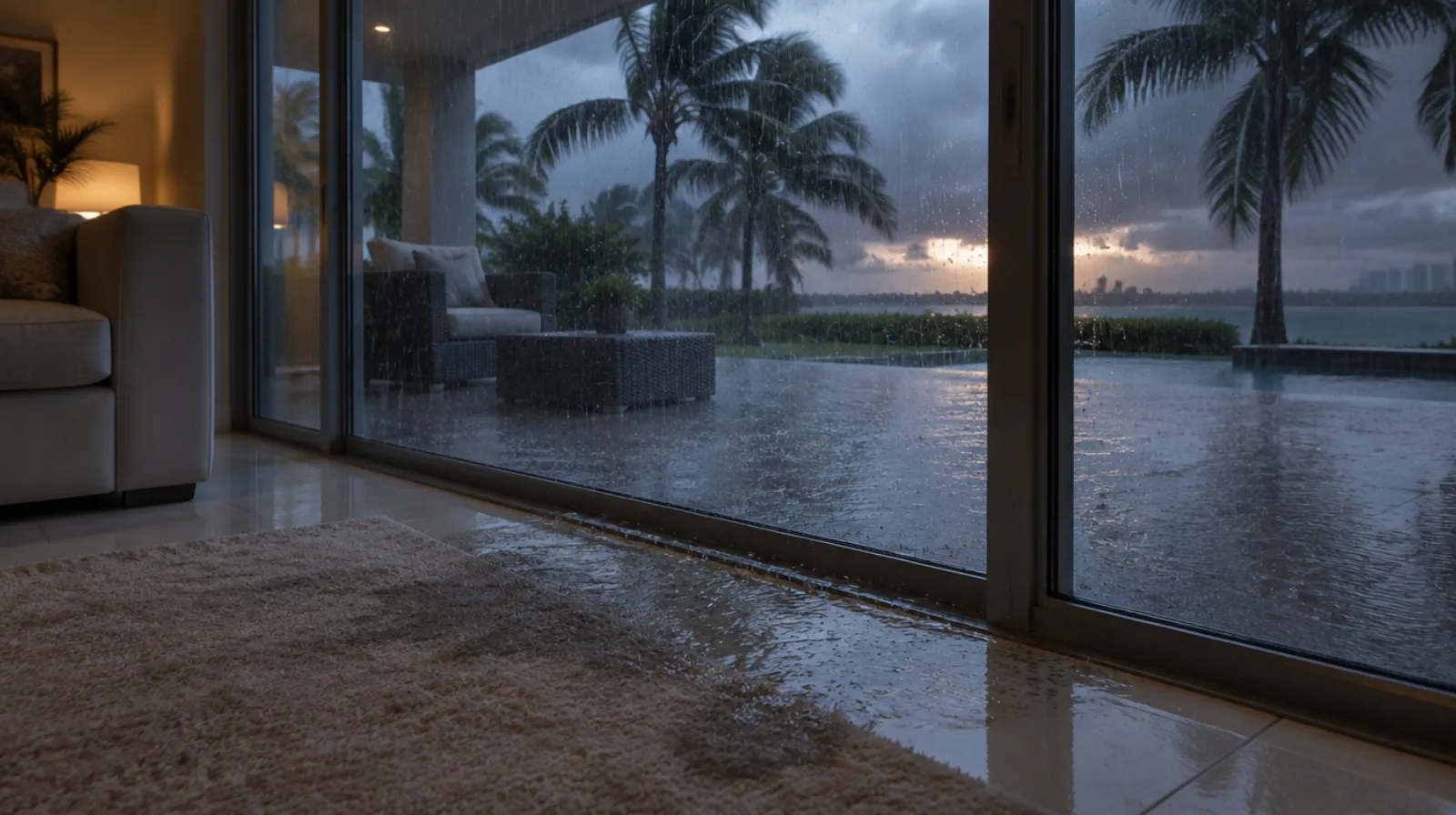
NBC 6 reported a flash flood warning for parts of Miami-Dade on November 1, with 3 to 5 inches down by early afternoon. If that rain, a roof leak or an AC line put water in your Miami home, we take the call 24/7, dry it out and rebuild the drywall, floors and tile.
Water in the house right now?
We answer 24/7, nights and weekends too
The EPA says wet drywall, baseboards and flooring should be dried within 24 to 48 hours to prevent mold. Call us. We come look, take moisture readings and tell you what has to go.
What has been happening in Miami
- NBC 6 reported a flash flood warning for parts of Miami-Dade on Sunday, November 1. By early afternoon, 3 to 5 inches of rain had fallen in those areas, with 1 to 2 inches more possible.
- NBC 6 also reported a flood watch covering Miami-Dade, Broward and Palm Beach counties into Monday afternoon.
- Local 10 reported a severe thunderstorm warning for parts of Miami-Dade on Monday afternoon, November 2, and a flood watch that remained in effect for the county.
- The Virginia Key tide gauge reached about 2.54 feet above mean higher high water (MHHW, the average high tide mark) on October 27, Watchers reported. See what the king tide did in Miami.
What we see in Miami homes
- Concrete block homes with tile over a slab. Water slips under the tile and sits on the slab, and the block and the bottom of the drywall wick it up. The floor looks fine while the wall stays wet.
- Older roofs with worn sealant or loose tiles. Rain gets through to the ceiling, and the stain often shows days later, after the insulation has soaked it up.
- AC air handlers in closets and garages. A clogged drain line or a rusted pan overflows into the drywall around the unit, and people ignore it until the baseboard swells.
- Slab and supply line leaks in older homes. They can run for weeks before the floor feels warm or the water bill jumps.
We cover all of Miami, including Brickell, Coconut Grove, Little Havana, Edgewater, Shenandoah.
Where is the water coming from?
Common questions
Does homeowners insurance cover rain water damage in Miami after the November storms?
It depends on how the water got in. Rain that comes through a damaged roof, a failed window seal or a wind-driven opening is generally a question for your homeowners policy. Water that rises from outside and floods the property, like king tide or street flooding, is generally handled under a separate flood policy. Read your declarations page to see what you carry, and check your deductible. Report the loss quickly. Florida's claim notice law gives you one year at most from the date of loss to report a new claim, and water that sits makes the damage harder to prove. We do not file or negotiate claims. We extract and dry the water, and we hand your adjuster photos, moisture readings and a written scope of the repair. Our homeowners claim guide walks through the steps, and the flood claim guide covers flood policies.
How do I tell whether the water in my Miami house came from the king tide or from rain?
Look at where the water started. Rain damage comes from above or through an opening: a stain on the ceiling, a wet window frame, water running down a wall, a damp edge at a door that took wind-driven rain. Tide and street water come in at floor level, through doorways and low walls, and they leave a waterline on the wall and a silt or salt film on the floor. The difference matters, because the cause decides which policy you call. Take photos of the waterline and the first wet spot before you clean anything. If the water came up from the ground, read what the king tide did in Miami. If you cannot tell, call us. We take moisture readings, trace where the water entered and write it up in a scope your adjuster can use. We answer 24/7, and we would rather you ask than guess.
Nearby in Miami-Dade County
Sources
Updated 2026-11-03. The image is an illustration, not a photo of one of our jobs.
Water in your Miami home?
We answer 24/7. IICRC-certified technicians extract, dry and rebuild.
(786) 363-7039