Updated October 29, 2026
What happened in Miami and Miami Shores
On Tuesday, October 27, 2026, Miami's Virginia Key tide gauge recorded about 2.5 feet of water above high tide, the most it has measured outside of a hurricane since 1994. Miami has seen about 8 inches of sea level rise since that gauge went in.
In Edgewater, along the bay north of downtown, floodwater made streets hard to get through on Monday, October 26, and residents were carrying pets through the water on Tuesday morning.
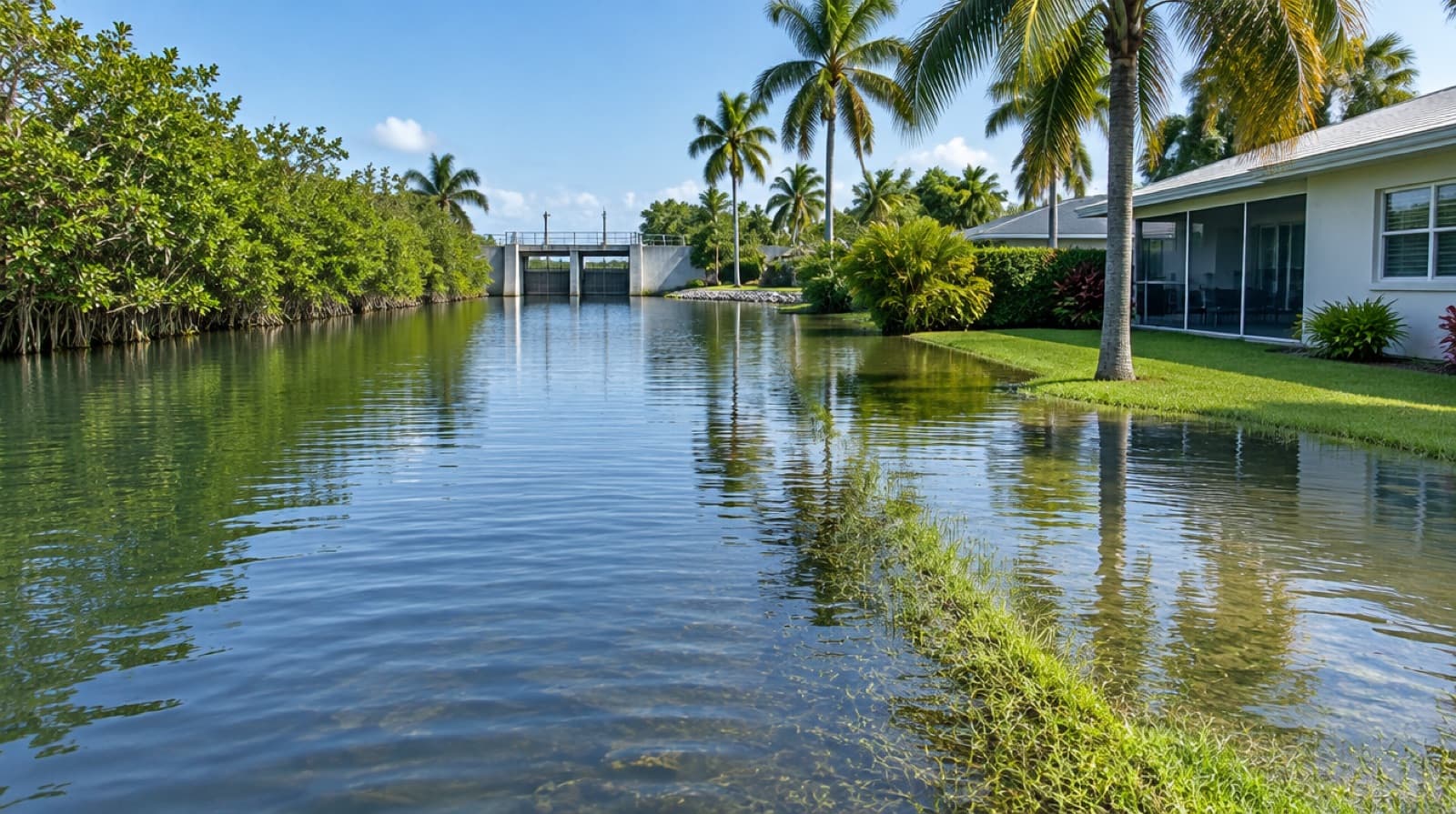
In Miami Shores, the water submerged the village golf course and shut it down for days. Near the 12th hole, a South Florida Water Management District flood control structure that is supposed to let canal water flow out to Biscayne Bay was not working. Water flowed backward, over the barrier and up into the canal. The same thing happened at the district's structures on the Little River and in North Miami Beach.
The EPA says wet drywall, baseboards and flooring should be dried within 24 to 48 hours to prevent mold. Call us. We come look, take moisture readings and tell you what has to go.
- EdgewaterFlooded streets on Oct 26 and 27.
- Miami Shores (golf course and canal)Golf course submerged, canal barrier overtopped and flowing backward on Oct 27.
- Little RiverFlood control structure overtopped, water backing up into the canal.
Why Miami and Miami Shores floods on a king tide
Much of this part of Miami drains through canals that were built more than 80 years ago to send rainwater out to Biscayne Bay. The gates at the mouths of those canals only work while the bay is lower than the canal. When a king tide pushes the bay higher, the water has nowhere to go, and on October 27 it went the wrong way, back up the canals toward homes. The district has federal money for bigger pumps and gates, but those projects are still in permitting.
Saltwater in the house: what has to come out
King tide water is not clean seawater. It comes up through storm drains, canals and sewer lines before it reaches your house, and the restoration industry classes it as Category 3, the most contaminated kind. That is why drying alone is not enough.
- Drywall: water wicks up the paper and gypsum well above where it stood. It gets cut out above the wet line, often at 2 feet off the floor.
- Baseboards and insulation: MDF swells and insulation holds the salt. Both go.
- Cabinets: particle board bases in kitchens and bathrooms soak water up from the bottom and do not recover.
- Floors: tile on a concrete slab usually survives with cleaning. Laminate, wood and carpet rarely do.
- Salt: salt left behind keeps pulling in moisture. Surfaces get rinsed with fresh water before drying.
How we repair it in Miami and Miami Shores
- Walkthrough. We find where the water came in and how high it wicked. You get photos and a written scope for your flood policy.
- Water out and tear-out. We remove carpet, baseboards, insulation and the wet lower drywall.
- Rinse and dry. We get the salt off and dry the room with air movers and dehumidifiers before anything gets closed up.
- Rebuild. Drywall, paint, tile, baseboards, cabinets, bathrooms and kitchens. If water reached electrical or plumbing, we bring in the right trade for that part.
Related services: interior painting, tile work, bathroom remodeling, kitchen remodeling, exterior repairs.
Before the next king tide
The City of Fort Lauderdale lists these remaining 2026 king tide windows:
- November 5 to 11
- November 22 to 28
- December 24 to 25
If you live along a canal in Miami Shores or near the Little River, the canal level is your warning sign. When it is near the top of the bank during a king tide window, move cars, get things off the garage floor, and do not count on rain draining until the tide falls.
Miami and Miami Shores king tide questions
Water backed up from the canal into my yard in Miami Shores. Is my house at risk?
Look at three things. First, the foundation line. Many older Miami Shores homes are on a raised floor or a slab only a few inches above the yard, so look for a water line on the exterior walls and at the bottom of doors. Second, anything below that line: the garage, a converted ground floor room, the laundry, the AC condenser and the pool equipment. Third, the yard drains and any septic system, because saltwater that sat in the yard can push into both. If the water never crossed the threshold, rinse the bottom of the exterior walls and doors with fresh water and keep an eye out for bubbling paint or swelling over the next few weeks. If it did come in, treat it as a flood: document, call your flood carrier, and get the wet material out within a day or two. We can walk the property and tell you which case you are in.
My Edgewater apartment building flooded at street level. What should I check in my unit?
If you are above the ground floor, your unit probably did not take floodwater, but check the things that connect to the ground floor. Garage parking, storage cages and anything in a ground level storage room may have been under water. Elevators and electrical rooms at street level sometimes take damage, which is the building's job. If you are on the ground floor, check the bottom of the drywall, the baseboards, the toe kicks under the kitchen and bathroom cabinets, and the edge of the floor at the walls. Salt and moisture there do not show right away. Watch for bubbling paint, a soft spot in the drywall, or a musty smell over the next two weeks. Ask the building manager in writing what the association covers before anyone opens a wall, and document your unit for your own policy. We can do the repair on the items that belong to you and coordinate access with management.
Is the flooding going to keep getting worse here?
The trend points that way. Miami has gained about 8 inches of sea level since the Virginia Key gauge went in in 1994, and researchers quoted after this tide said there is a clear trend toward more hours above normal high tide each year. Projections cited in the same reporting put South Florida at about two feet of additional rise by 2060. The canal gates in Miami Shores and on the Little River that failed on October 27 are slated for larger pumps and gates, with federal funding reinstated this year, but those projects are still in permitting. In practical terms, if your home took water this season, plan for it to happen again on the next big tide and rebuild the lowest part of the house with materials that can be rinsed and dried. The City of Fort Lauderdale lists the next windows as November 5 to 11, November 22 to 28 and December 24 to 25, and Miami sees the same tides.
Questions people are asking
- When is the next king tide in Fort Lauderdale and Miami?
- What should I do after king tide water gets into my house?
- What is a flood cut, and how high should drywall be cut after a flood?
- How long does it take to dry out a house after a flood?
- How fast does mold grow after a flood, and how do I stop it?
- Does insurance cover king tide flooding?
- My garage flooded with saltwater. What do I do?
- Is it safe to stay in a house after flooding?
- How can I tell if my drywall has water damage after a flood?
- Are king tides getting worse in South Florida?
- Who do I call for water damage after a flood?
- How do I file a flood insurance claim after the king tide?
- Can water damaged kitchen cabinets be saved after a flood?
- Which flooring can be saved after a flood: tile, laminate, vinyl or wood?
Other areas hit by this tide
- King tide damage in Fort Lauderdale
- King tide damage in Hollywood
- King tide damage in Miami Beach
- South Florida king tide flooding guide