Updated October 29, 2026
The highest water without a hurricane
The king tide peaked on Tuesday, October 27, 2026. Fort Lauderdale and Miami both measured about 2.5 feet of water above high tide, which the National Weather Service classifies as major flooding. Miami's Virginia Key gauge recorded the most water it has seen outside a hurricane since it was installed in 1994, and the Port Everglades gauge broke the record it set in September.
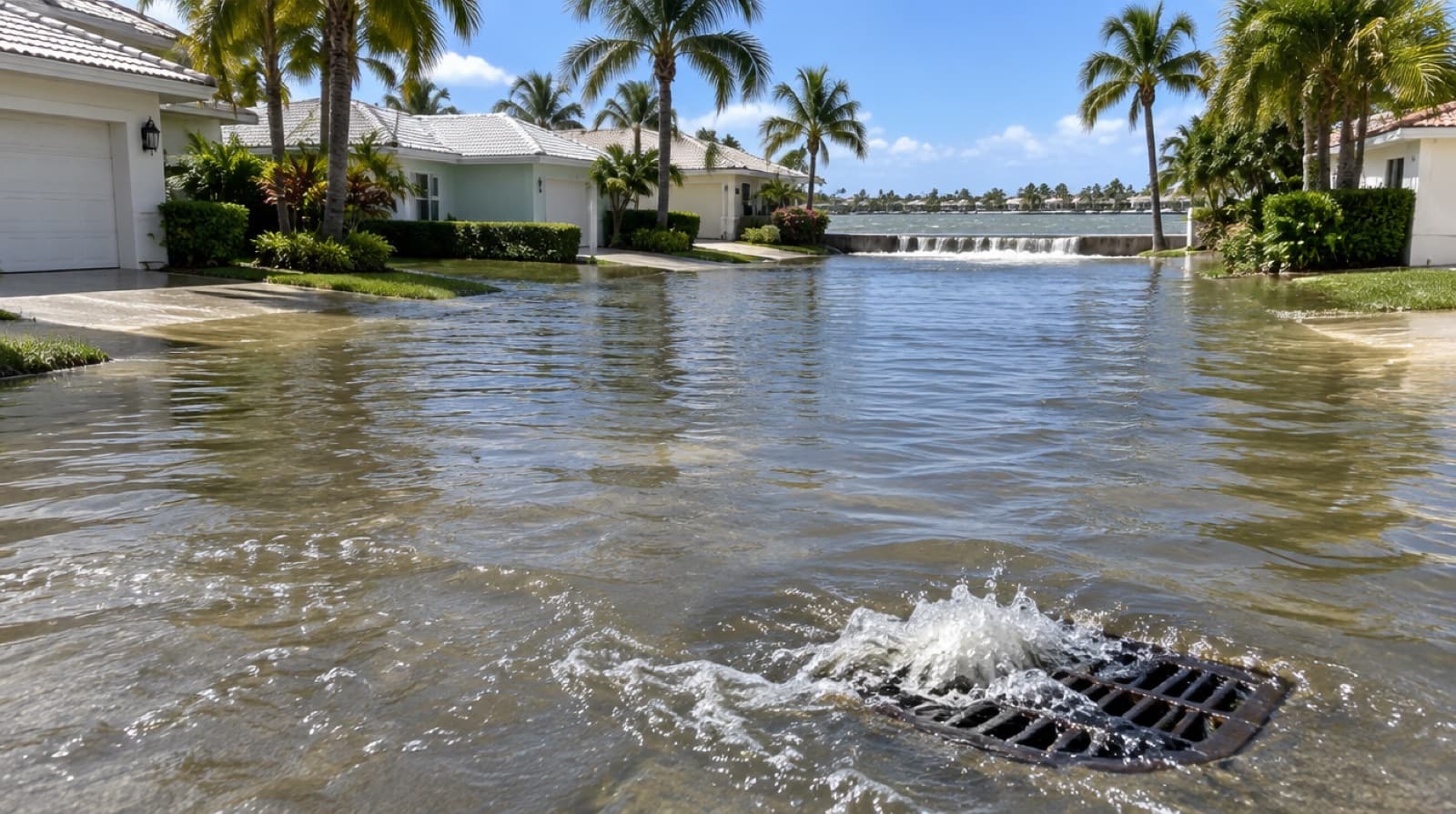
A low pressure system off the coast and 30 to 40 mph onshore wind pushed the water inland. It came over seawalls and up through storm drains, and reached the doors of coastal businesses in Miami Beach and Fort Lauderdale, in some cases getting past them.
The EPA says wet drywall, baseboards and flooring should be dried within 24 to 48 hours to prevent mold. Call us. We come look, take moisture readings and tell you what has to go.
The hardest-hit areas
In Pompano Beach, the September 2026 king tide had already put knee-high water on Riverside Drive near Atlantic Boulevard. If your home is on a street that flooded in September, check the same things we cover on these pages.
Questions people are asking
- When is the next king tide in Fort Lauderdale and Miami?
- What should I do after king tide water gets into my house?
- What is a flood cut, and how high should drywall be cut after a flood?
- How long does it take to dry out a house after a flood?
- How fast does mold grow after a flood, and how do I stop it?
- Does insurance cover king tide flooding?
- My garage flooded with saltwater. What do I do?
- Is it safe to stay in a house after flooding?
- How can I tell if my drywall has water damage after a flood?
- Are king tides getting worse in South Florida?
- Who do I call for water damage after a flood?
- How do I file a flood insurance claim after the king tide?
- Can water damaged kitchen cabinets be saved after a flood?
- Which flooring can be saved after a flood: tile, laminate, vinyl or wood?
Next king tides in 2026
The City of Fort Lauderdale lists these windows. Miami-Dade sees the same tides.
- November 5 to 11
- November 22 to 28
- December 24 to 25
What we do
We are a family owned, fully insured remodeling company based in Kendall, working across Miami-Dade and Broward. After a king tide we get the water and the wet material out, rinse off the salt, dry the house and rebuild: drywall, paint, tile, baseboards, cabinets, bathrooms and kitchens. You get photos and a written scope for your flood policy.
Common questions
Does homeowners insurance cover king tide flooding?
Usually not. A standard homeowners policy in Florida excludes flood, and water that rises from the street, a canal or over a seawall counts as flood. That damage is normally covered by a separate flood policy, either through the National Flood Insurance Program (NFIP) or a private flood carrier. If you have one, report the loss right away. NFIP policies set a deadline for your signed proof of loss, usually 60 days from the date of the flood, and the adjuster will want to see the damage before it is torn out. Take photos and video of every room, the water line on the walls, and anything you throw away. We put together photos and a written scope of the repair for your file. We do not negotiate your claim. That is between you, your carrier and your adjuster.
Is king tide water dirty, or is it just seawater?
Treat it as dirty. King tide water does not come straight from the beach. It backs up through storm drains, canals and sewer lines before it reaches your yard, and this October residents and reporters described sewage systems backing up along the coast. Restoration industry standards (IICRC S500) put floodwater that enters from outside the house in Category 3, the most contaminated class. That changes what can be saved. Wet carpet and pad go out. Drywall, baseboards and insulation that the water touched get cut out instead of dried in place. Hard surfaces get cleaned and rinsed. The salt matters too. Salt left in drywall paper, wood and grout keeps pulling moisture out of the humid Florida air, so a room that looks dry can stay damp. Wear boots and gloves when you go in, and keep kids and pets out until it is cleaned.
How fast do I need to act after the water goes down?
Fast. The EPA says wet building materials should be dried within 24 to 48 hours to keep mold from starting, and in a South Florida house with the AC off that window is short. Here is the order that works. First, if water reached outlets or anything plugged into the wall, keep that circuit off and have an electrician check it before you use it. Second, document everything for your flood policy. Third, get the wet material out: carpet, pad, baseboards and the bottom of the drywall. Fourth, rinse the salt off hard surfaces and dry the room with air movers and dehumidifiers running around the clock. Only then do you rebuild. The common mistake is painting over a wall that felt dry to the touch. The salt and moisture inside it come back through the paint in a few weeks as bubbling, stains and a musty smell.