Updated October 29, 2026
Why the cut goes higher than the water
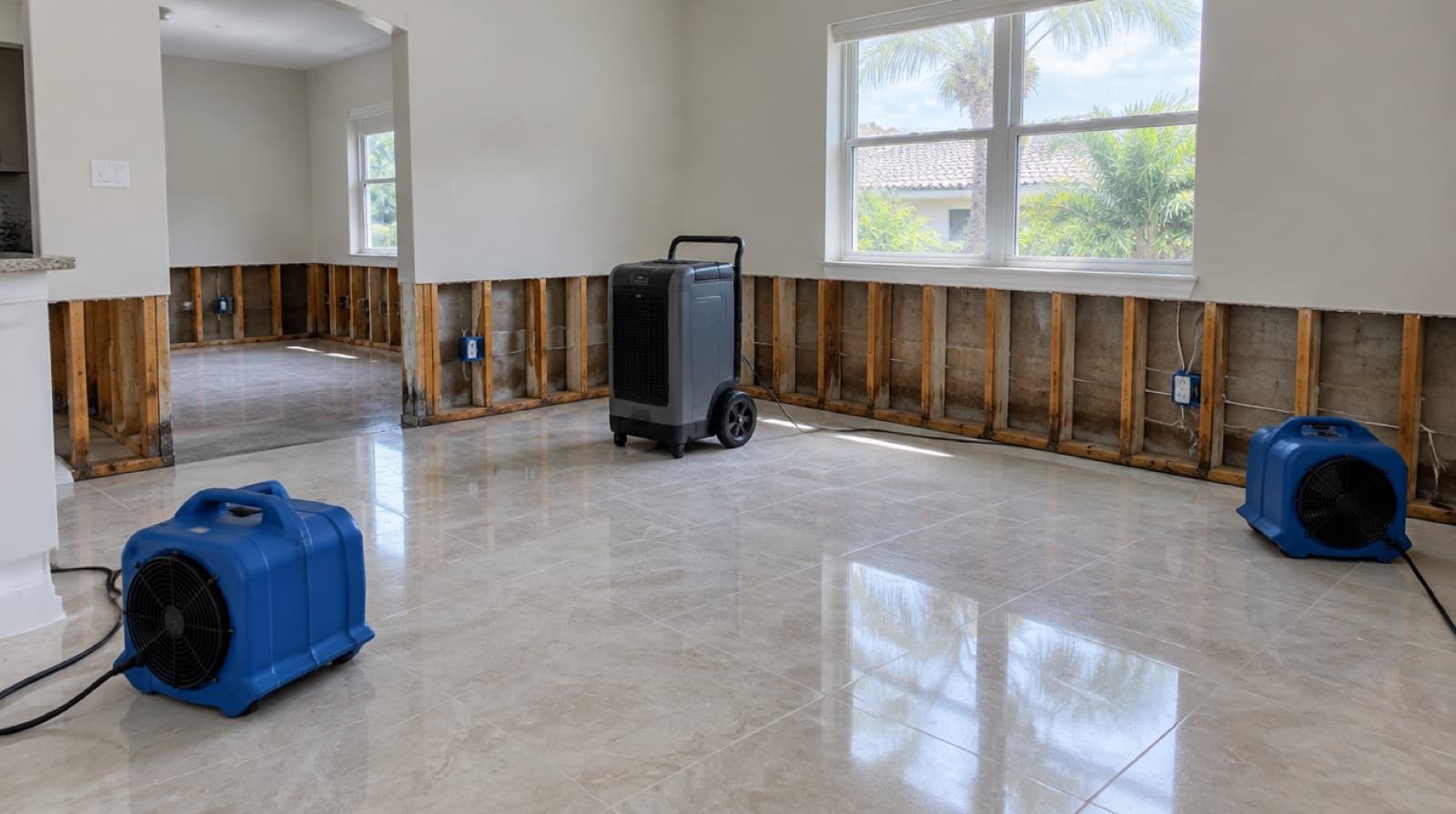
Drywall is gypsum wrapped in paper, and both act like a wick. Water that stood 3 inches deep on the floor can soak a foot or more up the wall within a day. Saltwater makes it worse, because salt left in the paper keeps drawing moisture from humid Florida air after the floor is dry. So the cut is set by checking the wall with a moisture meter every few inches up from the floor and cutting above the highest wet reading, not by eyeballing the stain.
Why 2 feet or 4 feet
Drywall sheets are 4 feet wide and usually hung horizontally. Cutting at 2 feet lets one sheet ripped in half patch two rows. Cutting at 4 feet replaces exactly one full row, with a single seam to tape at a height where it is easy to hide. Cutting at an odd height, like 19 inches, means more seams, more waste and more finishing. Once the wall is open, the insulation behind it comes out too, the studs and bottom plate get cleaned of salt and dried, and the wall stays open until the framing reads dry.
Can wet drywall be saved?
Not after a king tide. Drywall wet from a clean source, like a supply line that leaked for an hour, can sometimes be dried in place and kept. Floodwater is different. King tide water comes up through storm drains and carries salt, dirt and sometimes sewage into the paper and gypsum. FEMA's flood repair guide says wallboard soaked by floodwater is a health hazard and should be replaced. Drying it does not take out the contamination or the salt, and salty drywall keeps pulling moisture from the air. Not sure how high the wet goes? Check the signs of water damaged drywall.
Related questions
Can I just cut where the water line is?
It is a common mistake and it usually costs more later. The visible stain shows where the water stood, not how far it traveled up inside the paper and gypsum. Drywall wicks, so the wet section often runs several inches to more than a foot above the stain, and it is invisible from the outside until paint starts bubbling or a musty smell shows up weeks later. Cutting at the stain leaves a band of wet, salty drywall sealed inside the wall, which is exactly where mold grows. The right way is to check the wall with a moisture meter from the floor up, mark the highest wet reading, and cut above it, then round up to a height that makes the patch easy, often 2 or 4 feet. If a few walls read wet much higher than the rest, those get cut higher. The few extra inches cost little compared with opening the wall again.
What should go back in the wall to handle the next king tide better?
If your house is on a street that floods, rebuild the bottom of the wall for the next time. A few options make a real difference. Leave a small gap between the bottom of the new drywall and the floor, hidden by the baseboard, so the board does not sit in water. Use a mold-resistant or paperless gypsum board in the lowest row. Swap MDF baseboards for PVC or composite, which do not swell. In closed cabinet bases, use plywood or PVC instead of particle board. Some homeowners on the isles and near the bay go further and finish the lower section with a material that can be rinsed and dried, like a tile wainscot. None of this stops water from coming in. It changes the next cleanup from cutting and replacing into rinsing and drying, which is faster and much cheaper. We can price both versions so you can choose.
Areas hit by the October tide
- King tide flood damage repair in Fort Lauderdale
- King tide flood damage repair in Hollywood
- King tide flood damage repair in Miami Beach
- King tide flood damage repair in Miami and Miami Shores
More questions
- When is the next king tide in Fort Lauderdale and Miami?
- What should I do after king tide water gets into my house?
- How long does it take to dry out a house after a flood?
- How fast does mold grow after a flood, and how do I stop it?
- Does insurance cover king tide flooding?
- My garage flooded with saltwater. What do I do?
- Is it safe to stay in a house after flooding?
- How can I tell if my drywall has water damage after a flood?
- Are king tides getting worse in South Florida?
- Who do I call for water damage after a flood?
- How do I file a flood insurance claim after the king tide?
- Can water damaged kitchen cabinets be saved after a flood?
- Which flooring can be saved after a flood: tile, laminate, vinyl or wood?
Sources
- U.S. EPA, A Brief Guide to Mold, Moisture and Your Home
- FEMA P-234, Repairing Your Flooded Home (copy hosted by the National Center for Healthy Housing)
The image on this page is an illustration, not a photo of one of our jobs.