Updated October 29, 2026
What speeds it up and what slows it down
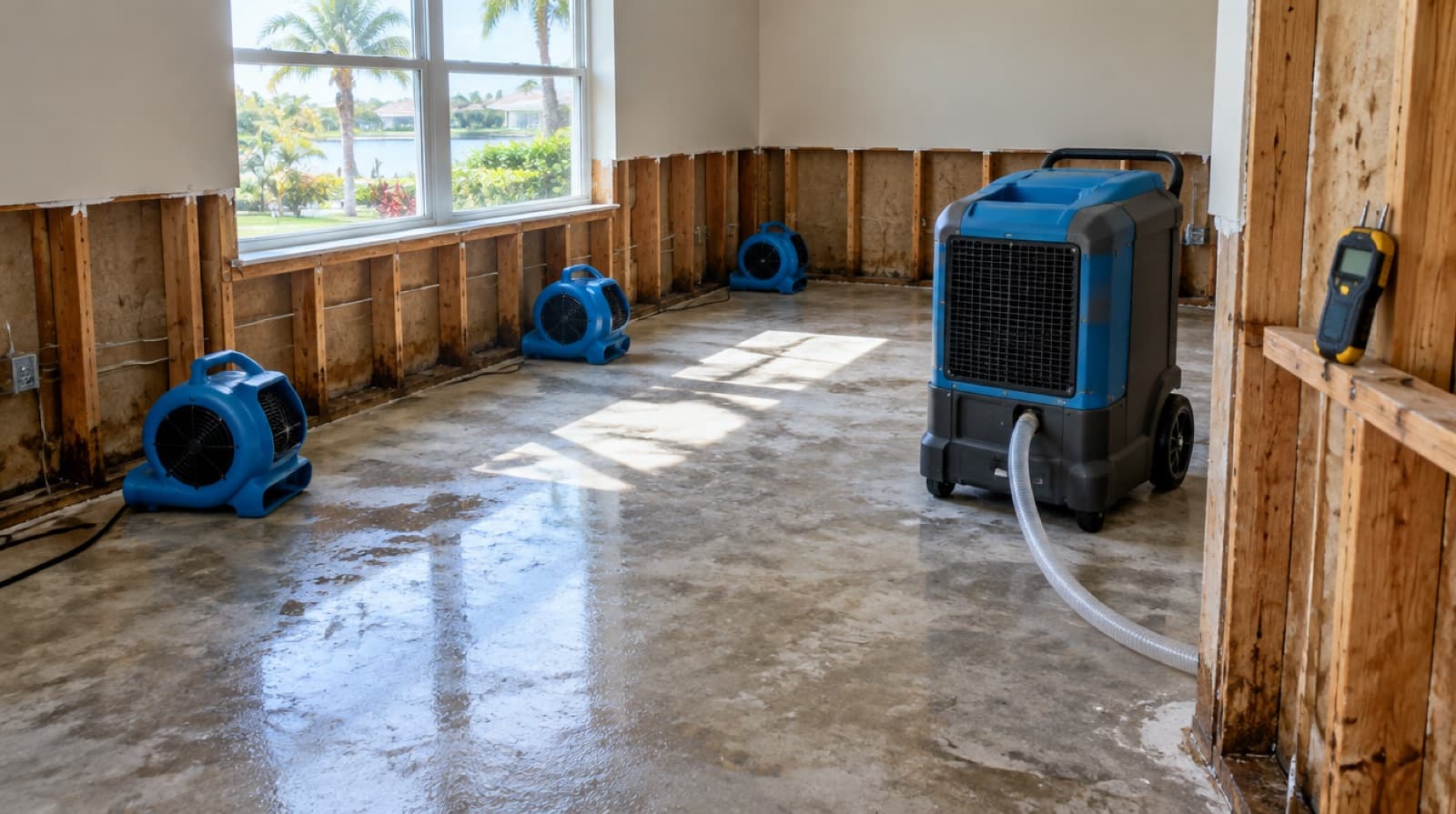
Removing what holds water is the biggest factor. A wall with wet drywall and insulation still in it can stay wet for weeks. Opened up with a flood cut, the studs dry in days. Next is equipment: air movers aimed along the base of the walls and dehumidifiers sized for the room, running day and night. In South Florida, opening the windows usually slows drying, because the outside air is humid. Keep the house closed and let the dehumidifiers and the AC pull the water out of the air.
Salt slows everything. Salt left on studs, slab and grout keeps pulling moisture back in, so surfaces that touched king tide water should be rinsed with clean water before the drying starts.
Why the 48-hour mark matters
The EPA says wet building materials should be dried within 24 to 48 hours to prevent mold. That does not mean the house must be fully dry in two days. It means the drying has to start in that window: wet material out, salt rinsed, equipment running. A house that sits closed and wet for a week after a flood almost always needs more demolition than one where drying started the next morning.
Related questions
How do I know when the walls are dry enough to close up?
Not by touch. Wood and concrete can feel dry on the surface while the inside is still wet. The way to know is a moisture meter. A pin meter pushed into the studs and bottom plate gives a moisture content reading for the wood, and the readings in the flooded area should come down to match a dry stud in an unaffected part of the same house. For the slab and remaining drywall, a pinless meter compares wet and dry areas the same way. Take readings at the same spots every day and write them down, so you can see the numbers falling and know when they level off. When the flooded framing matches the dry reference and stays there for a day with the equipment off, it is ready to close. Closing a wall a few days early to save time is how mold ends up inside a brand new wall, behind fresh paint.
Can I stay in the house while it dries?
Often yes, if the flooding was limited to part of the house and the power and AC are working safely. Plenty of families live in the dry rooms while one end of the house dries out. A few things matter. The equipment is loud and runs all day and night, so bedrooms near the work area can be hard to sleep in. Dehumidifiers and air movers draw real power, and they should be plugged into circuits that were not under water and are not overloaded. Keep children and pets out of rooms that took king tide water until they have been cleaned, because that water can carry sewage. If anyone in the house has asthma or a weak immune system, or if there is visible mold, staying elsewhere during demolition is the safer choice. And if water reached the electrical panel or the main AC equipment, wait until an electrician and an AC technician have cleared the house before living in it.
Areas hit by the October tide
- King tide flood damage repair in Fort Lauderdale
- King tide flood damage repair in Hollywood
- King tide flood damage repair in Miami Beach
- King tide flood damage repair in Miami and Miami Shores
More questions
- When is the next king tide in Fort Lauderdale and Miami?
- What should I do after king tide water gets into my house?
- What is a flood cut, and how high should drywall be cut after a flood?
- How fast does mold grow after a flood, and how do I stop it?
- Does insurance cover king tide flooding?
- My garage flooded with saltwater. What do I do?
- Is it safe to stay in a house after flooding?
- How can I tell if my drywall has water damage after a flood?
- Are king tides getting worse in South Florida?
- Who do I call for water damage after a flood?
- How do I file a flood insurance claim after the king tide?
- Can water damaged kitchen cabinets be saved after a flood?
- Which flooring can be saved after a flood: tile, laminate, vinyl or wood?
Sources
The image on this page is an illustration, not a photo of one of our jobs.