Updated October 29, 2026
The first 48 hours, in order
1. Safety. If water touched outlets, power strips, the AC air handler or anything plugged in, switch off those circuits at the panel. If the panel itself is wet or you have to stand in water to reach it, do not touch it. Have an electrician check before power goes back on.
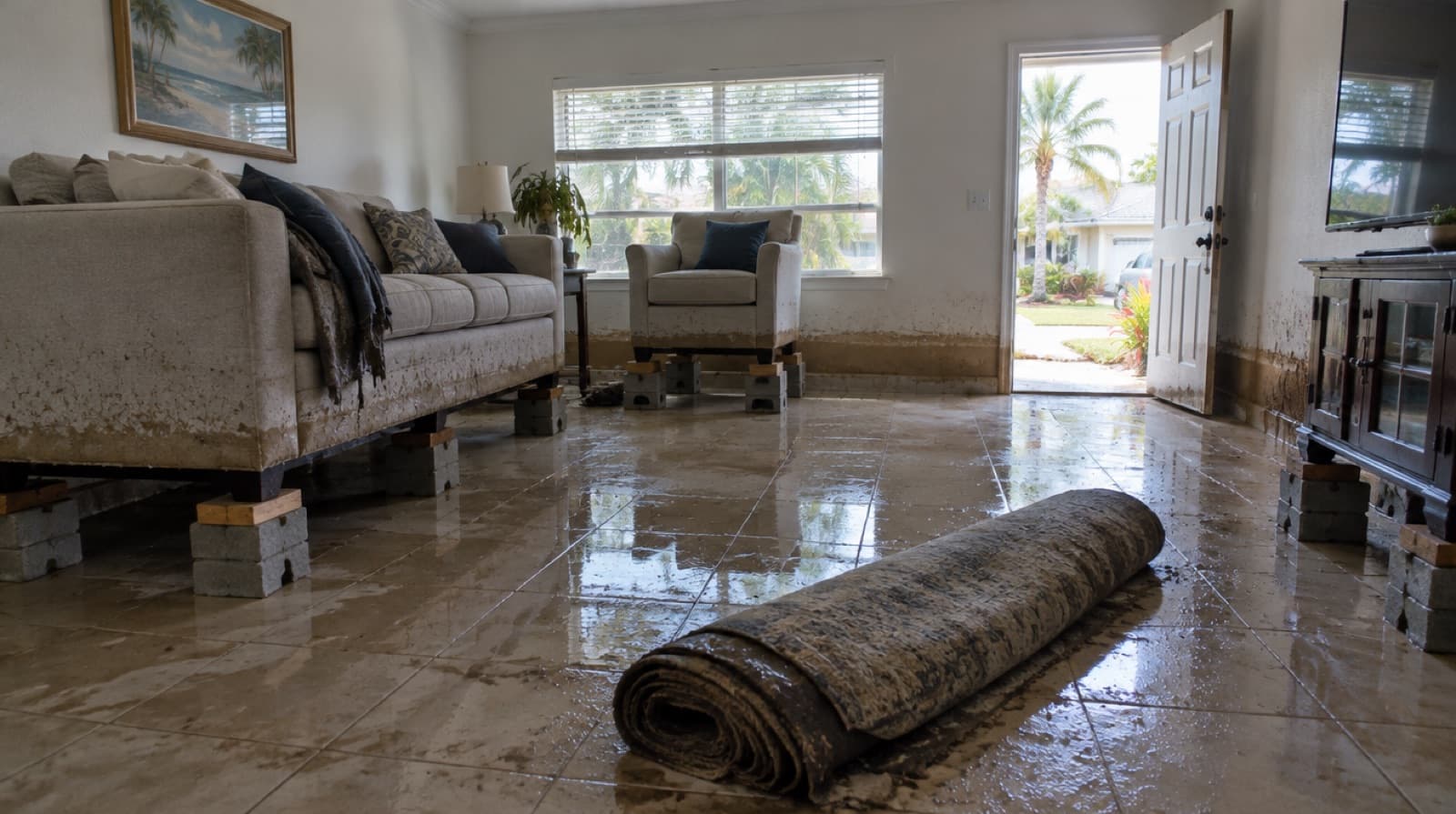
2. Document. Photograph and video every room before moving anything: the water line on walls, doors and cabinets, the floor, damaged belongings, and the street outside. Keep samples of flooring and anything you throw away until the adjuster has seen them or tells you otherwise.
3. Report. Call the company that wrote your flood policy and get a claim number. Florida's Department of Financial Services says a signed proof of loss is due within 60 days of the flood. Our claim guide walks through each step.
4. Remove. Wet carpet and pad, MDF baseboards, insulation and the lower drywall come out (how high to cut). The EPA says wet materials should be dried within 24 to 48 hours to prevent mold.
5. Rinse and dry. Rinse salt off hard surfaces with clean water, then dry with air movers and dehumidifiers running around the clock, with windows closed and the AC on once it is safe.
What not to do
Do not paint over a wall because it feels dry. Salt left inside drywall pulls moisture from the air and the damage comes back through the paint in a few weeks. Do not run a shop vac on standing water with wet hands or bare feet near outlets. Do not throw away damaged flooring or cabinets before photographing them and their labels. And do not wait for the next king tide to pass before drying out. The rebuild can wait. The drying cannot.
Related questions
Can I clean up king tide water myself?
Some of it, yes. If the water stayed on a tile floor and never reached the walls, cleaning the floor, rinsing the grout and drying the room with fans and a dehumidifier is often enough. Wear rubber boots and gloves, because king tide water comes up through storm drains and can carry sewage. Things change once water sits against drywall, baseboards or cabinets. Those materials wick water up well above the line you can see, and the wet section has to be cut out and the wall cavity dried, or it will grow mold inside the wall where you cannot see it. That work takes the right tools, a moisture meter to find where the wet stops, and enough air movers and dehumidifier capacity to dry the room in days instead of weeks. If you are unsure, have someone check before you close anything up. A walkthrough costs far less than opening the same wall twice.
Do I need to wait for the adjuster before removing wet drywall?
Ask your carrier, but in most cases you are expected to protect the property from further damage, and waiting a week with wet drywall in a South Florida house is how a flood claim turns into a mold problem. What protects you is documentation. Before anything is removed, photograph and video each room, the water line, and the wet materials, with something in the frame for scale. Measure the height of the water line and write it down. Keep a small cut piece of the drywall, carpet and pad from each room, and keep the labels or boxes from flooring and cabinets if you have them. Write down what was removed and when. If your carrier asks you to wait for an inspection, ask for the date in writing and ask whether you can at least extract water and run dehumidifiers in the meantime. We put photos and a written scope together for your file so the adjuster can see what was there.
Areas hit by the October tide
- King tide flood damage repair in Fort Lauderdale
- King tide flood damage repair in Hollywood
- King tide flood damage repair in Miami Beach
- King tide flood damage repair in Miami and Miami Shores
More questions
- When is the next king tide in Fort Lauderdale and Miami?
- What is a flood cut, and how high should drywall be cut after a flood?
- How long does it take to dry out a house after a flood?
- How fast does mold grow after a flood, and how do I stop it?
- Does insurance cover king tide flooding?
- My garage flooded with saltwater. What do I do?
- Is it safe to stay in a house after flooding?
- How can I tell if my drywall has water damage after a flood?
- Are king tides getting worse in South Florida?
- Who do I call for water damage after a flood?
- How do I file a flood insurance claim after the king tide?
- Can water damaged kitchen cabinets be saved after a flood?
- Which flooring can be saved after a flood: tile, laminate, vinyl or wood?
Sources
- U.S. EPA, A Brief Guide to Mold, Moisture and Your Home
- Florida Department of Financial Services, Flood Insurance Coverage FAQs
- CBS Miami, King tide flooding in South Florida, multiple rounds of rising water
The image on this page is an illustration, not a photo of one of our jobs.