Updated October 29, 2026
Floor by floor
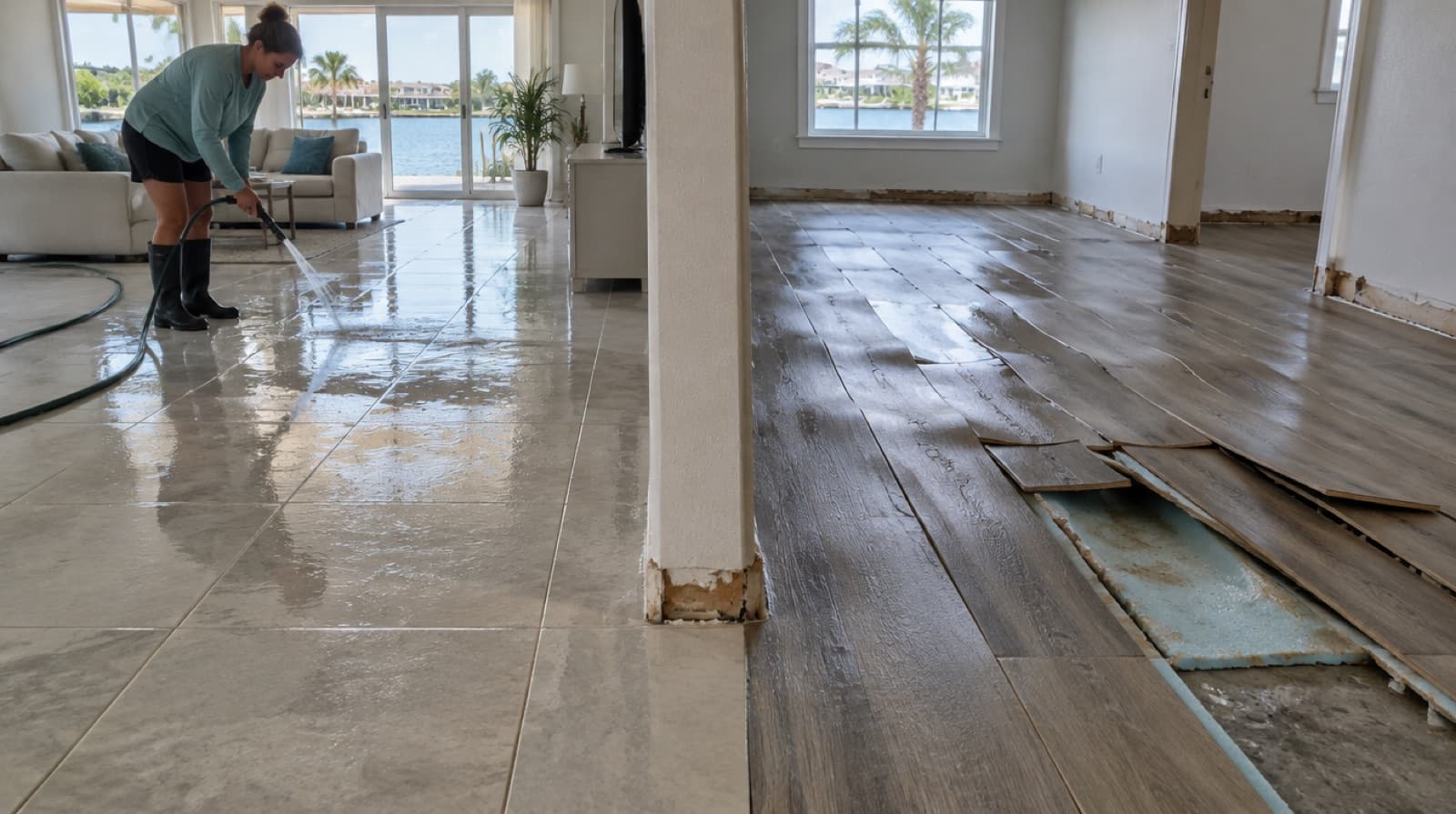
Tile and terrazzo. FEMA's flood repair guide lists ceramic tile and terrazzo among materials that resist water damage. Clean the floor, rinse the grout several times with clean water to pull out the salt, and tap each tile near the walls with a screwdriver handle. A hollow sound means the tile has let go of the thinset and should be reset.
Laminate. The core is high density fiberboard. Water gets in at the seams, the edges swell and peak, and they do not go back down. The foam underlayment under a floating floor also holds water against the slab. Plan on removing it.
Vinyl plank. The plank itself may shrug off water, but water runs underneath, and many vinyl floors sit on a foam pad. FEMA says tile, vinyl and linoleum should come up if they are warped, loose or laid over foam rubber padding. Pull a few planks along the lowest wall and look.
Wood. Some wood floors, and the joists under them, regain their shape if they dry naturally, according to FEMA, and may need sanding after. Engineered wood with a thin top layer over plywood or fiberboard often delaminates.
Carpet and pad. King tide water comes up through storm drains and can carry sewage, so the pad goes, and the carpet usually goes with it.
Under the floor: the slab
Most South Florida houses sit on a concrete slab, and a slab soaks up saltwater and gives it back slowly. FEMA's guide says not to lay new flooring until the subfloor is completely dry. Put new tile, vinyl or wood over a wet slab and the adhesive fails, the grout turns white with salt, or mold grows under the new floor. The slab gets rinsed, dried with dehumidifiers and checked with a moisture meter before anything goes back down. If the house is in a flood zone, even a small floor replacement can need a permit, as our HB 803 flood zone guide explains. See how long drying takes.
Related questions
My laminate looks fine. Do I still have to pull it?
Look closer before you decide, and look again in a few days. Laminate damage often shows up late. The seams swell first, then the edges lift into small peaks, and the floor starts to feel spongy near the walls. Even when the surface looks flat, water that got under a floating floor sits on the slab, trapped by the foam underlayment, and that is where mold starts. Pull the baseboard along the wall closest to where the water came in and lift two or three planks. If the underlayment is damp or the plank edges are dark and soft, the floor has to come out, and usually the whole connected area, since laminate clicks together across rooms. If everything is dry and the planks are still flat after a week, you may have gotten lucky. Take photos either way for your claim, and keep a plank as a sample.
What flooring should I put back if my street keeps flooding?
Pick a floor you can rinse and dry instead of one you have to replace. Porcelain or ceramic tile set in thinset directly on the slab is the most forgiving choice, and FEMA's guide lists ceramic tile and terrazzo among flood resistant materials, along with vinyl set with waterproof adhesive. Avoid laminate, floating floors over foam, and carpet in the rooms closest to the street or the canal. Our flooring comparison covers porcelain, LVP and terrazzo side by side. Pair the new floor with PVC or composite baseboards instead of MDF, and leave a small gap at the bottom of the drywall so the wall does not sit in water next time. Tile costs more up front than laminate, but after one more king tide it is a cleaning job instead of a tear-out. We install tile across Miami-Dade and Broward, and you can see that work on our tile page. We can price both options so you can compare.
Areas hit by the October tide
- King tide flood damage repair in Fort Lauderdale
- King tide flood damage repair in Hollywood
- King tide flood damage repair in Miami Beach
- King tide flood damage repair in Miami and Miami Shores
More questions
- When is the next king tide in Fort Lauderdale and Miami?
- What should I do after king tide water gets into my house?
- What is a flood cut, and how high should drywall be cut after a flood?
- How long does it take to dry out a house after a flood?
- How fast does mold grow after a flood, and how do I stop it?
- Does insurance cover king tide flooding?
- My garage flooded with saltwater. What do I do?
- Is it safe to stay in a house after flooding?
- How can I tell if my drywall has water damage after a flood?
- Are king tides getting worse in South Florida?
- Who do I call for water damage after a flood?
- How do I file a flood insurance claim after the king tide?
- Can water damaged kitchen cabinets be saved after a flood?
Sources
The image on this page is an illustration, not a photo of one of our jobs.