Updated October 29, 2026
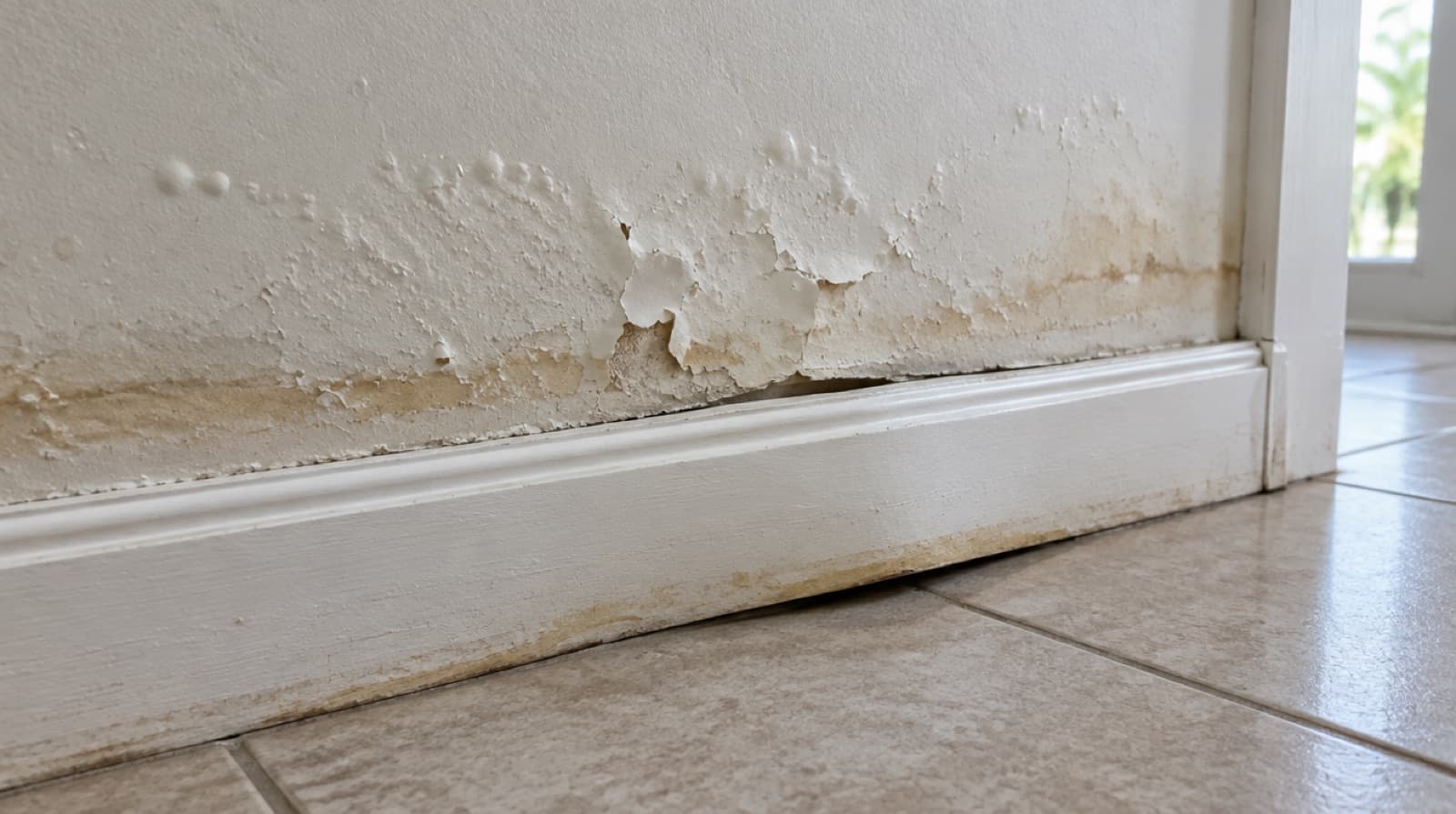
Why it can look fine and still be wet
Paint is a skin. Behind it, the paper face and the gypsum can be soaked while the surface looks normal, especially on walls where water stood only an inch or two deep. With saltwater, salt crystals left in the paper keep drawing moisture back in, and the signs show up later: blistering a week after the water went down, a white powdery line as the salt comes out, or a stain that grows instead of fading.
Related questions
The baseboards look swollen but the wall looks fine. What does that mean?
It usually means water reached the bottom of the wall and the drywall behind the baseboard got wet too, even if the painted face above it looks normal. Most baseboards in newer South Florida homes are MDF, which swells the first time it soaks up water and does not go back. That swelling is a useful warning, because the baseboard sits right where the drywall meets the floor, which is the spot that soaks up the most. Pull one swollen baseboard off carefully and look at the bottom of the drywall behind it. If the paper is stained, soft, or crumbles at the edge, the lower section of the wall is wet. Check it with a moisture meter a few inches up and keep going until it reads dry. In most cases the swollen baseboards get replaced, and the drywall gets cut above the wet line. If you are rebuilding on a street that floods, PVC or composite baseboards will not swell the next time.
Can water damaged drywall be dried instead of replaced?
Sometimes, after clean water. After king tide water, usually not. Drywall that got wet from a clean source, like a supply line leak caught quickly, can sometimes be dried in place if it has not lost strength and drying starts right away. King tide water is different. It comes from outside, through storm drains and canals, and restoration standards treat that kind of floodwater as contaminated. Drywall is porous, so whatever was in the water, including salt and bacteria, is now inside the paper and gypsum, and you cannot wash it out of the inside of a sheet. Salt left in it keeps pulling moisture back in for weeks. That is why the normal approach after saltwater flooding is to cut the wet drywall out above the highest wet reading, clean and dry the framing, and hang new board. The good news is that drywall is one of the cheapest parts of the repair. Leaving the wrong piece in place is what gets expensive.
Areas hit by the October tide
- King tide flood damage repair in Fort Lauderdale
- King tide flood damage repair in Hollywood
- King tide flood damage repair in Miami Beach
- King tide flood damage repair in Miami and Miami Shores
More questions
- When is the next king tide in Fort Lauderdale and Miami?
- What should I do after king tide water gets into my house?
- What is a flood cut, and how high should drywall be cut after a flood?
- How long does it take to dry out a house after a flood?
- How fast does mold grow after a flood, and how do I stop it?
- Does insurance cover king tide flooding?
- My garage flooded with saltwater. What do I do?
- Is it safe to stay in a house after flooding?
- Are king tides getting worse in South Florida?
- Who do I call for water damage after a flood?
- How do I file a flood insurance claim after the king tide?
- Can water damaged kitchen cabinets be saved after a flood?
- Which flooring can be saved after a flood: tile, laminate, vinyl or wood?
Sources
The image on this page is an illustration, not a photo of one of our jobs.