Updated October 29, 2026
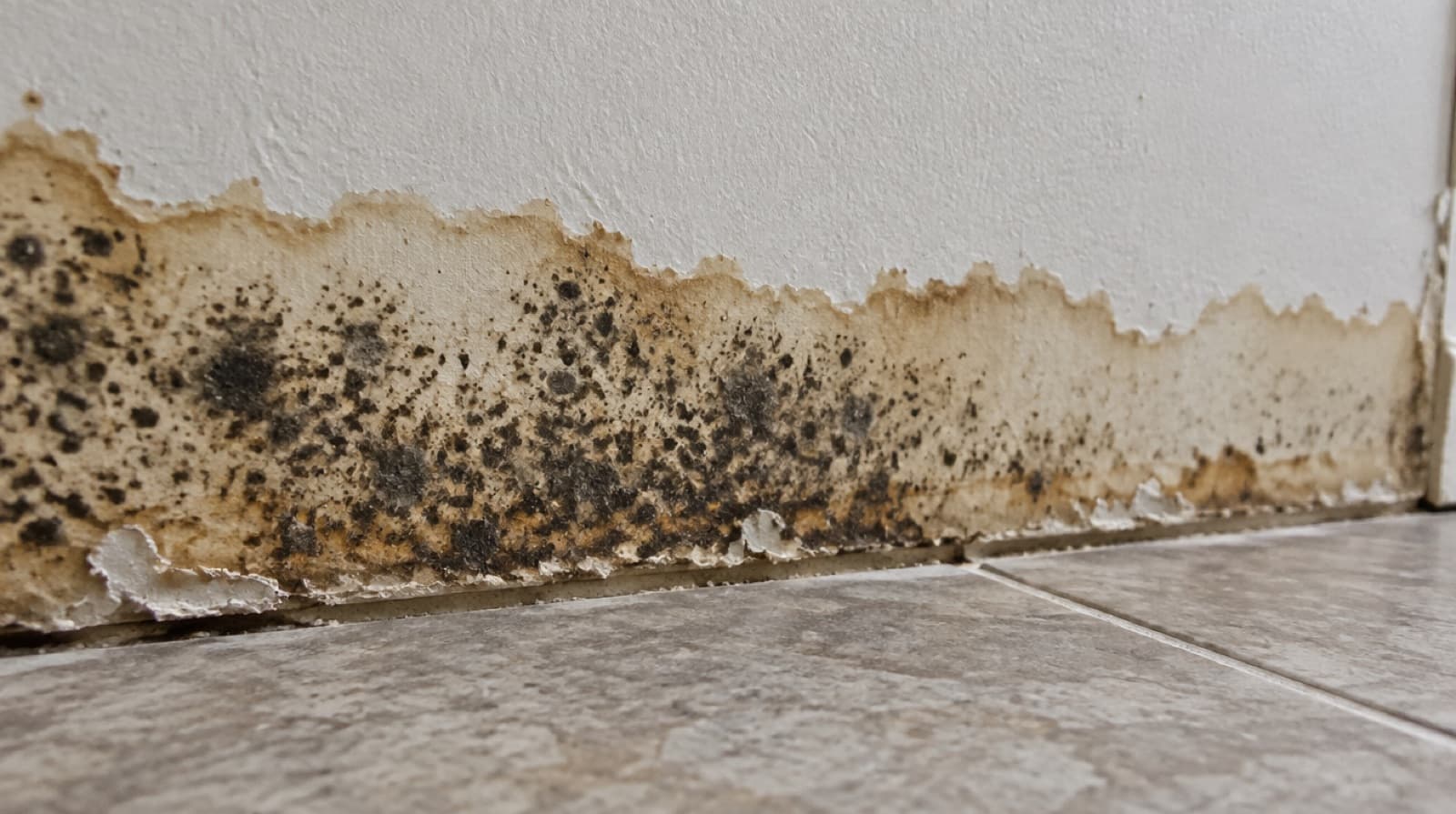
Where mold shows up first after a king tide
Behind baseboards, on the back side of the drywall, under carpet pad, inside the toe kick under kitchen and bathroom cabinets, and in the insulation of exterior walls. These are the places that stay dark, stay damp and hold the dirt that floodwater carried in. A musty smell a few days after the water goes down usually means one of them is still wet.
Small patch or bigger problem
The EPA says that if the moldy area is less than about 10 square feet, in most cases you can handle it yourself, with gloves, eye protection and an N95 mask, by removing porous material and cleaning hard surfaces. Larger areas, mold inside the HVAC system, or anyone in the house with health concerns call for a mold professional. Florida regulates mold assessment and remediation at the state level, so ask any mold company for its Florida DBPR credentials before work starts.
Related questions
Can I spray bleach on the wall and leave the drywall?
No. Bleach can lighten the stain on the surface, but it does not dry the wall, and drywall that soaked up king tide water is still wet, salty and dirty inside the paper and gypsum. The mold comes back from the inside, and the water in bleach adds moisture to a material that already has too much. The EPA's guidance is that absorbent materials like drywall, ceiling tiles and carpet that got moldy may need to be thrown away, because mold can grow into the empty spaces and crevices of porous materials. For hard surfaces like tile, metal and sealed concrete, scrubbing with detergent and water and then drying fully works. The real fix after a flood is not a chemical. It is cutting out the wet porous material, cleaning and drying what stays, and rebuilding once the framing reads dry. Spraying and painting over the problem just hides it for a few weeks.
Does flood insurance pay for mold?
It depends on why the mold is there. Under the National Flood Insurance Program, mold that results directly from a covered flood can be part of the claim, but policies generally expect the owner to take reasonable steps to limit damage after the water recedes. Mold that grew because the house was left wet and closed for weeks can be treated as a failure to protect the property. That is one more reason to document everything early and start drying within a day or two. Keep a record of what you did and when: photos of the water, when you called the carrier, when wet materials came out, and the equipment used to dry. If mold does show up, photograph it, report it to your carrier as part of the same flood claim, and ask in writing what they need from you. Read your own policy or call your agent for the exact terms, because private flood policies can differ from the NFIP.
Areas hit by the October tide
- King tide flood damage repair in Fort Lauderdale
- King tide flood damage repair in Hollywood
- King tide flood damage repair in Miami Beach
- King tide flood damage repair in Miami and Miami Shores
More questions
- When is the next king tide in Fort Lauderdale and Miami?
- What should I do after king tide water gets into my house?
- What is a flood cut, and how high should drywall be cut after a flood?
- How long does it take to dry out a house after a flood?
- Does insurance cover king tide flooding?
- My garage flooded with saltwater. What do I do?
- Is it safe to stay in a house after flooding?
- How can I tell if my drywall has water damage after a flood?
- Are king tides getting worse in South Florida?
- Who do I call for water damage after a flood?
- How do I file a flood insurance claim after the king tide?
- Can water damaged kitchen cabinets be saved after a flood?
- Which flooring can be saved after a flood: tile, laminate, vinyl or wood?
Sources
The image on this page is an illustration, not a photo of one of our jobs.