Updated October 29, 2026
Three things to settle first
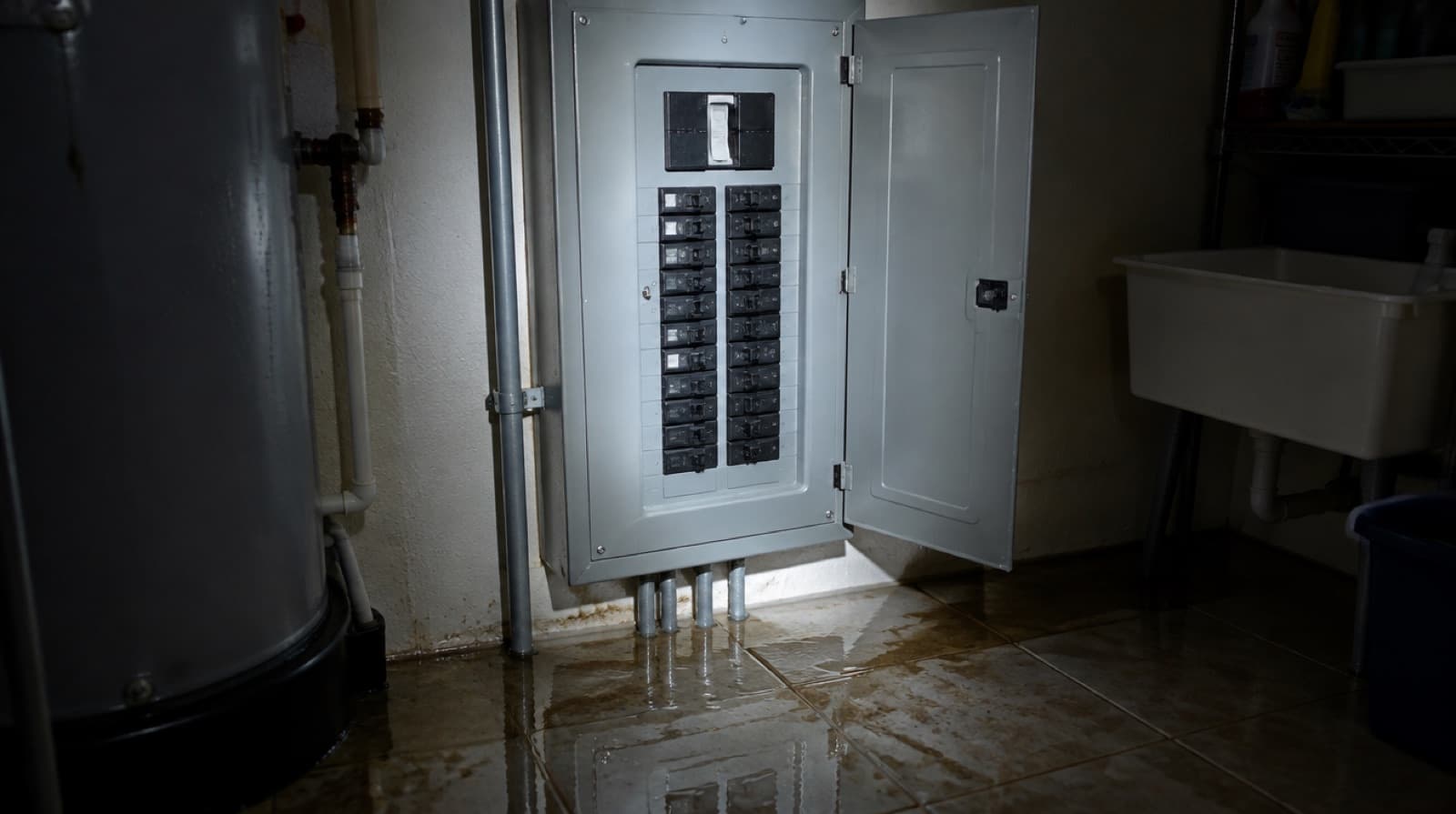
Electricity. Any circuit with outlets, cords or equipment that sat in water stays off until an electrician checks it. Saltwater conducts and corrodes, so a breaker that turns back on is not proof that the circuit is safe.
Sanitation. King tide water comes up through storm drains and, this October, was reported alongside backed-up sewage systems on the coast. Floors and surfaces it touched need cleaning, and kids and pets stay out until then.
Air. Wet drywall, carpet and insulation start growing mold within a day or two. Removing them and running dehumidifiers keeps the air in the rest of the house clean.
Related questions
Can I turn the AC back on after the flood?
If the outdoor condenser, the indoor air handler and their electrical connections stayed dry, yes, and running the AC actually helps drying, because it pulls moisture out of the air. Keep the thermostat at a normal setting and keep windows closed so you are not pulling humid outside air into the house. If water reached the air handler, which in many Florida homes sits in a closet or garage at floor level, or if the condenser outside sat in water, leave the system off and have an AC technician check it first. Saltwater can damage the electrical components and the coil, and an air handler that sat in floodwater can spread contaminated air through the ducts. The same goes for any ductwork that runs under the floor or in a space that flooded. Ask the technician to look at the drain pan and the ducts as well, not just whether the unit turns on.
Is king tide water dangerous to walk through?
It can be. King tide water looks calm, but it is not clean. It comes up through storm drains and canals and mixes with whatever is on the street, including oil, fuel, fertilizer and sometimes sewage, which was reported backing up along the coast during the October 2026 tide. Cuts and scrapes on your feet or legs can get infected, so wear closed boots, not sandals, and wash any skin it touched with soap and clean water. You also cannot see what is under it: missing drain grates, curbs, broken pavement and debris. Inside the house, standing water near outlets or appliances can be energized, so do not walk through it until the power to that area is off. And keep cars out of it. Saltwater damages brakes, wiring and the underside of a car, and reporters in Fort Lauderdale saw several cars stall in it this October.
Areas hit by the October tide
- King tide flood damage repair in Fort Lauderdale
- King tide flood damage repair in Hollywood
- King tide flood damage repair in Miami Beach
- King tide flood damage repair in Miami and Miami Shores
More questions
- When is the next king tide in Fort Lauderdale and Miami?
- What should I do after king tide water gets into my house?
- What is a flood cut, and how high should drywall be cut after a flood?
- How long does it take to dry out a house after a flood?
- How fast does mold grow after a flood, and how do I stop it?
- Does insurance cover king tide flooding?
- My garage flooded with saltwater. What do I do?
- How can I tell if my drywall has water damage after a flood?
- Are king tides getting worse in South Florida?
- Who do I call for water damage after a flood?
- How do I file a flood insurance claim after the king tide?
- Can water damaged kitchen cabinets be saved after a flood?
- Which flooring can be saved after a flood: tile, laminate, vinyl or wood?
Sources
- Tampa Bay Times / Miami Herald, 'Highest king tide ever' swamps South Florida
- CBS Miami, King tide flooding in South Florida, multiple rounds of rising water
- U.S. EPA, A Brief Guide to Mold, Moisture and Your Home
The image on this page is an illustration, not a photo of one of our jobs.