Updated October 29, 2026
Why garages take the worst of it
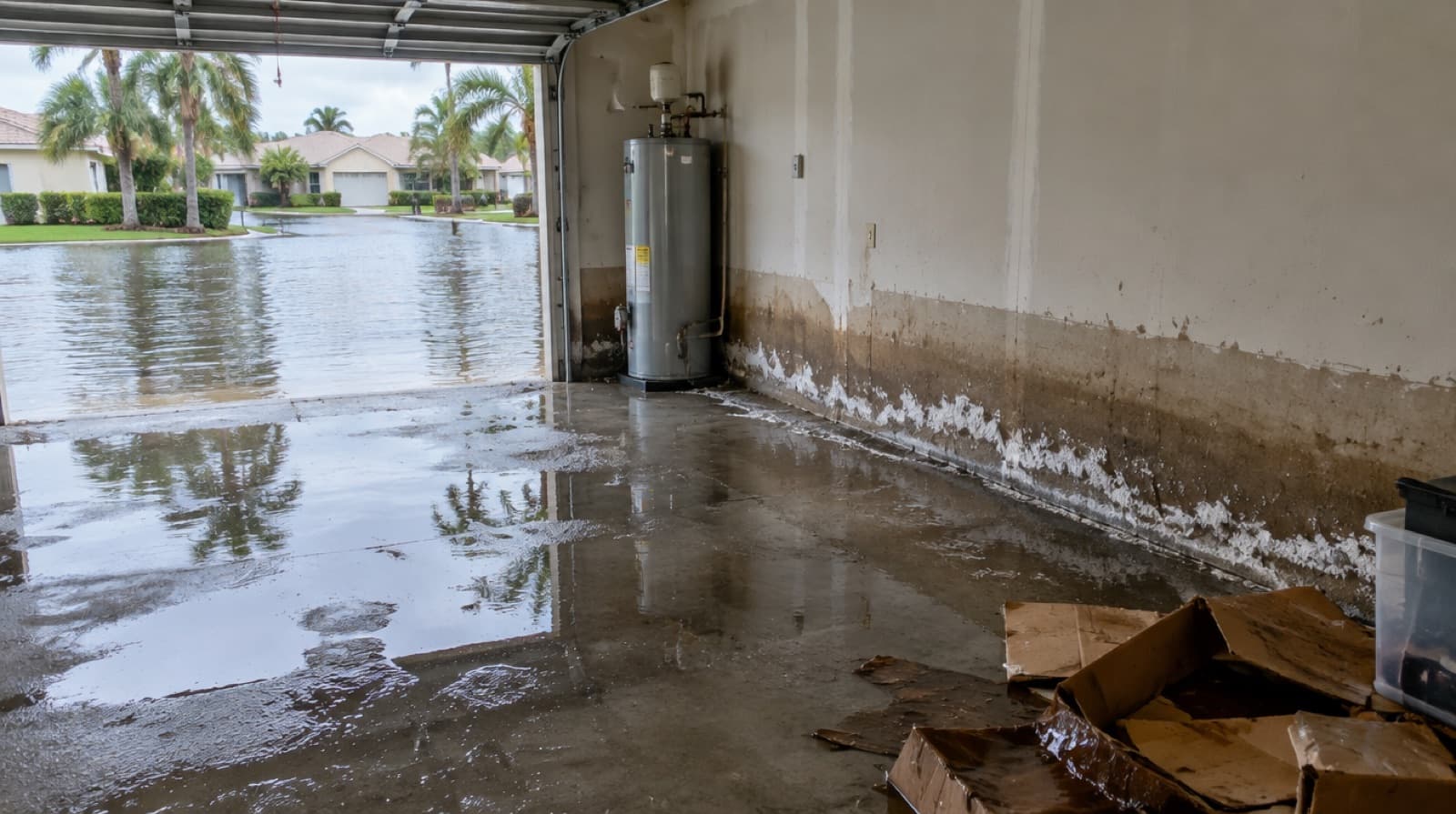
In many South Florida homes the garage slab sits a step below the living area, and the garage door is the lowest opening in the house. During the October 2026 king tide, water stood on streets across Fort Lauderdale, Hollywood and Miami Beach for hours at each high tide. It does not need to come into the house to soak the garage.
What to check
The shared wall with the house: drywall, insulation and the bottom plate behind it. The water heater, washer, dryer and any freezer sitting on the slab, which should be checked before use if water reached their controls. The garage door bottom seal, track, springs and opener rail. Anything stored in cardboard on the floor. And the door from the garage into the house, where swelling at the bottom of the frame is an early sign that water got further than you thought.
Related questions
The water never got past the garage. Do I need to open the wall?
Only if it is wet inside, and you can find out without tearing anything. Check the wall shared with the house from both sides. On the garage side, look at the bottom of the drywall for staining, softness or a white salt line. On the house side, look at the baseboard and the bottom of the wall for bubbling paint or swelling, and smell for mustiness in that room and the closet next to it. A moisture meter on the lower foot of the wall, on both sides, gives a real answer. If it reads dry a few days after the water went down, rinse, dry and keep an eye on it. If it reads wet, cut the lower section on the garage side, where the patch is easy to hide and the finish is simpler, pull the insulation, rinse and dry the cavity, and close it up when the framing reads dry. That keeps the inside of the house untouched in most cases.
Is my water heater safe after saltwater sat around it?
Do not assume it is. If the water only touched the bottom of the tank and never reached the burner on a gas unit or the lower element and wiring on an electric one, it may be fine after the area is rinsed and dried, but have it looked at before relying on it. If water reached the gas burner, the controls or the electrical connections, shut it off and have a plumber or appliance technician inspect it before turning it back on. Saltwater corrodes metal parts and electrical contacts quickly, and the damage may not show for weeks. The same goes for washers, dryers and freezers on the garage floor. Many manufacturers advise replacing gas controls and electrical parts that were under floodwater rather than drying and reusing them. Take photos of each appliance, the water line on it, and its label with the model and serial number for your flood claim. Under the NFIP, a water heater counts as building property, while a washer, dryer or freezer falls under contents coverage, so check which coverage you carry.
Areas hit by the October tide
- King tide flood damage repair in Fort Lauderdale
- King tide flood damage repair in Hollywood
- King tide flood damage repair in Miami Beach
- King tide flood damage repair in Miami and Miami Shores
More questions
- When is the next king tide in Fort Lauderdale and Miami?
- What should I do after king tide water gets into my house?
- What is a flood cut, and how high should drywall be cut after a flood?
- How long does it take to dry out a house after a flood?
- How fast does mold grow after a flood, and how do I stop it?
- Does insurance cover king tide flooding?
- Is it safe to stay in a house after flooding?
- How can I tell if my drywall has water damage after a flood?
- Are king tides getting worse in South Florida?
- Who do I call for water damage after a flood?
- How do I file a flood insurance claim after the king tide?
- Can water damaged kitchen cabinets be saved after a flood?
- Which flooring can be saved after a flood: tile, laminate, vinyl or wood?
Sources
- CBS Miami, King tide flooding in South Florida, multiple rounds of rising water
- Tampa Bay Times / Miami Herald, 'Highest king tide ever' swamps South Florida
- FEMA, Flood Insurance
The image on this page is an illustration, not a photo of one of our jobs.