Updated November 3, 2026
Why slab leaks happen in South Florida homes
Many South Florida homes sit on a concrete slab, and in a lot of them the water lines run through or under it. Pipes under a slab can fail from corrosion, from rubbing against rock or concrete as the pipe heats and cools, from a bad fitting, or from high water pressure working on a weak spot. Nobody sees any of it, so the leak runs until the bill, the sound or the floor gives it away.
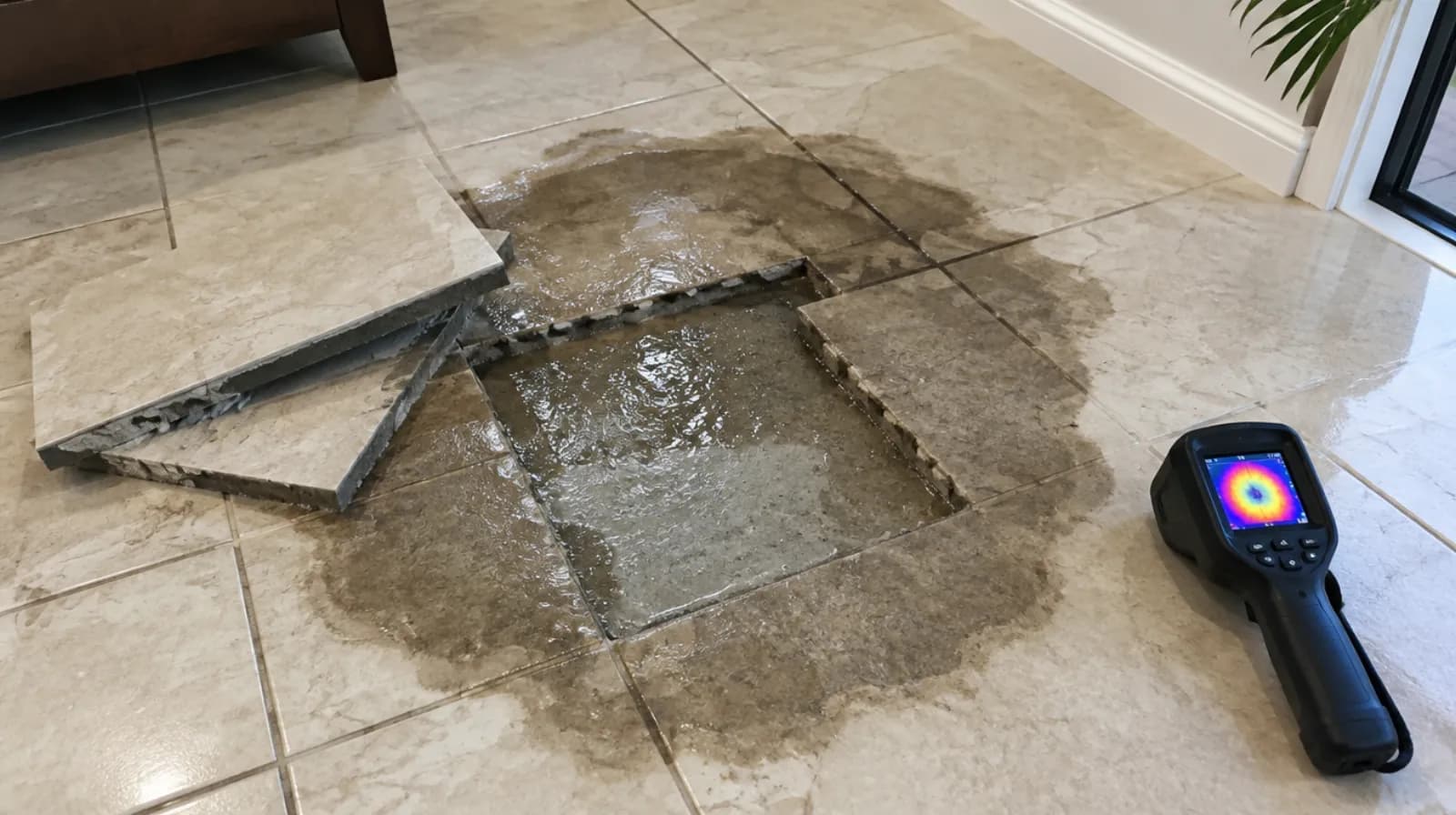
Water from a slab leak has two ways to go. It can travel along the bottom of the slab and the soil under it, or it can push up through cracks, joints and the gap at the wall. Where it shows up is often not where the pipe broke. A wet corner or a lifting tile can be a long way from the leak.
The first hour: what to do
1. Do the meter test. Turn off every tap and appliance, then read the water meter. The EPA's WaterSense program says to read the meter before and after two hours with no water in use, and that if it changes at all, you probably have a leak. 2. Close the main valve and look again. If the meter stops, the leak is on the house side of the line. 3. A warm spot on the floor can mean the hot water line. Tell the plumber.
4. Call a plumber who does leak detection, and ask them to find the break before anyone cuts the floor. We do not do plumbing or leak detection. 5. Move rugs, furniture and electronics off wet floors. Photograph the wet area, the meter readings and any warm spots. 6. If the leak is large, leave the main closed until the plumber arrives. 7. Call us once the water is off so we can start extraction and drying.
Repair or reroute: the plumber's call
A plumber has two usual ways to fix a slab leak. One is to break out the concrete over the leak, repair the pipe and patch the slab. The other is to abandon the line under the slab and run new pipe through the attic, walls or ceiling. Which one fits depends on the house, how many leaks there are and what the pipe is made of. It is the plumber's decision and yours. We do not do plumbing, so we do not tell you which to pick.
Each choice leaves work for the floors. A spot repair means a trench in the slab and tile or flooring removed along it. Matching old tile is the hard part, so ask early whether it is still made. A reroute leaves the floors mostly alone but opens walls and ceilings, which means drywall and paint afterward. We do both kinds of finish work, from tile to interior painting.
What we do about the water and the floors
We extract any standing water, then take moisture readings across the floor, at the baseboards and in the bottom of the walls to map how far it went. Concrete is porous and usually is not damaged by water, but it holds moisture for a long time. The National Wood Flooring Association says flooring, adhesives and sealers slow the drying of a wet slab, and that moisture levels must be checked before new flooring goes down. So we dry the slab with air movers and dehumidifiers until the readings are right, not until it looks dry.
What comes out depends on the floor. Carpet and pad go if they stayed wet. Tile that sounds hollow or has lifted is reset or replaced. Wood, laminate and vinyl plank that cupped, swelled or bubbled are removed, and our page on water under hardwood floors explains how we judge each one. When the plumber is done and the slab is dry, we handle the reconstruction too: new flooring, tile, baseboards, drywall and paint, with one crew from extraction to the final walkthrough. We photograph each step and keep the readings.
What insurance usually looks at
Slab leak claims turn on a few facts: was the leak sudden or slow, where was it, and what does your policy say about tearing out the floor. Many policies pay to open the slab to reach the pipe if the water damage itself is covered, but not to repair the pipe. Long-term seepage is often excluded. The plumber's report, with the cause and location of the leak, matters as much as ours.
We give your adjuster photos, moisture readings and a written scope for the water damage and the floor. We do not file or negotiate the claim. Report it soon, because Florida law bars a claim unless the insurer gets notice within 1 year after the date of loss. There is more in our insurance claim guide.