Updated November 3, 2026
How fast mold grows after water damage
The EPA puts it plainly. Dry water-damaged areas and items within 24 to 48 hours to prevent mold growth, and when wet areas are dried in that window, mold in most cases will not grow. Hold on to that two day number.
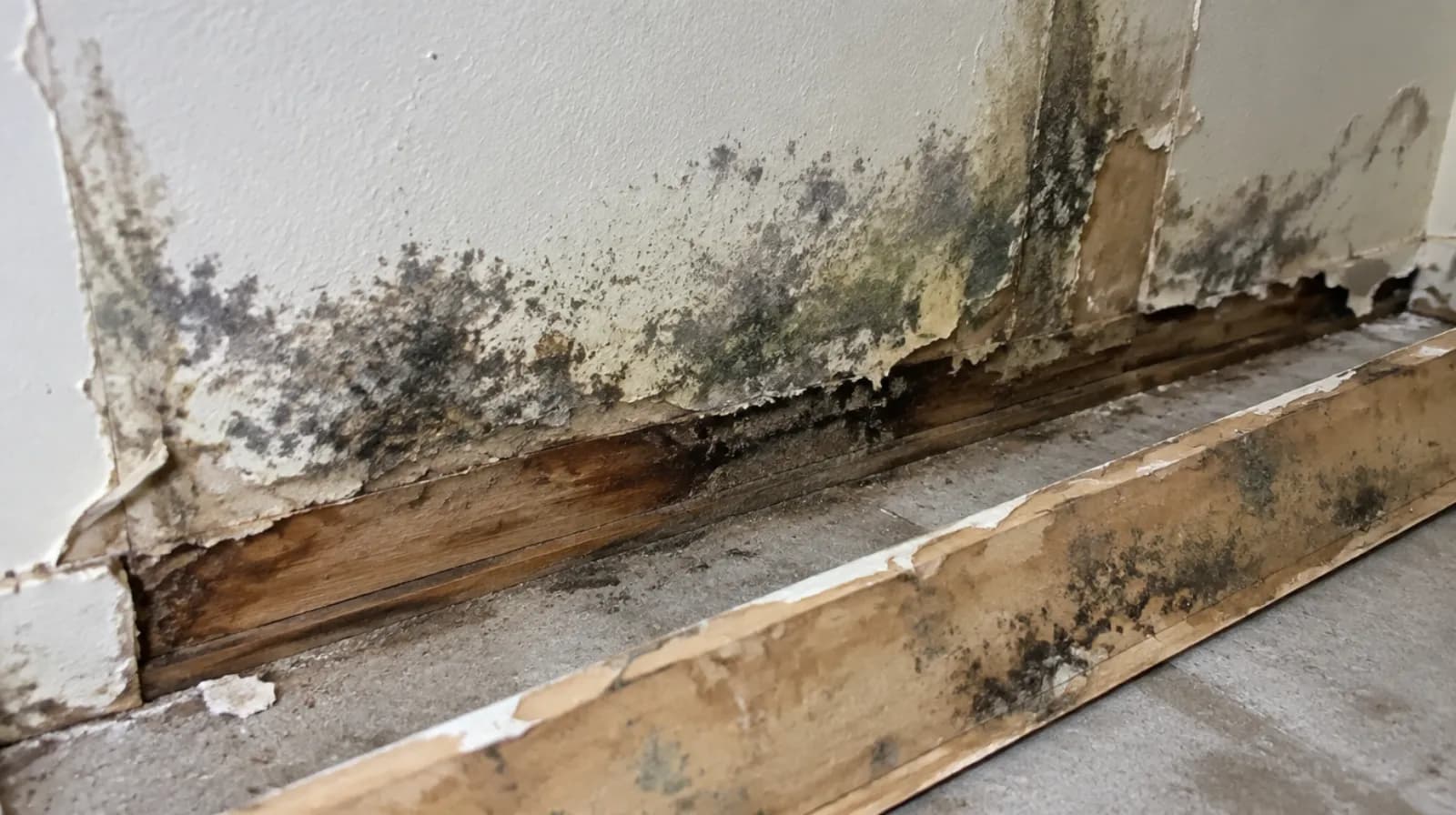
Mold spores are in the air in every house. They only need moisture and something to eat. Drywall paper, carpet pad, wood framing, cabinet backs and insulation all work. In South Florida the warm air means a wet wall cavity stays wet a long time after the water is gone. The surface can feel dry while the back of the board is still damp.
A clean-water leak counts. A supply line, an AC drain pan or a roof leak can start mold just like a flood can, if the material stays wet. If the water was dirty, from a drain, a toilet or a flood, call a professional who has experience with that kind of damage. For flood and saltwater, see our page on mold after flooding. This page is about water from pipes, AC, roofs and rain.
What you can clean yourself
The EPA says that if the moldy area is less than about 10 square feet, in most cases you can handle the job yourself. Fix the water problem first or the mold comes back. Then, on hard surfaces like tile, glass and sealed counters, scrub with detergent and water and dry the surface completely.
Soft and porous materials are different. The EPA says ceiling tiles and carpet may have to be thrown away, because mold can be difficult or impossible to remove completely from them. Drywall with mold growing through the paper belongs in the same group. Do not scrub it. Cut it out. Wear gloves, goggles and boots, as the CDC advises, and keep the work area closed off from the rest of the house.
Talk to your doctor first if anyone in the house has asthma, allergies or a weakened immune system. The EPA advises consulting a health professional before starting cleanup if you have health concerns. And never mix bleach with ammonia or other cleaners. The CDC warns it makes a poisonous gas.
When to get a mold assessment, and who is allowed to do it
Get a mold assessor when any of these is true. The moldy area is bigger than about 10 square feet. The water was dirty. You smell mold but cannot find it. Someone in the house is getting sick. Or you are in a claim and need to show what is there. The EPA says to consult its remediation guidance when water damage is extensive or mold covers more than 10 square feet.
Florida regulates this work. Under Chapter 468, Part XVI of the Florida Statutes, mold assessors and mold remediators must hold a state credential, and section 468.8411 defines both jobs as work on mold or mold-contaminated matter of greater than 10 square feet. That lines up with the EPA's 10 square foot guide. Ask for the person's Florida mold credential number and check it with the state before you sign anything.
Consider using one company for the assessment and a different one for the cleanup, so the person who tells you what is there is not the one selling the fix.
What we do: dry the house fast, then do the reconstruction
We do not do mold remediation. Our job is the part before and after. When water gets in, we take emergency calls 24/7 and do the water extraction and drying in-house with IICRC-certified technicians, because the faster a house dries, the less chance mold has.
We take photos and moisture readings, and we write a scope for your insurance adjuster. If the readings or what we find in the wall point to mold, we tell you, and you bring in a company that holds a Florida mold credential. Once the area is cleared and dry, we do the reconstruction too: new drywall, baseboards, flooring, tile, cabinets, paint, bathrooms and kitchens. The same team that dried the house rebuilds it. See water damage reconstruction for how that works.
The places mold shows up most are behind baseboards, under vanities, inside the kitchen sink cabinet, on the wall behind a water heater, and on ceilings under a roof or AC leak. You can see every kind of source on our water damage page.
Mold and your insurance policy
Mold and water damage are often treated separately in a homeowners policy. Many policies limit mold coverage or cover it only when it follows a covered water loss, and many exclude mold from a leak that ran for weeks or months. Read your policy and ask your agent. The wording and the limits are different from one policy to the next.
Report the water loss first, and report it fast. Mold you find later is much easier to tie to a covered loss when the photos, readings and dry-out records start on day one. Our insurance claim guide lists what to photograph and keep. Do not throw away moldy material until the adjuster has seen it, unless it is a health risk.