Updated November 3, 2026
The first two days are a drying job. After that it is a rebuild.
In the first day or two, water damage is a drying problem. Pull the water out, move air, run dehumidifiers, and most materials come back. The EPA says to dry water-damaged areas within 24 to 48 hours to prevent mold growth, and that when wet areas are dried in that window, mold in most cases will not grow.
Miss that window and the job changes. The paper on the drywall stays wet. Carpet pad goes sour. Insulation holds water against the framing. What could have been a few days of fans and a dehumidifier becomes cutting, hauling and replacing.
The bill climbs in steps. Step one is drying. Step two is replacing what could not be dried. Step three is the framing, subfloor and wiring behind it. Step four is mold work by a company that holds a Florida mold credential, then rebuilding. Each step is bigger than the one before, and every day of waiting moves you closer to the next. That is why we take 24/7 emergency calls and do water extraction and drying in-house with IICRC-certified technicians. We also do the reconstruction: new drywall, baseboards, flooring, tile, cabinets and paint, one team from extraction to final walkthrough. See our water damage reconstruction page. If you are not sure what you have, start with our water damage page.
Mold: what it does to the house and to the people in it
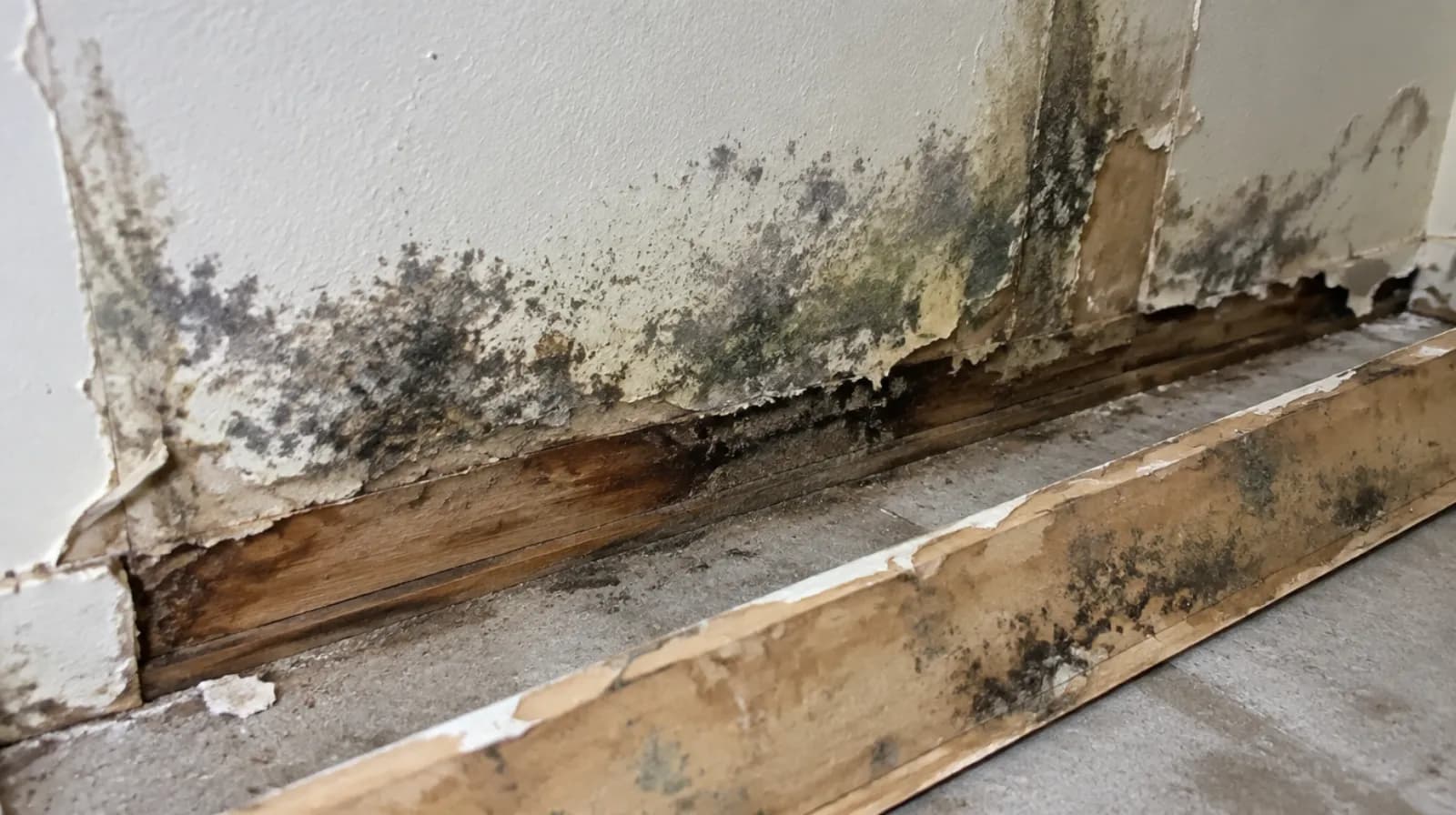
Mold needs moisture, and a wet wall cavity in South Florida never lacks for warmth. It feeds on drywall paper, carpet pad, wood and the backs of cabinets. It starts behind the baseboard, under the carpet and inside the wall, where you cannot see it. By the time it shows on the surface, it has been growing for a while.
The CDC says mold can cause a stuffy nose, sore throat, coughing or wheezing, burning eyes or a skin rash, and that people with asthma or mold allergies can have severe reactions. People with weakened immune systems or chronic lung disease can get lung infections from mold. If someone in your home is in one of those groups, talk to their doctor.
The EPA says that in most cases you can handle a patch under about 10 square feet yourself. Past that, or when the water was dirty, bring in a professional. We do not do mold remediation. We dry the house to keep it from getting there, and we rebuild after. The details are on our page about mold after water damage.
Rot, termites and the structure
Wood can take some moisture. It is not built to sit wet. FEMA's repair guide says wallboard will disintegrate if it stays wet too long, and wood can swell, warp or rot. It shows first at the bottom plate of the wall, the subfloor under the wet spot, door jambs and the base of cabinets. Rot does not announce itself. You find it as a soft spot, a floor with a bounce, or a baseboard that crumbles when you pull it.
Termites go where the wet wood is. UF/IFAS says subterranean termites target and feed on water-damaged wood, and that controlling moisture in the structure helps prevent them. If you see mud tubes, sawdust-like droppings or shed wings near a spot that was wet, call a pest control company. A termite problem in framing that rot has already softened is a much bigger repair.
Ceilings are a safety issue. A ceiling that is holding water gets heavy, and FEMA's guide warns that wet plaster or wallboard is very heavy and dangerous if it falls. A brown stain that is growing, or a ceiling that is bowing, means stay out from under it and get it checked.
Wiring, floors and the smell that will not leave
Water and electricity do not mix, and slow water does its damage quietly. FEMA's guide says wet electrical parts can short out, malfunction and cause fires or shock. Outlets and switch boxes in a wall that got wet, a panel on a wall that has been damp, and fixtures in a ceiling that leaked should all be checked by an electrician before you trust them. If breakers trip or lights flicker near a wet area, and you can do it safely, shut off power to that area.
Floors tell the story slowly. Hardwood cups and gaps. Laminate swells at the seams. Tile pops when the thinset loosens, and the subfloor under it can be soft. Water trapped under a floor does more damage than the part you can see. Our page on water under a hardwood floor shows what to look for.
The smell is the part people live with longest. A musty smell means something is wet or growing. It settles into carpet, cabinets and closets, and it can ride the air handler through the whole house. Air fresheners cover it. Only drying and removing the wet material ends it.
Insurance, selling the house and the bill that keeps growing
A homeowners policy is written for sudden and accidental water. Many policies exclude constant or repeated seepage or leakage over a period of time, and some put a number on it, like 14 days or more. The wording is different in each policy, so read yours and ask your agent. A leak you knew about and did not fix looks very different to an adjuster than a pipe that burst on Tuesday. Your policy also expects you to take reasonable steps to stop more damage. Our insurance claim guide walks through what to do and the Florida notice deadline.
Selling is the other place it catches up. A buyer's inspector may bring a moisture meter, and what shows up goes into the report. Under Florida law, a seller who knows about a problem that hurts the value of the home and that a buyer cannot easily see has to tell the buyer, and Florida Realtors says that duty still applies when a home is sold as is. Repaired damage with photos, readings and invoices is easy to explain. Hidden damage is a problem you do not want to explain later. Talk to your real estate agent or an attorney about your own sale.
Put it together and the cheapest moment to fix water damage is the first day. Shut off the source, take photos and call for drying before the next step of the bill kicks in.